AI Workflows Replacing Middle Management: 2026 Outlook
Advertisements

By 2026, 43% of US enterprises are projected to replace middle management with autonomous AI workflows, driving significant shifts in organizational structures, operational efficiencies, and the very nature of work itself.
The corporate landscape is on the cusp of a profound transformation, with a significant shift towards artificial intelligence redefining traditional roles. By 2026, a remarkable 43% of US enterprises are anticipated to begin replacing middle management with autonomous AI workflows, fundamentally reshaping how organizations operate and innovate.
The AI Revolution in Management: An Unstoppable Tide
The integration of artificial intelligence into business operations is no longer a futuristic concept; it's a present reality rapidly accelerating. This section delves into the foundational reasons behind the growing trend of AI replacing traditional middle management roles, exploring the efficiency gains and strategic advantages that autonomous workflows offer to large US enterprises.
As businesses strive for unprecedented levels of efficiency and agility, the limitations of human-centric middle management are becoming increasingly apparent. AI-driven systems can process vast amounts of data, identify patterns, and make decisions at speeds and scales impossible for human counterparts, leading to more streamlined operations and enhanced productivity across various departments.
Driving Forces Behind AI Management Adoption
Several critical factors are propelling enterprises towards adopting AI for management tasks. These include the quest for operational excellence, the need for data-driven decision-making, and the desire to reduce overhead costs associated with extensive managerial hierarchies.
- Cost Reduction: Eliminating or reallocating middle management roles can lead to significant savings in salaries, benefits, and office space.
- Enhanced Efficiency: AI can automate repetitive tasks, optimize resource allocation, and manage project timelines with greater precision than human managers.
- Data-Driven Decisions: Autonomous AI workflows leverage real-time data analytics to inform strategies and tactical adjustments, leading to more objective and effective outcomes.
- Scalability: AI systems can scale operations up or down rapidly to meet changing business demands without the complexities of hiring or downsizing human teams.
The shift towards autonomous AI workflows in management represents a strategic pivot for enterprises looking to gain a competitive edge in a dynamic global market. It's about more than just automation; it's about reimagining organizational structures to be more responsive, data-informed, and ultimately, more successful.
Operational Efficiency Redefined: Beyond Human Limitations
Autonomous AI workflows are fundamentally redefining operational efficiency by transcending the inherent limitations of human middle management. This transformation is not merely about automating tasks but about creating a more responsive, optimized, and error-resistant operational framework that can handle the complexities of modern enterprise at scale.
Traditional middle management often grapples with information silos, cognitive biases, and time constraints that can impede decision-making and slow down project execution. AI, conversely, operates with unwavering objectivity, 24/7 availability, and the ability to synthesize data from disparate sources instantaneously, leading to a level of operational fluidity previously unattainable.
Precision and Speed in Decision-Making
One of the most compelling aspects of AI in management is its capacity for rapid, data-backed decision-making. AI algorithms can analyze market trends, production metrics, and supply chain data in real-time, providing actionable insights and even executing decisions autonomously.
- Real-time Analytics: AI continuously monitors performance indicators, flagging anomalies and opportunities as they arise.
- Predictive Capabilities: Machine learning models forecast future trends, allowing enterprises to proactively adjust strategies and resource allocation.
- Automated Task Assignment: AI can intelligently distribute tasks based on team capabilities, workload, and project priorities, ensuring optimal utilization of human talent.
The move towards AI-driven operational efficiency also mitigates the risk of human error in routine managerial tasks. From scheduling and inventory management to compliance checks and quality control, AI systems perform with consistent accuracy, freeing human employees to focus on more creative, strategic, and interpersonal aspects of their roles.
The Economic Imperative: Cost Savings and ROI
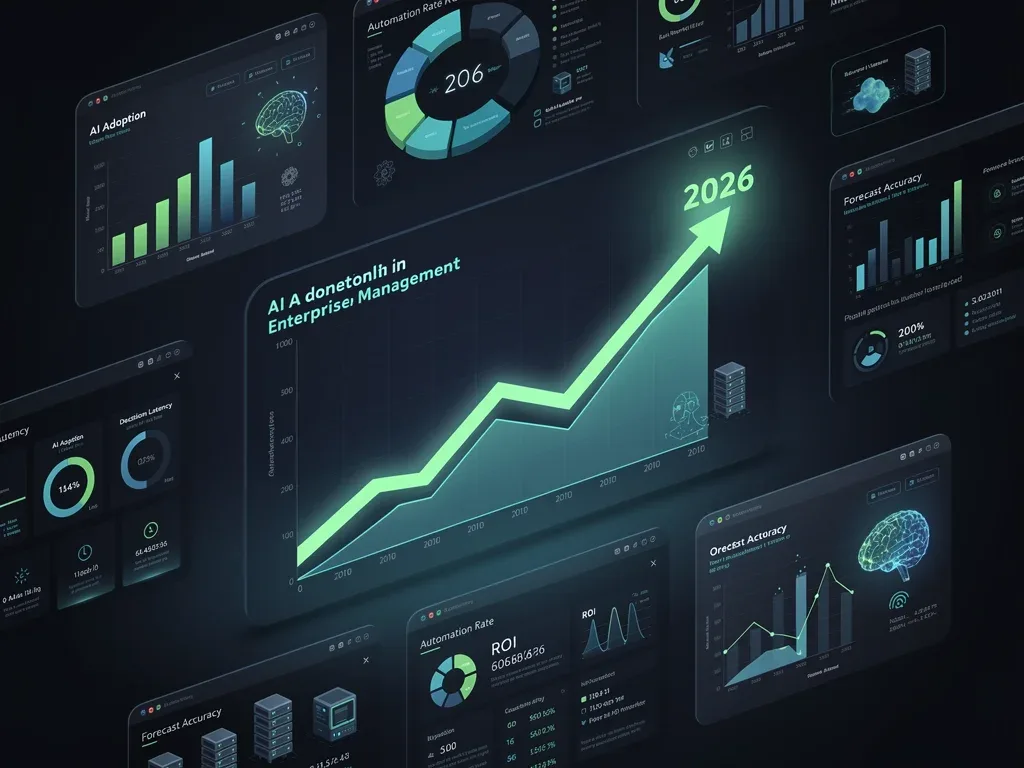
Beyond the operational benefits, the economic imperative forms a significant driver for the adoption of autonomous AI workflows in middle management. US enterprises are acutely aware of the substantial cost savings and impressive return on investment (ROI) that AI integration can deliver, making it a compelling strategic move for financial sustainability and growth.
The salaries, benefits, training, and overhead associated with a large middle management layer represent a considerable expenditure for any large organization. By streamlining these functions through AI, companies can reallocate resources to innovation, talent development, or direct revenue-generating activities, thereby enhancing their bottom line.
Quantifiable Financial Advantages
The financial benefits of implementing autonomous AI workflows are multifaceted and extend beyond simple salary reductions. They encompass increased productivity, reduced waste, and optimized resource utilization, all contributing to a stronger financial position.
- Reduced Labor Costs: Direct savings from fewer managerial positions and associated administrative expenses.
- Optimized Resource Allocation: AI ensures that capital, labor, and materials are used most effectively, minimizing waste and maximizing output.
- Improved Productivity: Faster decision-making and automated task management lead to quicker project completion and higher overall output per employee.
- Error Reduction: AI's precision minimizes costly mistakes, reworks, and compliance penalties.
The initial investment in AI infrastructure and development, while potentially significant, is often quickly recouped through these efficiencies and cost reductions. Enterprises are increasingly viewing AI as a critical capital expenditure that yields long-term strategic and financial advantages, making the decision to replace human middle management with AI-driven systems an economically sound one.
Reshaping the Workforce: A New Paradigm for Human Roles
The replacement of middle management by autonomous AI workflows is not merely about job displacement; it heralds a fundamental reshaping of the workforce, ushering in a new paradigm for human roles within the enterprise. This evolution emphasizes different skill sets, fosters increased collaboration, and potentially elevates the human contribution to more strategic and creative endeavors.
Instead of managing day-to-day operations and overseeing teams, human employees will increasingly find themselves engaged in tasks that require uniquely human attributes: critical thinking, complex problem-solving, creativity, emotional intelligence, and interpersonal communication. AI will handle the routine, the analytical, and the repetitive, allowing humans to focus on innovation and strategic growth.
Evolving Skill Sets and Collaboration
This shift necessitates a proactive approach to workforce development, with an emphasis on upskilling and reskilling programs. Employees will need to adapt to working alongside AI, understanding how to leverage its capabilities, and contributing to areas where human insight remains indispensable.
- Augmented Intelligence: Humans will work collaboratively with AI, using its analytical power to enhance their decision-making and problem-solving.
- Strategic Focus: Human roles will pivot towards higher-level strategic planning, innovation, and complex relationship management.
- Creative Problem Solving: Employees will be empowered to tackle novel challenges that require imaginative and non-linear thinking.
- Emotional Intelligence: Roles requiring empathy, negotiation, and motivational leadership will become even more critical.
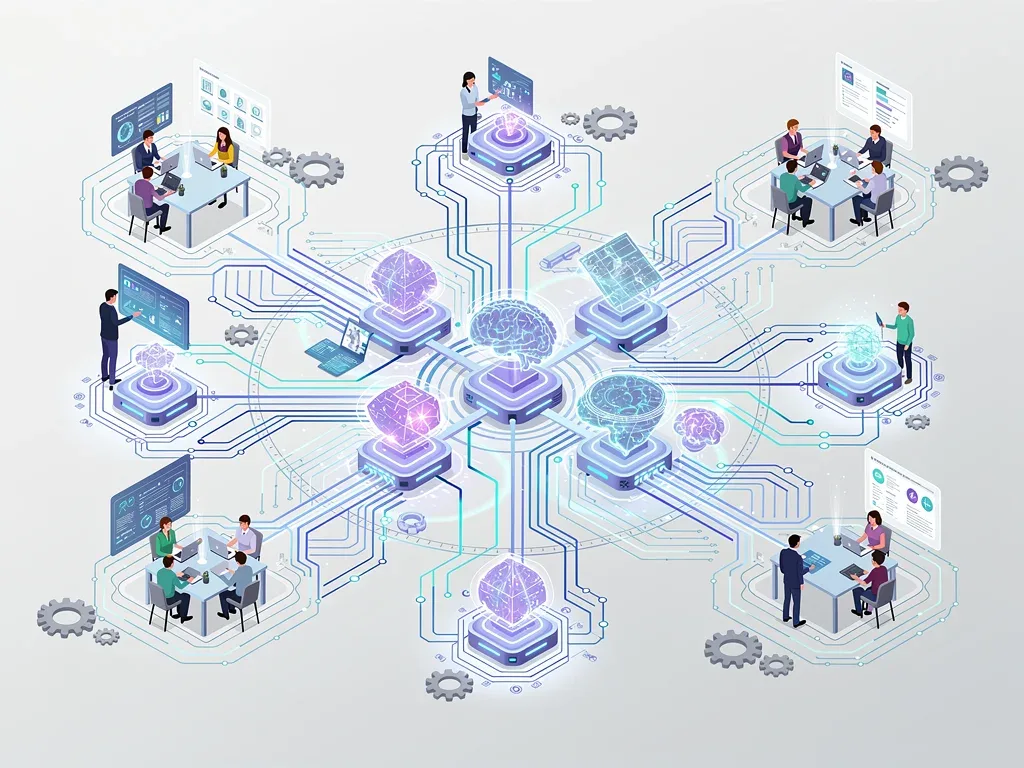
The new workforce paradigm will likely be characterized by flatter organizational structures, increased cross-functional collaboration, and a greater emphasis on individual accountability and initiative. Autonomous AI workflows will act as an overarching intelligent layer, providing guidance, data, and support, while humans drive the vision and execute the nuanced aspects of business development. This evolution promises a more engaging and impactful work environment for many.
Challenges and Considerations in AI Implementation
While the benefits of autonomous AI workflows in replacing middle management are compelling, the journey to full implementation is not without its challenges and crucial considerations. Enterprises must navigate a complex landscape of technological hurdles, ethical dilemmas, and significant organizational change management to successfully integrate AI into their managerial structures.
The successful deployment of AI is not merely a technical undertaking; it requires a holistic approach that addresses data quality, algorithmic bias, cybersecurity, and the human element. Ignoring these considerations can lead to costly failures, reduced trust, and unintended consequences that undermine the potential advantages of AI adoption.
Key Hurdles and Strategic Planning
Enterprises need to engage in meticulous planning and continuous evaluation to mitigate risks and ensure that AI systems align with their strategic objectives and ethical guidelines.
- Data Quality and Integrity: AI systems are only as good as the data they process. Ensuring clean, accurate, and unbiased data is paramount.
- Algorithmic Bias: Developers must actively work to identify and eliminate biases in AI algorithms to prevent discriminatory outcomes.
- Cybersecurity Risks: Autonomous systems, particularly those handling sensitive operational data, present new vulnerabilities that require robust security measures.
- Employee Resistance and Retraining: Managing the human impact of AI, including potential job displacement and the need for extensive retraining, is critical for smooth transitions.
- Ethical and Regulatory Frameworks: Developing clear ethical guidelines and adhering to evolving regulatory standards for AI use is essential for public and employee trust.
Addressing these challenges requires a multi-disciplinary approach involving IT specialists, HR professionals, legal experts, and senior leadership. A phased implementation strategy, coupled with transparent communication and continuous feedback loops, can help enterprises overcome these obstacles and realize the full potential of autonomous AI workflows in management.
The Future of Enterprise: Agility, Innovation, and AI
The future of enterprise, particularly for the 43% of US companies embracing autonomous AI workflows for middle management by 2026, is characterized by unprecedented agility, continuous innovation, and a symbiotic relationship between human intelligence and artificial intelligence. This forward-looking perspective envisions organizations that are not just more efficient, but inherently more adaptive and resilient in an ever-changing global market.
Enterprises leveraging AI in this manner will be better positioned to respond to market shifts, capitalize on emerging opportunities, and optimize their value chains with a speed and precision unmatched by traditional models. The elimination of bureaucratic layers and the automation of routine decision-making will free up significant organizational bandwidth, fostering a culture of experimentation and rapid iteration.
Cultivating a Culture of Continuous Evolution
The ultimate success of AI integration in management will hinge on an enterprise's ability to cultivate a culture that embraces continuous evolution, learning, and adaptation. This involves not only technological upgrades but also a fundamental shift in mindset across all levels of the organization.
- Dynamic Organizational Structures: Enterprises will adopt more fluid and project-based structures, with AI facilitating resource allocation and team formation.
- Continuous Learning and Development: Investment in upskilling and reskilling will become a core strategic imperative to keep the human workforce relevant and impactful.
- Innovation at Scale: With AI handling operational complexities, human teams can dedicate more time and creativity to developing new products, services, and business models.
- Enhanced Customer Experience: AI-driven insights will allow for more personalized and proactive customer interactions, leading to greater satisfaction and loyalty.
The vision for the future enterprise is one where AI acts as an intelligent backbone, supporting and augmenting human capabilities, rather than merely replacing them. This synergy will unlock new levels of productivity, foster a more engaged and empowered workforce, and ultimately drive sustainable competitive advantage for those US enterprises bold enough to lead this transformative charge.
| Key Aspect | Impact on Enterprises |
|---|---|
| Operational Efficiency | AI workflows provide unprecedented speed and precision in task management and decision-making. |
| Cost Savings | Significant reduction in labor costs and optimized resource allocation. |
| Workforce Reshaping | Human roles shift to strategic, creative, and emotionally intelligent tasks. |
| Challenges | Requires addressing data quality, algorithmic bias, and change management. |
Frequently Asked Questions About AI in Management
What exactly are autonomous AI workflows in management?▼Autonomous AI workflows are AI-driven systems capable of performing managerial tasks, such as resource allocation, project scheduling, performance monitoring, and data analysis, with minimal human intervention. They leverage machine learning and automation to optimize operations and decision-making.
Will AI completely eliminate middle management roles?▼While a significant portion of traditional middle management tasks will be automated, AI is more likely to transform rather than completely eliminate these roles. Human managers will shift towards more strategic, creative, and interpersonal functions, collaborating with AI rather than competing against it.
What are the primary benefits for enterprises adopting AI management?▼The main benefits include enhanced operational efficiency, significant cost savings through reduced labor and optimized resource use, faster and more accurate data-driven decision-making, and increased scalability to adapt to market changes more effectively.
What challenges do enterprises face when implementing AI management?▼Key challenges include ensuring high-quality and unbiased data, mitigating algorithmic bias, strengthening cybersecurity against new threats, managing employee resistance to change, and developing robust ethical and regulatory frameworks for AI deployment.
How will the workforce adapt to AI-driven management?▼The workforce will adapt by focusing on uniquely human skills like critical thinking, creativity, and emotional intelligence. Extensive upskilling and reskilling programs will be crucial to prepare employees for collaborative roles alongside AI, emphasizing strategic oversight and innovation.
Conclusion
The projected shift of 43% of US enterprises replacing middle management with autonomous AI workflows by 2026 marks a pivotal moment in the evolution of business. This transformation is driven by an undeniable pursuit of efficiency, substantial cost savings, and the strategic advantage of data-driven decision-making. While presenting significant challenges in terms of technological integration and workforce adaptation, the future enterprise promises to be more agile, innovative, and resilient. Embracing this AI-driven paradigm is not just about staying competitive; it's about redefining the very essence of organizational success in the digital age, fostering a new era of collaboration between human ingenuity and artificial intelligence.
