Deploying Post-Quantum Cryptography: NIST Standards for US Enterprises
Advertisements

US enterprises must strategically adopt post-quantum cryptography (PQC) by 2026, leveraging NIST-approved standards to preemptively secure their digital infrastructure against the imminent threat of quantum computing.
The dawn of quantum computing heralds a new era of cyber threats, making the implementation of post-quantum cryptography standards an urgent imperative for US enterprises. This pivotal shift isn't a distant concern but a pressing reality, demanding proactive measures to safeguard sensitive data against quantum attacks.
The Quantum Threat and the Urgency for PQC Adoption
The advent of quantum computers, particularly those capable of running Shor's algorithm, poses an existential threat to much of our current public-key cryptography. Algorithms like RSA and elliptic curve cryptography (ECC), which form the backbone of secure communications and transactions today, will become vulnerable. This vulnerability isn't just theoretical; it's a looming reality that forward-thinking enterprises must address now to avoid catastrophic data breaches in the future.
The urgency stems from several factors, including the 'harvest now, decrypt later' threat, where encrypted data is collected today with the intention of decrypting it once sufficiently powerful quantum computers become available. This means that even data encrypted today, if not protected with quantum-resistant algorithms, could be compromised years down the line. Enterprises, especially those handling long-lived sensitive data, must recognize this timeline and act decisively.
Understanding the Quantum Computing Landscape
Quantum computing leverages the principles of quantum mechanics to solve problems intractable for classical computers. While still in its early stages, the rapid progress in quantum hardware and algorithms suggests that cryptographically relevant quantum computers are not a matter of 'if' but 'when'. This advancement is driving a global race to develop and standardize new cryptographic primitives.
- Shor's Algorithm: Directly targets factoring and discrete logarithm problems, compromising RSA and ECC.
- Grover's Algorithm: Offers a quadratic speedup for searching unsorted databases, potentially weakening symmetric key cryptography and hash functions.
- Quantum Supremacy: Demonstrations of quantum computers performing tasks beyond classical supercomputers, signaling their growing capabilities.
Recognizing this impending threat, governments and standardization bodies worldwide, most notably the National Institute of Standards and Technology (NIST) in the US, have initiated processes to identify and standardize quantum-resistant cryptographic algorithms. This collective effort underscores the severity of the threat and the critical need for a coordinated response.
In conclusion, the quantum threat is not a distant science fiction scenario but a tangible risk demanding immediate attention. US enterprises must understand the implications and begin their transition to post-quantum cryptography to secure their operations and data against future attacks.
NIST's Role and the Standardization Process
NIST has been at the forefront of the global effort to standardize post-quantum cryptography (PQC). Their multi-year process, launched in 2016, involved evaluating numerous candidate algorithms submitted by cryptographers and researchers worldwide. This rigorous, transparent, and collaborative process is designed to ensure that the chosen algorithms are robust, efficient, and suitable for widespread deployment.
The standardization process has progressed through several rounds, with candidates being scrutinized for their security, performance, and practicality. The goal is to select a diverse set of algorithms based on different mathematical problems, providing a layered defense against potential weaknesses in any single approach. This careful selection is crucial for building a resilient cryptographic infrastructure.
Phases of the NIST PQC Project
The NIST PQC project has unfolded in distinct phases, each contributing to the meticulous selection of quantum-resistant algorithms.
- Submission and Evaluation: Cryptographic algorithms were submitted and underwent extensive public analysis for security and performance.
- Selection of First Standards: Initial algorithms were identified for standardization based on their maturity and security assurances.
- Continued Evaluation: Further candidates continue to be evaluated for future rounds of standardization, ensuring a broad portfolio.
NIST's commitment extends beyond just selecting algorithms; it also involves developing implementation guidelines and fostering an ecosystem that supports the transition. This holistic approach is vital for smooth and effective adoption across various industries and government sectors. The transparency of the process allows for broad community input and builds confidence in the selected standards.
By providing clear guidance and approved standards, NIST empowers US enterprises to confidently embark on their PQC migration journey. This eliminates the guesswork and reduces the risk associated with adopting unproven cryptographic solutions, ensuring a unified and secure transition.
Key PQC Standards: Lattice-Based Cryptography
Lattice-based cryptography has emerged as a leading contender in the race for quantum-resistant solutions, forming the basis for several of NIST's selected algorithms. These schemes derive their security from the computational difficulty of certain problems in high-dimensional lattices, which are believed to be resistant to attacks by quantum computers. Their mathematical foundations offer a promising path forward.
The efficiency and versatility of lattice-based schemes make them attractive for various applications, from key encapsulation mechanisms (KEMs) to digital signatures. Their structured nature also allows for relatively compact key sizes and efficient operations, which are crucial for practical deployment in real-world systems. This balance of security and performance is a key advantage.
CRYSTALS-Kyber: A Standard for Key Establishment
CRYSTALS-Kyber has been selected by NIST as a primary algorithm for key-establishment. It is a lattice-based KEM designed for efficiency and strong security guarantees. Kyber's role will be to secure the exchange of symmetric encryption keys, a fundamental component of secure communication protocols like TLS/SSL.
- Key Encapsulation Mechanism (KEM): Securely establishes shared secret keys over an insecure channel.
- Efficiency: Designed for practical performance in real-world applications.
- Security: Based on the hardness of the learning with errors (LWE) problem, considered quantum-resistant.
The adoption of CRYSTALS-Kyber will be a critical step for enterprises looking to secure their data in transit. Its integration into existing security protocols will require careful planning and testing, but the benefits of quantum-resistant key exchange are undeniable. Enterprises should begin to explore how Kyber can be integrated into their infrastructure for securing data in motion.
Lattice-based cryptography, particularly CRYSTALS-Kyber, represents a significant leap forward in securing digital communications against quantum adversaries. Its robust mathematical underpinnings and practical performance make it an essential component of any enterprise's PQC strategy.
Key PQC Standards: Digital Signatures and Hash-Based Schemes
Beyond key establishment, digital signatures are another critical area requiring quantum-resistant solutions. Digital signatures ensure data integrity and authenticity, verifying the origin and unaltered state of digital information. NIST has also selected algorithms for this purpose, with a strong focus on schemes that offer robust security against quantum attacks.
Hash-based signature schemes, while typically generating larger signatures, offer strong security guarantees and are well-understood. These schemes often rely on the security of cryptographic hash functions, which are generally considered more resistant to quantum attacks than the underlying problems of classical public-key cryptography. Their maturity and proven security make them valuable.
CRYSTALS-Dilithium: For Robust Digital Signatures
CRYSTALS-Dilithium, another lattice-based scheme, has been chosen by NIST as a primary standard for digital signatures. Dilithium provides strong authenticity and integrity for digital data, crucial for everything from software updates to secure boot processes. Its security is also rooted in the hardness of lattice problems, offering quantum resistance.
- Digital Signature Algorithm (DSA): Verifies the authenticity and integrity of digital messages.
- Lattice-Based: Security derived from the difficulty of lattice problems.
- Applications: Ideal for code signing, secure boot, and authenticated data.
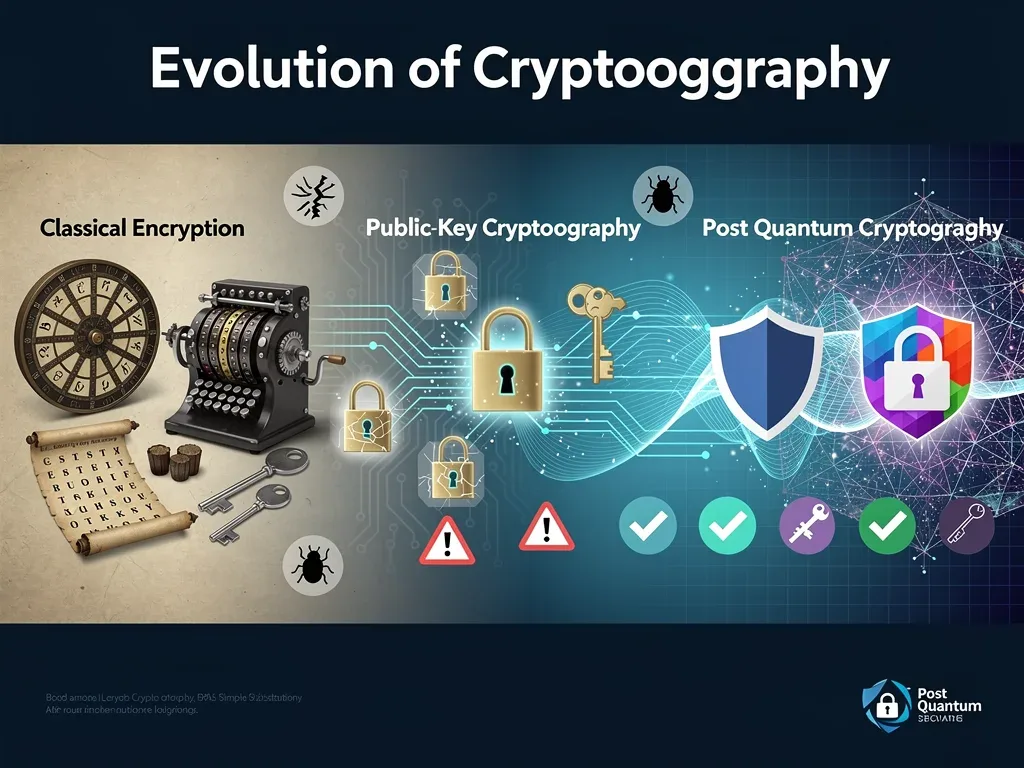
Enterprises will need to integrate Dilithium into their signature infrastructure, replacing vulnerable RSA and ECC-based signature schemes. This transition will impact various systems, including certificate authorities, software distribution channels, and secure communication protocols. Planning for this migration is essential to maintain trust and security.
SPHINCS+: State-of-the-Art Hash-Based Signatures
SPHINCS+ is a stateful hash-based signature scheme also selected by NIST. While it offers different performance characteristics compared to lattice-based signatures, its security is highly robust and relies on well-understood cryptographic hash functions. SPHINCS+ provides an alternative for situations where long-term security and conservative design are paramount, even at the cost of larger signatures or state management.
- Hash-Based: Security relies on the collision resistance of cryptographic hash functions.
- Stateless vs. Stateful: SPHINCS+ is stateless, simplifying management compared to earlier hash-based schemes.
- Conservative Design: Offers a strong alternative with different security assumptions.
The inclusion of SPHINCS+ provides enterprises with a diversified portfolio of signature algorithms. While Dilithium might be the go-to for many applications due to its efficiency, SPHINCS+ offers a valuable option for high-assurance scenarios. Understanding the trade-offs between these schemes is vital for strategic deployment.
The standardization of CRYSTALS-Dilithium and SPHINCS+ offers US enterprises robust tools for ensuring digital authenticity and integrity in the quantum era. These algorithms represent critical components in building a comprehensive post-quantum security posture.
Emerging PQC Standards: Falcon and Classic McEliece
While CRYSTALS-Kyber and CRYSTALS-Dilithium are primary selections, NIST's portfolio of post-quantum cryptography standards also includes other algorithms that offer diverse security properties and performance characteristics. These additional choices provide flexibility and resilience, ensuring that enterprises have a range of options suitable for different use cases and security requirements. Diversification is key to robust security.
The ongoing evaluation and selection of these algorithms demonstrate NIST's commitment to a multi-faceted approach to PQC. This strategy acknowledges that no single algorithm is perfect for every scenario and that a strong cryptographic ecosystem relies on a variety of robust primitives. Enterprises should monitor these developments closely to inform their long-term PQC strategies.
Falcon: High-Performance Digital Signatures
Falcon is another lattice-based digital signature algorithm that NIST has selected as an additional standard. Falcon is particularly notable for its exceptionally compact signatures and efficient verification, making it highly attractive for applications where bandwidth and computational resources are constrained. Its performance characteristics complement Dilithium, offering a high-speed option.
- Compact Signatures: Smaller signature sizes compared to other PQC signature schemes.
- Efficient Verification: Fast verification times, suitable for high-throughput systems.
- Use Cases: Ideal for embedded systems, constrained devices, and high-volume transactions.
Enterprises with specific performance needs, such as those in IoT or high-frequency trading, may find Falcon particularly appealing. Its integration will require similar diligence to other PQC schemes, but the performance benefits could be significant. Evaluating Falcon's suitability for specific applications is a valuable step in PQC planning.
Classic McEliece: A Code-Based Alternative for KEM
Classic McEliece stands out as a code-based key encapsulation mechanism (KEM), offering a different mathematical foundation than lattice-based schemes. While it comes with significantly larger public keys, its security is very well-understood and has withstood decades of cryptanalysis, including against quantum attacks. It serves as a conservative, high-assurance option for key establishment.
- Code-Based Cryptography: Security derived from the hardness of decoding general linear codes.
- Large Public Keys: A significant trade-off, requiring careful consideration for deployment.
- Long-Term Security: Considered a highly conservative and robust choice for critical infrastructure.
Classic McEliece's inclusion in the NIST portfolio provides a crucial diversification of cryptographic assumptions. For applications where maximum security and resistance to unforeseen algorithmic breakthroughs are paramount, and where large key sizes are tolerable, Classic McEliece offers an unparalleled level of confidence. Enterprises must weigh its benefits against its practical implications for storage and bandwidth.
The availability of Falcon and Classic McEliece enriches the PQC landscape, providing US enterprises with a broader array of tools to build quantum-resistant systems. These emerging standards cater to diverse requirements, from high performance to extreme long-term security, enabling tailored cryptographic solutions.
Strategic Implementation Roadmap for US Enterprises
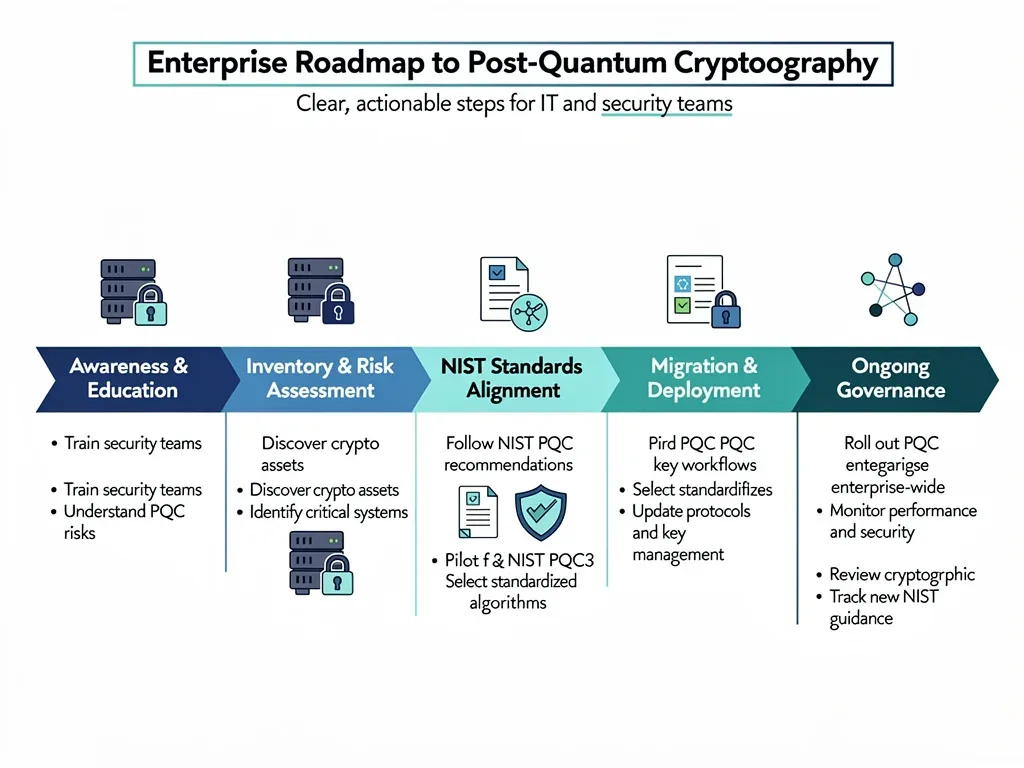
The transition to post-quantum cryptography is not a trivial undertaking; it requires a well-defined strategic roadmap. US enterprises must begin planning and allocating resources now to ensure a smooth and timely migration by 2026. This involves a multi-stage process that encompasses inventory, risk assessment, pilot programs, and full-scale deployment. Procrastination is not an option given the 'harvest now, decrypt later' threat.
A successful PQC migration will involve collaboration across various departments, including IT, security, legal, and business units. It's not just a technical challenge but a strategic business imperative that touches upon compliance, data governance, and long-term risk management. Early engagement and clear communication are paramount to success.
Phase 1: Inventory and Risk Assessment
The initial phase involves a comprehensive audit of all cryptographic assets and dependencies within the enterprise. This includes identifying all instances of public-key cryptography, understanding their use cases, and assessing the impact of a quantum attack on each system.
- Cryptographic Asset Discovery: Catalog all public-key algorithms, protocols, and key lengths in use.
- Dependency Mapping: Identify systems, applications, and services reliant on current cryptography.
- Risk Prioritization: Assess the criticality of each asset and the sensitivity of the data it protects.
This inventory will provide a clear picture of the enterprise's cryptographic attack surface and help prioritize migration efforts. Understanding where cryptographic functions are embedded, from hardware to software, is crucial for effective planning. This foundational step ensures that no critical system is overlooked.
Phase 2: Pilot Programs and Testing
Once the inventory is complete, enterprises should initiate pilot programs to test the integration of NIST-approved PQC algorithms into non-critical systems. This allows for practical experience with the new algorithms, identification of potential performance bottlenecks, and refinement of deployment strategies.
- Algorithm Selection: Choose appropriate NIST PQC algorithms based on risk assessment and use case.
- Proof-of-Concept Development: Implement PQC in isolated environments to evaluate performance and compatibility.
- Interoperability Testing: Ensure new PQC systems can communicate with existing infrastructure and external partners.
Pilot programs are invaluable for gaining hands-on experience and building internal expertise. They provide a safe environment to troubleshoot issues and optimize configurations before broader deployment. Learning from these early implementations will inform the larger migration effort.
Phase 3: Full-Scale Deployment and Monitoring
The final phase involves the systematic deployment of PQC across the enterprise, starting with the most critical systems identified in the risk assessment. This requires careful coordination, change management, and continuous monitoring to ensure the integrity and performance of the new cryptographic infrastructure.
The transition to post-quantum cryptography is a journey, not a destination. It requires ongoing vigilance, adaptation to new threats, and continuous improvement of cryptographic practices. US enterprises that embrace this strategic roadmap will be well-positioned to navigate the quantum era securely.
Challenges and Best Practices for PQC Migration
While the need for post-quantum cryptography is clear, the migration process presents several significant challenges for US enterprises. These include the complexity of integrating new cryptographic primitives into existing systems, managing a potentially long transition period, and addressing the skill gap in PQC expertise. Overcoming these hurdles requires careful planning and adherence to best practices.
Enterprises must also contend with the evolving nature of the quantum threat and the PQC landscape. As research progresses, new vulnerabilities might be discovered, or new, more efficient algorithms might emerge. Building an agile and adaptable cryptographic infrastructure will be crucial for long-term security. This requires a commitment to continuous learning and updating.
Addressing the Cryptographic Agility Challenge
One of the primary challenges is achieving cryptographic agility, the ability to quickly and efficiently update or replace cryptographic algorithms. This agility is essential for PQC migration, as it allows enterprises to swap out vulnerable algorithms for quantum-resistant ones without major disruptions. It also prepares them for future cryptographic updates.
- Modular Architecture: Design systems with cryptographic components that can be easily updated or replaced.
- Automated Management: Implement tools for automated key management and certificate rotation.
- Protocol Updates: Ensure protocols can support multiple cryptographic algorithms simultaneously (hybrid mode).
Investing in cryptographic agility now will pay dividends in the future, making subsequent cryptographic transitions far less burdensome. This proactive approach minimizes the risk of being locked into outdated or insecure algorithms, which could prove costly in the long run.
Leveraging Hybrid Modes and Dual Stacks
A common strategy during the transition period is to employ hybrid modes or dual stacks. This involves running both classical and post-quantum cryptographic algorithms in parallel. This approach provides a fallback in case PQC algorithms are found to have unforeseen weaknesses, while also offering immediate quantum resistance. It's a prudent risk mitigation strategy.
For example, in a TLS handshake, a client and server could negotiate both an ECC key exchange and a Kyber key exchange. The session key would then be derived from both exchanges, meaning an attacker would need to break both classical and quantum-resistant cryptography to compromise the session. This provides a robust layer of defense during the transition.
Best practices for PQC migration also include fostering internal expertise, engaging with industry consortia, and staying informed about NIST's ongoing work. By adopting a proactive, agile, and diversified approach, US enterprises can successfully navigate the complexities of PQC migration and secure their digital future against quantum threats.
| Key Aspect | Brief Description |
|---|---|
| Quantum Threat | Quantum computers will break current public-key encryption; immediate action needed for 'harvest now, decrypt later'. |
| NIST Standards | NIST has standardized quantum-resistant algorithms like Kyber, Dilithium, SPHINCS+, Falcon, and Classic McEliece. |
| Key Algorithms | CRYSTALS-Kyber (KEM), CRYSTALS-Dilithium (Signature), SPHINCS+ (Signature), Falcon (Signature), Classic McEliece (KEM). |
| Migration Roadmap | Inventory, risk assessment, pilot programs, full deployment, and continuous monitoring are crucial for enterprises. |
Frequently Asked Questions About Post-Quantum Cryptography
Why is post-quantum cryptography (PQC) necessary for US enterprises?▼PQC is necessary because powerful quantum computers, once developed, will be able to break current public-key encryption algorithms like RSA and ECC. This threatens the confidentiality and integrity of sensitive data, making PQC essential for long-term security against quantum attacks.
What is NIST's role in standardizing PQC algorithms?▼NIST has led a multi-year, open process to solicit, evaluate, and standardize quantum-resistant cryptographic algorithms. Their role is to provide secure, efficient, and publicly vetted standards that US enterprises can confidently adopt to secure their digital infrastructure.
Which NIST-approved algorithms are crucial for key establishment?▼For key establishment, CRYSTALS-Kyber is a primary NIST-approved standard. It is a lattice-based Key Encapsulation Mechanism (KEM) designed to securely exchange symmetric keys. Classic McEliece also offers a highly robust, code-based KEM for high-assurance scenarios.
What NIST-approved algorithms should be used for digital signatures?▼For digital signatures, CRYSTALS-Dilithium is a primary NIST-approved standard, offering strong authenticity and integrity based on lattices. SPHINCS+ provides a conservative hash-based alternative, and Falcon offers high-performance, compact signatures for various applications.
What are the first steps for enterprises in deploying PQC?▼Enterprises should start with a comprehensive inventory of their cryptographic assets, followed by a thorough risk assessment. Subsequently, pilot programs integrating NIST-approved PQC algorithms into non-critical systems can provide valuable experience before full-scale deployment.
Conclusion
The imperative to deploy post-quantum cryptography standards by 2026 is a critical challenge for US enterprises, marking a significant shift in cybersecurity strategy. The NIST-approved algorithms—CRYSTALS-Kyber for key establishment, and CRYSTALS-Dilithium, SPHINCS+, and Falcon for digital signatures, alongside Classic McEliece as a robust KEM alternative—offer the foundational elements for a quantum-resistant future. This transition demands a proactive, strategic approach, beginning with comprehensive cryptographic inventory and risk assessment, progressing through pilot implementations, and culminating in full-scale deployment. By embracing cryptographic agility and leveraging hybrid modes, enterprises can navigate this complex landscape, securing their digital assets against the formidable computational power of future quantum adversaries. The time to act is now, ensuring resilience and trustworthiness in an increasingly quantum-threatened world.
