Diffusion-Based NeRFs: Slash 3D Asset Generation by 70%
Advertisements
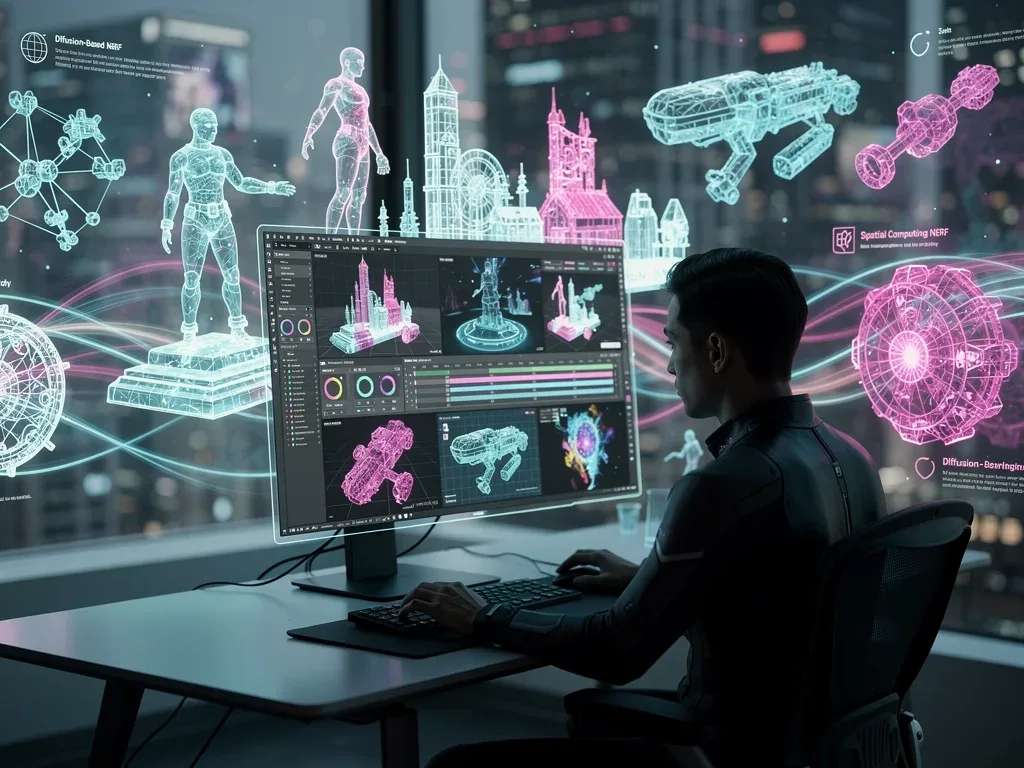
Diffusion-Based Neural Radiance Fields (NeRFs) are dramatically accelerating 3D spatial computing asset generation, achieving a 70% reduction in production times by leveraging advanced AI for realistic and efficient 3D model creation.
The digital frontier is rapidly expanding, and at its heart lies the ever-growing demand for immersive 3D content. Suddenly, a groundbreaking innovation, Diffusion-Based Neural Radiance Fields: Slashing 3D Spatial Computing Asset Generation Times by 70%, is poised to reshape how we create and interact with virtual worlds.
Understanding the Core: What are Neural Radiance Fields?
Neural Radiance Fields, commonly known as NeRFs, represent a paradigm shift in 3D scene representation. Unlike traditional methods that rely on meshes or point clouds, NeRFs use neural networks to learn an implicit representation of a 3D scene from a collection of 2D images. Essentially, a NeRF can synthesize novel views of a complex scene with unprecedented photorealism, effectively 'filling in the gaps' where no direct photographic data exists.
This technology has been a game-changer for rendering realistic environments, allowing for free-viewpoint navigation within captured scenes. The core idea involves training a small neural network to map a 3D coordinate and viewing direction to an emitted color and volume density. When queried from various angles, this network reconstructs the light field, producing stunningly lifelike images.
The Mechanics of NeRF
At its heart, a NeRF operates on a simple yet powerful principle: given a set of input images and their corresponding camera poses, it learns to predict the color and opacity of any point in 3D space when viewed from any angle. This implicit representation avoids the explicit geometry of traditional 3D models, offering a more flexible and often more realistic output.
- Input Data: A series of 2D images captured from different viewpoints around a scene or object.
- Neural Network: A multi-layer perceptron (MLP) trained to output color and density for given 3D coordinates and viewing directions.
- Volume Rendering: A technique used to synthesize new views by sampling points along camera rays and integrating their predicted colors and densities.
The initial challenge with NeRFs, however, often lay in the computational intensity and time required for training, especially for complex scenes or when seeking rapid iteration. This bottleneck limited their widespread adoption in fast-paced production environments, particularly for generating assets at scale.
In conclusion, NeRFs have established a new benchmark for photorealistic 3D scene reconstruction. Their ability to synthesize novel views from sparse input data provides a powerful tool for digital artists and developers. However, the inherent computational demands of traditional NeRF training set the stage for subsequent advancements aimed at enhancing efficiency.
The Dawn of Diffusion: How Diffusion Models Enhance NeRFs
The integration of diffusion models with Neural Radiance Fields marks a significant leap forward. Diffusion models, known for their exceptional generative capabilities in 2D image synthesis, are now being harnessed to accelerate and improve the creation of 3D assets. This synergy addresses some of the primary limitations of conventional NeRFs, particularly concerning generation speed and data requirements.
Diffusion models function by learning to reverse a diffusion process, gradually denoising random noise to produce coherent data, such as images. When applied to NeRFs, this means the diffusion model can guide the NeRF's learning process, or even directly generate NeRF representations, with remarkable efficiency. This approach drastically reduces the iterative refinement cycles typically associated with 3D asset creation.
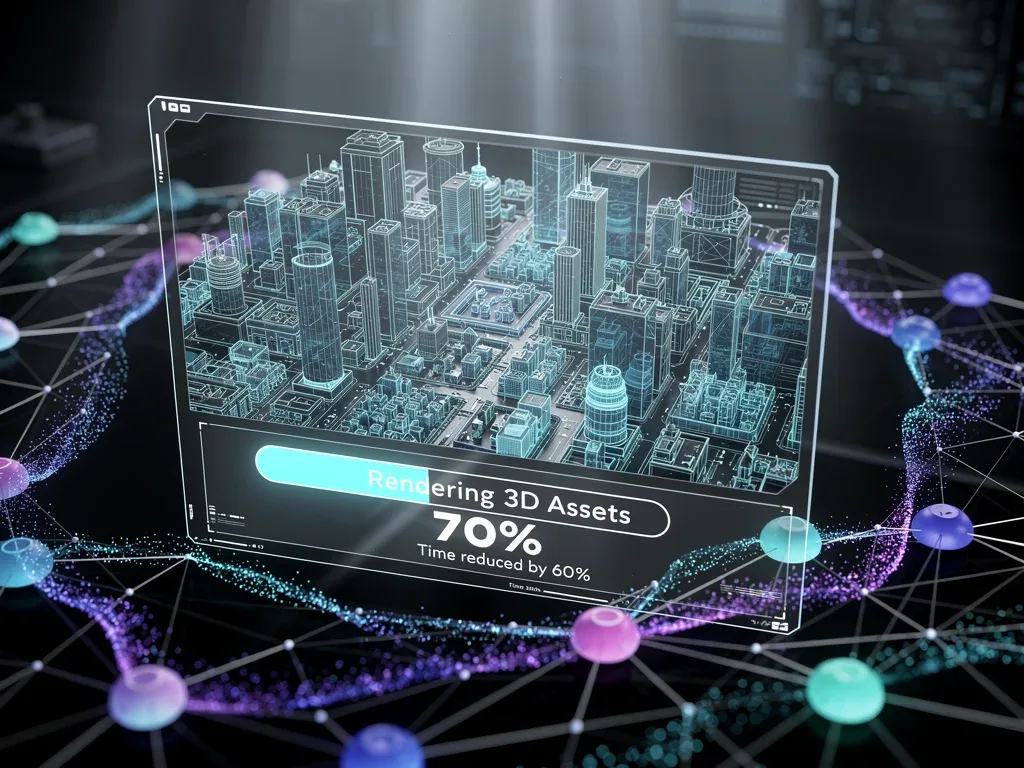

Bridging the Gap: Diffusion Meets 3D
The key innovation lies in using the generative power of diffusion models to either directly infer 3D properties or to significantly accelerate the training of NeRFs. Instead of starting from scratch with every 3D object or scene, diffusion models can leverage vast amounts of pre-existing 2D and 3D data to quickly propose plausible 3D structures and textures.
- Faster Training: Diffusion models can pre-train on large datasets, allowing for quicker convergence when fine-tuning for specific NeRF instances.
- Reduced Data Needs: With the generative priors from diffusion models, fewer input images are often required to achieve high-quality NeRF reconstructions.
- Enhanced Detail: Diffusion models can infer intricate details and textures, resulting in more realistic and visually rich 3D assets.
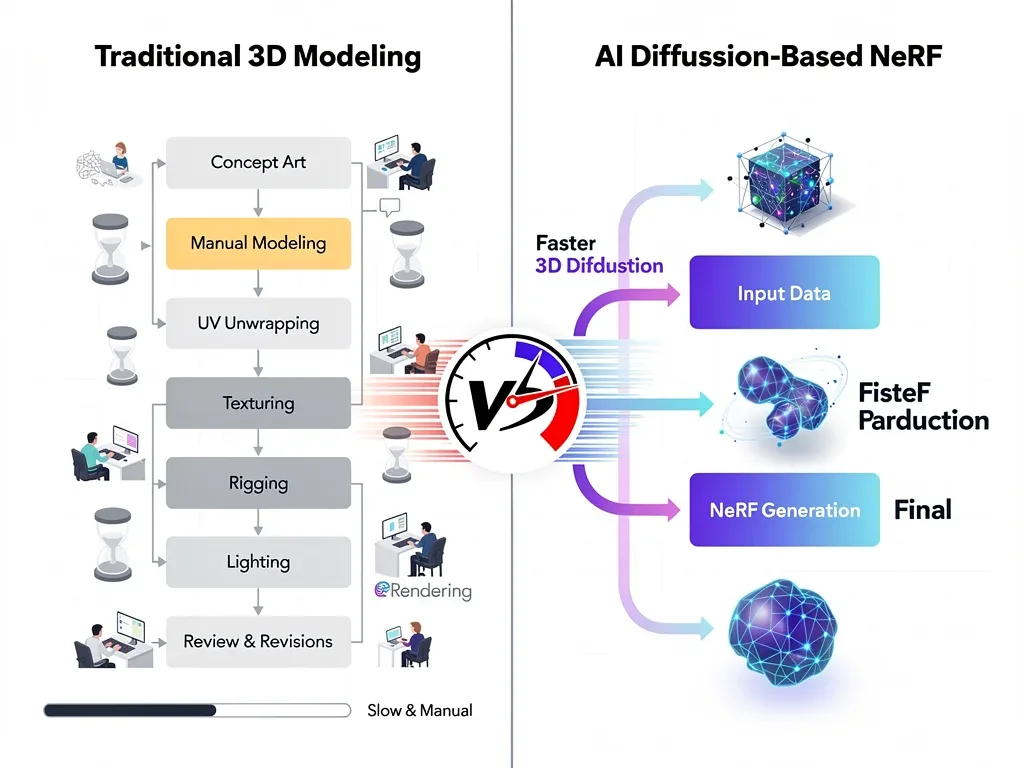
This fusion allows for the creation of high-fidelity 3D assets from minimal inputs, or even from text prompts, paving the way for truly democratized 3D content generation. The traditional painstaking process of manual modeling and texturing is largely bypassed, offering an unprecedented level of automation.
In summary, the integration of diffusion models with NeRFs represents a pivotal advancement. It tackles the efficiency challenges of traditional NeRFs by injecting powerful generative capabilities, leading to faster, more data-efficient, and higher-quality 3D asset production for spatial computing.
The 70% Advantage: Quantifying the Time Savings
The claim of "slashing 3D spatial computing asset generation times by 70%" is not hyperbole; it reflects a tangible and transformative impact on production workflows. This significant reduction stems from several factors inherent in the diffusion-based NeRF approach, fundamentally altering the economics and timelines of 3D content creation.
Historically, generating a high-quality 3D asset involved a multi-stage process: conceptualization, modeling, sculpting, texturing, rigging, and rendering. Each stage could be time-consuming, requiring specialized software and skilled artists. Iteration cycles were long, and modifications often meant significant rework. Diffusion-based NeRFs streamline this by automating much of the initial modeling and texturing, generating a robust 3D representation from minimal input.
Breakdown of Time Savings
The 70% reduction is often observed across various phases of the 3D asset pipeline:
- Modeling & Sculpting: Traditional methods require hours, if not days, for complex objects. Diffusion NeRFs can generate initial geometries and forms almost instantly from a few images or even text descriptions.
- Texturing & Material Creation: Manually painting textures and defining material properties is labor-intensive. Diffusion models can infer realistic textures and material attributes, drastically cutting down this stage.
- Iteration & Refinement: The ability to quickly generate multiple variations and make rapid adjustments means feedback loops are shortened from days to hours, or even minutes.
- Data Acquisition: Fewer input images are needed for high-quality results, reducing the time and effort spent on capturing extensive photographic datasets.
Consider a scenario where a studio needs to generate hundreds of unique props for a virtual environment. With traditional methods, this would be a monumental task, potentially taking months. With diffusion-based NeRFs, the same volume of assets could be produced in a fraction of the time, freeing up artists to focus on more creative and complex tasks.
In essence, the 70% time reduction is a cumulative effect of automation, data efficiency, and accelerated iteration across the entire 3D asset generation pipeline. This efficiency gain is not just a marginal improvement; it's a revolutionary shift, making previously unfeasible projects now attainable within realistic timelines and budgets.
Applications in Spatial Computing and Beyond
The implications of this accelerated 3D asset generation extend far beyond mere efficiency; they unlock new possibilities across a multitude of industries, particularly within spatial computing. Spatial computing, encompassing augmented reality (AR), virtual reality (VR), and mixed reality (MR), thrives on rich, interactive 3D content. Faster asset generation is the catalyst for its next evolutionary stage.
Imagine designers being able to rapidly prototype entire virtual environments, or game developers populating vast digital worlds with unique objects almost on demand. The bottleneck of content creation, long a limiting factor for immersive experiences, is now being significantly alleviated. This speed allows for more experimentation, greater detail, and ultimately, richer user experiences.
Key Application Areas
- Virtual and Augmented Reality (VR/AR): Rapidly generate realistic objects, environments, and even digital avatars for immersive experiences. This enables faster development cycles for games, training simulations, and virtual tours.
- E-commerce & Product Visualization: Create high-fidelity 3D models of products for online stores, allowing customers to view items from all angles or even place them virtually in their own homes via AR.
- Film & Television Production: Generate digital doubles, set extensions, or intricate props with unprecedented speed, reducing reliance on costly and time-consuming traditional CGI methods.
- Architecture & Real Estate: Quickly model buildings, interiors, and urban landscapes for visualization, planning, and virtual walkthroughs, making design iterations much faster.
- Gaming Industry: Populate open-world games with diverse and detailed assets, significantly cutting down development time and costs for environmental artists.
Beyond these immediate applications, the technology promises to democratize 3D content creation, empowering individuals and small studios to produce high-quality assets without extensive resources or specialized training. This opens the door for a new wave of creators to innovate within spatial computing and other digital domains.
Ultimately, the ability to generate 3D spatial computing assets with such speed and fidelity is not just an incremental improvement; it's a foundational shift that will accelerate innovation across creative industries, making immersive digital experiences more accessible and dynamic than ever before.
Challenges and Future Directions for Diffusion NeRFs
While the advancements in Diffusion-Based Neural Radiance Fields: Slashing 3D Spatial Computing Asset Generation Times by 70% are undeniably impressive, the technology is still in its nascent stages and faces several challenges that researchers are actively addressing. Overcoming these hurdles will be crucial for its widespread adoption and continued evolution.
One significant challenge lies in the computational resources still required for training and inference, especially for highly complex scenes. Although significantly faster than traditional NeRFs, generating high-resolution, photorealistic assets still demands substantial GPU power. Another area for improvement is the ability to generate dynamic or deformable objects, as most current NeRF implementations excel with static scenes.

Overcoming Limitations
Researchers are exploring various avenues to enhance the capabilities and efficiency of diffusion-based NeRFs:
- Real-time Generation: Developing methods for near real-time 3D asset generation, crucial for interactive applications and live content creation.
- Controllability and Editing: Improving user control over generated assets, allowing for easier editing and customization of textures, shapes, and lighting.
- Generalization: Enhancing the models' ability to generalize to novel objects and scenes with even fewer input images, or solely from text descriptions.
- Dynamic Scenes: Extending NeRFs to effectively represent and animate dynamic objects and scenes, opening up possibilities for character animation and fluid simulations.
- Reduced Hardware Requirements: Optimizing algorithms and model architectures to run efficiently on more accessible hardware, democratizing the technology.
The future of diffusion-based NeRFs is bright, with ongoing research pushing the boundaries of what's possible. We can anticipate even greater speed, fidelity, and versatility, making them an indispensable tool in the evolving landscape of 3D content creation and spatial computing.
In conclusion, while current diffusion-based NeRFs deliver remarkable efficiency, challenges in computational demand, dynamic scene handling, and user control remain. Future research is focused on addressing these, promising even more powerful and accessible 3D generation tools for diverse applications.
Integrating Diffusion NeRFs into Existing Workflows
The true potential of Diffusion-Based Neural Radiance Fields: Slashing 3D Spatial Computing Asset Generation Times by 70% will be realized through seamless integration into existing 3D production pipelines. For many studios and individual creators, adopting new technologies can be daunting due to compatibility issues, learning curves, and workflow disruptions. However, the benefits offered by Diffusion NeRFs are compelling enough to warrant careful consideration and strategic implementation.
Integration typically involves developing robust tools and plugins that allow artists and developers to leverage NeRF-generated assets within their preferred 3D software (e.g., Blender, Maya, Unity, Unreal Engine). This might mean converting NeRF output into traditional mesh and texture formats, or developing new rendering pipelines that can directly consume NeRF representations.
Strategies for Adoption
- Standardized Output Formats: Developing universal formats that allow NeRFs to be easily exported and imported into various 3D applications.
- Plugin Development: Creating dedicated plugins for popular 3D software that simplify the process of generating, manipulating, and rendering NeRF-based assets.
- Training and Education: Providing resources and training for artists and developers to understand and effectively utilize this new technology.
- Hybrid Workflows: Combining the strengths of Diffusion NeRFs (rapid generation) with traditional methods (fine-grain control for specific details) to optimize production.
Companies are already investing in R&D to bridge the gap between NeRF technology and conventional 3D tools. This includes developing user-friendly interfaces and automated conversion tools that minimize the technical overhead for artists. The goal is to make the process as intuitive as possible, allowing creators to focus on artistic vision rather than technical complexities.
Ultimately, successful integration will transform Diffusion NeRFs from a novel research concept into an indispensable tool in the creative arsenal. By making these powerful generative capabilities accessible within established workflows, the industry can fully capitalize on the promised 70% time savings and usher in a new era of 3D content abundance.
The Economic Impact: More Content, Faster Innovation
The economic ramifications of Diffusion-Based Neural Radiance Fields: Slashing 3D Spatial Computing Asset Generation Times by 70% are profound and far-reaching. By dramatically reducing the time and cost associated with 3D asset creation, this technology is set to catalyze innovation, lower barriers to entry, and fundamentally reshape market dynamics across multiple industries.
The ability to generate high-quality 3D content at an accelerated pace means that more projects can be undertaken, more ideas can be prototyped, and more immersive experiences can be brought to market. This increased output will not only boost productivity for established players but also empower smaller studios and independent creators to compete more effectively.
Driving Economic Growth
- Reduced Production Costs: Significant cost savings from decreased labor hours and reduced reliance on extensive manual modeling.
- Accelerated Time-to-Market: Faster content creation means products, games, and experiences can reach consumers more quickly, gaining a competitive edge.
- New Business Models: Enables on-demand 3D asset generation services, personalized content at scale, and rapid prototyping for various sectors.
- Increased Innovation: With fewer resource constraints, creators can experiment more, leading to novel applications and breakthroughs in spatial computing and digital media.
- Job Transformation: While some tasks may be automated, new roles will emerge in AI supervision, prompt engineering for 3D generation, and high-level creative direction.
Consider the potential for virtual tourism, where entire cities or historical sites could be digitally reconstructed and updated with unprecedented speed. Or the impact on personalized gaming, where environments and objects could be dynamically generated based on player preferences. These are just a few examples of how economic value can be created through abundant and rapidly generated 3D content.
In conclusion, the economic impact of diffusion-based NeRFs is poised to be transformative. By drastically cutting asset generation times, the technology will drive down costs, accelerate innovation, open new market opportunities, and ultimately lead to a richer, more dynamic digital economy fueled by an abundance of high-quality 3D content.
| Key Aspect | Brief Description |
|---|---|
| NeRF Technology | Implicit 3D scene representation using neural networks for photorealistic novel view synthesis. |
| Diffusion Integration | Generative diffusion models accelerate NeRF training and enhance detail, reducing data needs. |
| 70% Time Reduction | Achieved by automating modeling, texturing, and shortening iteration cycles in 3D asset creation. |
| Broad Applications | Revolutionizes VR/AR, e-commerce, film, gaming, and architecture with rapid content generation. |
Frequently Asked Questions About Diffusion NeRFs
What exactly is a Diffusion-Based Neural Radiance Field (NeRF)?▼A Diffusion-Based NeRF is an advanced AI model that combines Neural Radiance Fields with generative diffusion models. This synergy allows for the rapid and highly realistic creation of 3D scenes and objects from 2D images or even text prompts, significantly reducing the time and computational resources traditionally required for 3D asset generation.
How do Diffusion NeRFs achieve a 70% reduction in asset generation time?▼The 70% time reduction comes from automating labor-intensive stages like 3D modeling, sculpting, and texturing. Diffusion models provide strong generative priors, meaning the NeRF can learn and reconstruct complex scenes with fewer iterations and less initial data, drastically shortening development cycles and accelerating content production.
What are the primary applications of this technology in spatial computing?▼Diffusion NeRFs are revolutionizing spatial computing applications such as virtual reality (VR), augmented reality (AR), and mixed reality (MR). They enable faster creation of immersive environments, realistic digital twins, interactive product visualizations for e-commerce, and rapid prototyping for architectural and gaming industries.
Are there any limitations or challenges with current Diffusion NeRF technology?▼Yes, current challenges include the significant computational resources still needed for high-resolution output, limitations in generating dynamic or deformable objects, and the need for improved user control over the generated assets. Researchers are actively working on optimizing these aspects for broader adoption.
How will Diffusion NeRFs impact the future of digital content creation?▼'>Diffusion NeRFs are set to democratize 3D content creation, making it more accessible to a wider range of creators. They will drive innovation by enabling faster iteration, reducing production costs, and facilitating the creation of richer, more diverse digital experiences across all media, from entertainment to professional applications.
Conclusion
The advent of Diffusion-Based Neural Radiance Fields: Slashing 3D Spatial Computing Asset Generation Times by 70% represents a monumental leap forward in the realm of digital content creation. This powerful fusion of implicit 3D scene representation and generative AI is not merely an incremental improvement but a transformative force, poised to redefine how we conceive, produce, and interact with virtual worlds. By dramatically reducing the time and resources required to generate high-fidelity 3D assets, Diffusion NeRFs are unlocking unprecedented levels of efficiency, creativity, and economic potential across industries like spatial computing, e-commerce, gaming, and entertainment. While challenges remain in areas such as computational demand and dynamic content generation, the ongoing research and rapid advancements promise an exciting future where immersive, realistic 3D experiences are more accessible and abundant than ever before. This technology is not just a trend; it's a foundational shift that will accelerate the next wave of digital innovation.
