Why 68% of Mid-Market Companies Are Restructuring Hybrid Work Policies for ROI
Advertisements

Sixty-eight percent of mid-market companies are strategically restructuring their hybrid work policies to maximize commercial real estate ROI by optimizing space utilization and aligning physical assets with evolving workforce needs.
The landscape of work has irrevocably changed, and with it, the traditional role of the office. A significant trend emerging from this evolution is that 68% of mid-market companies are restructuring hybrid work policies to maximize commercial real estate ROI. This isn't merely a reaction to recent events; it's a proactive strategic shift aimed at optimizing one of a company's largest expenditures: its physical footprint. Understanding this phenomenon is crucial for businesses navigating the complexities of modern work environments.
The evolving definition of the office space
The traditional office, once a central hub for all work activities, is undergoing a profound transformation. Companies are no longer viewing their physical spaces as mere cubicle farms but as dynamic environments designed to foster collaboration, innovation, and company culture in a hybrid model.
This redefinition is driven by several factors, including employee preferences for flexibility and the increasing realization that not all work requires a dedicated desk. The focus has shifted from maximizing individual occupancy to optimizing shared resources and creating spaces that genuinely support a distributed workforce.
From fixed desks to flexible hubs
Many mid-market companies are moving away from assigned seating models. Instead, they are implementing 'hot-desking' or 'hoteling' systems, where employees reserve space only when needed. This approach allows for a smaller overall footprint while still providing adequate resources for those who choose to come into the office.
- Reduced square footage per employee.
- Increased variety of workspaces (e.g., quiet zones, collaborative areas).
- Enhanced flexibility for staff scheduling.
The goal is to create a more agile and responsive office environment that can adapt to fluctuating attendance and diverse work styles. This flexibility is key to attracting and retaining talent in a competitive market.
Designing for collaboration and culture
With routine individual tasks often performed remotely, the office's primary purpose is increasingly becoming a place for team-building, brainstorming, and critical face-to-face interactions. This means a greater emphasis on communal areas, meeting rooms equipped with advanced technology, and social spaces.
The physical office is becoming a strategic asset for reinforcing company values and fostering a sense of belonging. Companies are investing in design elements that encourage spontaneous interactions and creative problem-solving, making the office a destination rather than an obligation.
Ultimately, the evolving definition of the office space reflects a deeper understanding of how work gets done today. It's about creating environments that are intentional, flexible, and supportive of a hybrid workforce, thereby maximizing the return on investment in commercial real estate.
Financial imperatives driving policy changes
At the core of these widespread policy restructurings is a clear financial imperative. Commercial real estate often represents one of the largest fixed costs for a business, second only to personnel. In a fluctuating economic climate, optimizing these expenditures becomes paramount for mid-market companies looking to maintain competitiveness and profitability.
The shift to hybrid work has unveiled significant opportunities for cost reduction and resource reallocation. Companies are scrutinizing every square foot of their leased or owned properties, asking how each space contributes to their strategic objectives and bottom line.
Reducing operational overheads
A smaller or more efficiently utilized office space directly translates into lower operational costs. This includes not just rent or mortgage payments, but also utilities, maintenance, cleaning, and security expenses. By right-sizing their real estate portfolios, companies can unlock substantial savings.
- Lower utility bills due to reduced energy consumption.
- Decreased maintenance and cleaning costs for smaller areas.
- Potential for renegotiating leases for smaller or more flexible terms.
These savings can then be reinvested into other critical areas of the business, such as technology upgrades, employee development, or research and development, fostering growth and innovation.
Optimizing capital expenditure
Beyond operational costs, companies are also looking at their capital expenditure on office fit-outs and renovations. Instead of investing heavily in fixed infrastructure for every employee, the focus is shifting towards creating versatile, technology-rich spaces that can serve multiple purposes.
This means investing in modular furniture, advanced video conferencing systems, and robust IT infrastructure that supports seamless transitions between remote and in-office work. Such investments are designed to have a longer shelf life and greater adaptability, providing a better long-term ROI.
The financial imperatives are clear: hybrid work policies offer a tangible pathway to significantly reduce real estate costs and reallocate capital more strategically. This optimization is not just about cutting expenses; it's about making every dollar spent on commercial real estate work harder for the business.
Leveraging technology for hybrid efficiency
Technology serves as the backbone for any successful hybrid work model, enabling seamless communication, collaboration, and space management. Mid-market companies are increasingly investing in sophisticated tools and platforms to ensure their hybrid policies translate into tangible real estate ROI.
Without the right technological infrastructure, the benefits of a hybrid approach—such as reduced office footprint and increased employee flexibility—would be difficult to realize. Technology bridges the gap between physical and virtual workspaces, making both equally productive.
Smart space management solutions
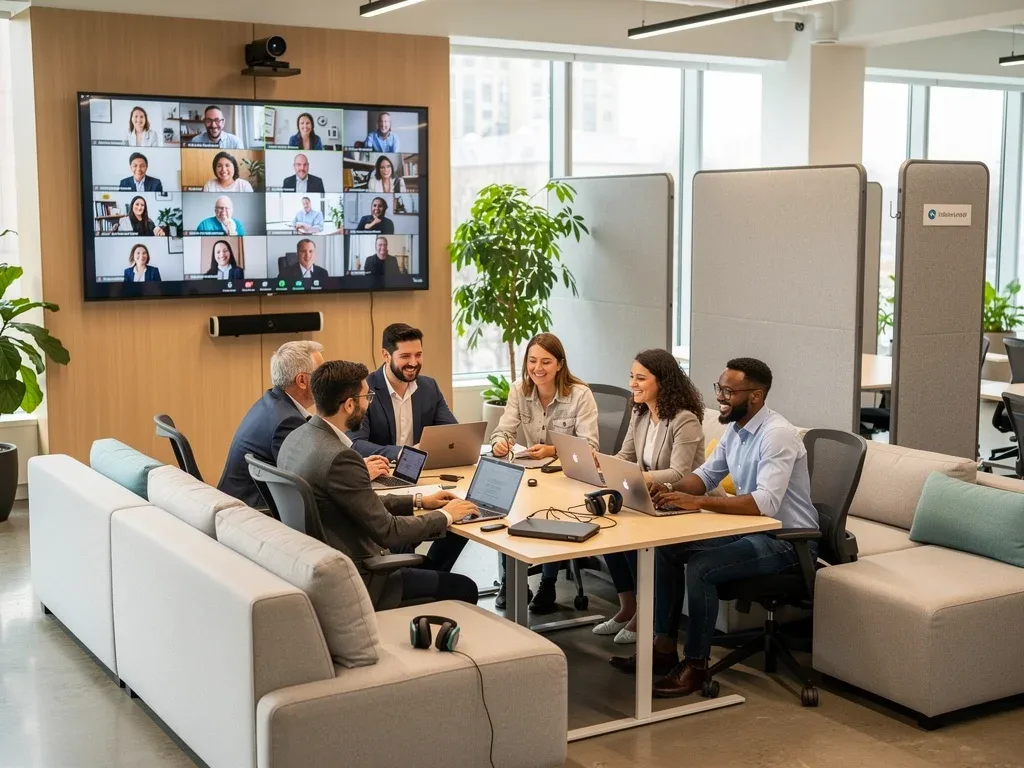
One of the most significant technological advancements for hybrid work is the emergence of smart space management platforms. These systems allow employees to book desks, meeting rooms, and other office resources in advance, providing real-time data on space utilization.
- Desk and room booking applications.
- Occupancy sensors for real-time data.
- Analytics dashboards for space utilization insights.
By understanding exactly how and when their office space is being used, companies can make informed decisions about their real estate needs, potentially reducing excess capacity and optimizing layouts for maximum efficiency.
Enhanced virtual collaboration tools
Beyond physical space management, robust virtual collaboration tools are essential for maintaining productivity and connection among a distributed workforce. These tools ensure that remote employees feel just as engaged and productive as in-office counterparts.
Investment in high-quality video conferencing, project management software, and instant messaging platforms is crucial. These technologies facilitate effective communication, document sharing, and team coordination, regardless of physical location.
Leveraging technology effectively allows mid-market companies to create a cohesive and productive hybrid environment. It ensures that the physical office, when used, is optimized for its purpose, and that remote work remains efficient, ultimately contributing to a better return on commercial real estate investments.
Employee preferences and talent retention
The shift towards hybrid work is not solely driven by financial considerations; it's also a direct response to evolving employee expectations. A significant majority of the workforce now values flexibility, and companies that fail to offer it risk losing top talent to competitors.
Mid-market companies recognize that a positive employee experience, including the flexibility offered by hybrid work, is a powerful tool for talent acquisition and retention. This directly impacts long-term business success and indirectly influences the value derived from commercial real estate.
Meeting the demand for flexibility
Surveys consistently show that employees prefer hybrid work models, valuing the ability to balance professional and personal commitments. Companies that offer this flexibility are seen as more progressive and employee-centric.
By accommodating these preferences, businesses can tap into a wider talent pool, including individuals who may not be able to commute daily or who thrive in a more autonomous work setting. This expands recruitment possibilities beyond geographical limitations.
Boosting employee satisfaction and productivity
When employees have greater control over their work environment, they often report higher job satisfaction and increased productivity. Hybrid work can reduce commute times, leading to less stress and more time for personal pursuits, which in turn can lead to a more engaged and motivated workforce.
- Improved work-life balance for employees.
- Reduced stress and burnout.
- Higher engagement and motivation.
This enhanced satisfaction and productivity contribute to lower turnover rates and higher quality output, further justifying the investment in hybrid work infrastructure and the corresponding adjustments to real estate strategies.
Ultimately, aligning real estate strategies with employee preferences is a win-win. It allows companies to optimize their physical assets while simultaneously creating a work environment that attracts and retains the best talent, reinforcing a strong employer brand.
Challenges and strategic considerations
While the benefits of restructuring hybrid work policies for real estate ROI are clear, the process is not without its challenges. Mid-market companies must navigate a complex landscape of operational, cultural, and logistical hurdles to successfully implement these changes.
Strategic planning is paramount to avoid common pitfalls that could undermine the intended benefits. This involves careful consideration of company culture, technology infrastructure, and employee engagement strategies to ensure a smooth transition and sustainable success.
Maintaining company culture and cohesion
One of the primary concerns for companies adopting hybrid models is how to preserve and foster a strong company culture when employees are not always physically together. It requires intentional effort to create opportunities for connection and shared experiences.
- Organizing regular in-person team events.
- Investing in virtual team-building activities.
- Clear communication of company values and goals.
Leaders must actively work to ensure that remote employees feel included and connected, preventing the formation of 'us vs. them' dynamics between in-office and remote staff. This cultural integration is vital for long-term success.
Ensuring equitable experiences for all employees
Another significant challenge is ensuring that all employees, regardless of their work location, have equitable access to resources, opportunities, and career advancement. This includes access to technology, mentorship, and visibility within the organization.
Companies need to establish clear guidelines and practices that promote fairness and inclusivity in a hybrid environment. This might involve standardizing equipment for remote workers, implementing hybrid meeting protocols that prioritize virtual participants, and ensuring performance reviews are unbiased by physical presence.
Addressing these challenges proactively through thoughtful strategy and continuous adaptation is crucial for mid-market companies. Successfully overcoming these hurdles ensures that the restructuring of hybrid work policies not only maximizes real estate ROI but also strengthens the organization as a whole.
Measuring success: metrics and continuous adaptation
Restructuring hybrid work policies to maximize commercial real estate ROI is an ongoing process that requires continuous measurement and adaptation. Mid-market companies are establishing clear metrics to evaluate the effectiveness of their new strategies and make data-driven adjustments.
Simply implementing a hybrid model is not enough; businesses must actively track its impact on both financial performance and employee experience. This iterative approach ensures that policies remain relevant and optimized for evolving business needs and market conditions.
Key performance indicators for real estate ROI
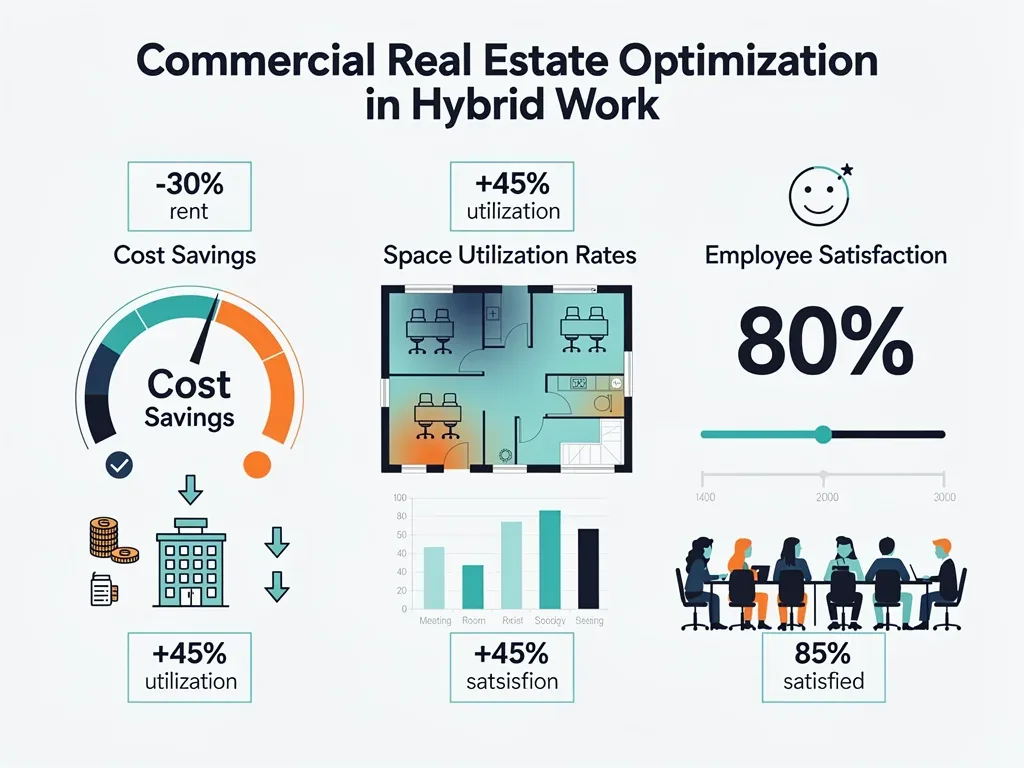
Companies are focusing on a range of KPIs to assess the financial return on their commercial real estate. These metrics provide tangible evidence of whether the hybrid strategy is achieving its cost-saving and efficiency goals.
- Space utilization rates: Tracking actual usage of desks and meeting rooms.
- Cost per square foot: Comparing current costs with previous traditional models.
- Energy consumption: Monitoring reductions in utility expenses.
- Lease renegotiation savings: Quantifying financial benefits from smaller or more flexible leases.
These metrics offer a clear picture of the financial impact and guide further adjustments to real estate portfolios.
Employee satisfaction and productivity metrics
Beyond financial figures, the success of hybrid work is also heavily dependent on employee well-being and productivity. Companies are using surveys, feedback sessions, and performance data to gauge the human impact of their policies.
Regular pulse surveys can assess satisfaction with hybrid arrangements, while performance reviews and project completion rates can indicate productivity levels. Monitoring absenteeism and turnover rates can also provide insights into overall employee morale and engagement.
The ability to continuously measure, analyze, and adapt is fundamental to maximizing the long-term ROI from hybrid work policies and commercial real estate. This data-driven approach ensures that mid-market companies remain agile and responsive to the dynamic nature of modern work.
The future outlook for hybrid work and real estate
The trends observed today suggest that hybrid work is not a temporary phase but a permanent fixture in the corporate world. For mid-market companies, this means a sustained focus on integrating hybrid models deeply into their operational and real estate strategies.
The future outlook points towards even greater innovation in workspace design, technology integration, and flexible working arrangements, all aimed at optimizing commercial real estate while fostering a productive and engaged workforce.
Continued evolution of workspace design
Expect to see further evolution in office design, moving even further away from traditional layouts. Future offices will likely be more modular, adaptable, and focused on specific functions like collaboration, innovation, or client engagement.
There will be an increased emphasis on biophilic design, wellness amenities, and smart building technologies that enhance the employee experience while optimizing energy consumption and space utilization. The office will become a highly curated environment.
Increased adoption of flexible lease terms
Landlords and commercial real estate providers are responding to these shifts by offering more flexible lease options. Mid-market companies will increasingly seek shorter lease terms, co-working space solutions, and 'space-as-a-service' models to maintain agility and reduce long-term commitments.
This flexibility in leasing will allow companies to scale their physical footprint up or down more easily in response to changing business needs, further maximizing their real estate ROI by avoiding unnecessary fixed costs.
The future of hybrid work and commercial real estate is dynamic and exciting. Mid-market companies that proactively embrace these changes, continuously adapt their policies, and leverage technology will be best positioned to thrive in this evolving landscape, ensuring their real estate investments yield maximum returns.
| Key Aspect | Impact on Real Estate ROI |
|---|---|
| Policy Restructuring | Directly optimizes space utilization, leading to reduced operational costs. |
| Technology Integration | Enables efficient space management and seamless hybrid collaboration, enhancing value. |
| Employee Preferences | Attracts and retains talent, increasing long-term productivity and justifying real estate investments. |
| Continuous Adaptation | Ensures ongoing optimization of space and resources based on data, maximizing sustained ROI. |
Frequently Asked Questions About Hybrid Work and Real Estate ROI
Why are mid-market companies prioritizing real estate ROI in hybrid models?▼Mid-market companies are prioritizing real estate ROI to reduce significant operational costs associated with physical spaces. Optimizing these expenditures allows them to reallocate resources more effectively, fostering growth and innovation while adapting to new work paradigms and employee demands for flexibility.
How does hybrid work affect office space utilization?▼Hybrid work often leads to lower daily office occupancy, prompting companies to shift from fixed desks to flexible hot-desking or hoteling models. This allows for a smaller overall office footprint, better utilization of shared resources, and a greater emphasis on collaborative and social spaces rather than individual workstations.
What role does technology play in maximizing real estate ROI for hybrid companies?▼Technology is crucial for maximizing real estate ROI by enabling smart space management solutions, like booking systems and occupancy sensors. It also facilitates seamless virtual collaboration, ensuring productivity for remote workers and optimizing the use of physical office resources when employees are on-site.
What are the main challenges when restructuring hybrid work policies?▼Key challenges include maintaining a strong company culture, ensuring equitable experiences for all employees regardless of location, and managing logistical complexities. Companies must actively foster connection, standardize access to resources, and establish fair practices to prevent disparities and maintain cohesion.
How can companies measure the success of their hybrid real estate strategies?▼Success can be measured through key performance indicators such as space utilization rates, cost per square foot, energy consumption reductions, and lease renegotiation savings. Additionally, employee satisfaction, productivity metrics, and retention rates provide crucial insights into the human impact and overall effectiveness of the strategies.
Conclusion
The substantial percentage of mid-market companies actively restructuring their hybrid work policies underscores a fundamental shift in how businesses perceive and utilize commercial real estate. This strategic evolution is driven by a confluence of financial imperatives, technological advancements, and a deep understanding of evolving employee expectations. By meticulously optimizing office spaces, leveraging smart technologies, and prioritizing employee well-being, these companies are not merely adapting to a new normal; they are proactively shaping a more efficient, flexible, and sustainable future for their operations. The journey towards maximizing commercial real estate ROI in a hybrid world is continuous, demanding ongoing evaluation and agile adaptation, but the benefits in cost savings, talent retention, and enhanced productivity are unequivocally clear.
