M&A Integration Roadmap: Preserving 85% Customer Equity
Advertisements

Private equity-backed businesses can effectively preserve an impressive 85% of customer equity in post-merger phases by implementing a meticulously planned and executed M&A integration roadmap focused on strategic communication, operational alignment, and value proposition clarity.
Navigating the complexities of mergers and acquisitions (M&A) can be a daunting task, especially for private equity-backed businesses where value creation and rapid scaling are paramount. A well-defined M&A integration roadmap is not just a luxury but a critical necessity to ensure a smooth transition and, more importantly, to preserve the invaluable asset of customer equity. This article delves into how businesses can strategically approach integration to retain a significant 85% of their customer base post-merger.
Understanding Customer Equity in M&A Context
Customer equity represents the total lifetime value of all customers, both current and potential, to a business. In the context of M&A, it's a crucial metric that often determines the true success of an acquisition. Losing customers post-merger can significantly erode the anticipated value, turning a promising deal into a costly endeavor.
Private equity firms, with their focus on maximizing returns within a defined investment horizon, understand that preserving customer equity is not merely about preventing churn; it's about safeguarding future revenue streams, market share, and brand reputation. The challenge lies in harmonizing two distinct entities without alienating the very people who drive their success: the customers.
The True Cost of Customer Churn
- Revenue Loss: Direct impact on sales and profitability.
- Reputation Damage: Negative word-of-mouth can deter new customers.
- Integration Delays: Churn can force resource reallocation, slowing down other integration efforts.
- Reduced Valuation: Lower customer numbers can negatively affect future exit multiples.
Therefore, a proactive approach to understanding and mitigating customer attrition risks from the outset of the integration process is essential. This involves deep dives into customer data, understanding their needs, and anticipating their reactions to the merger.
Phase 1: Pre-Integration Planning and Due Diligence
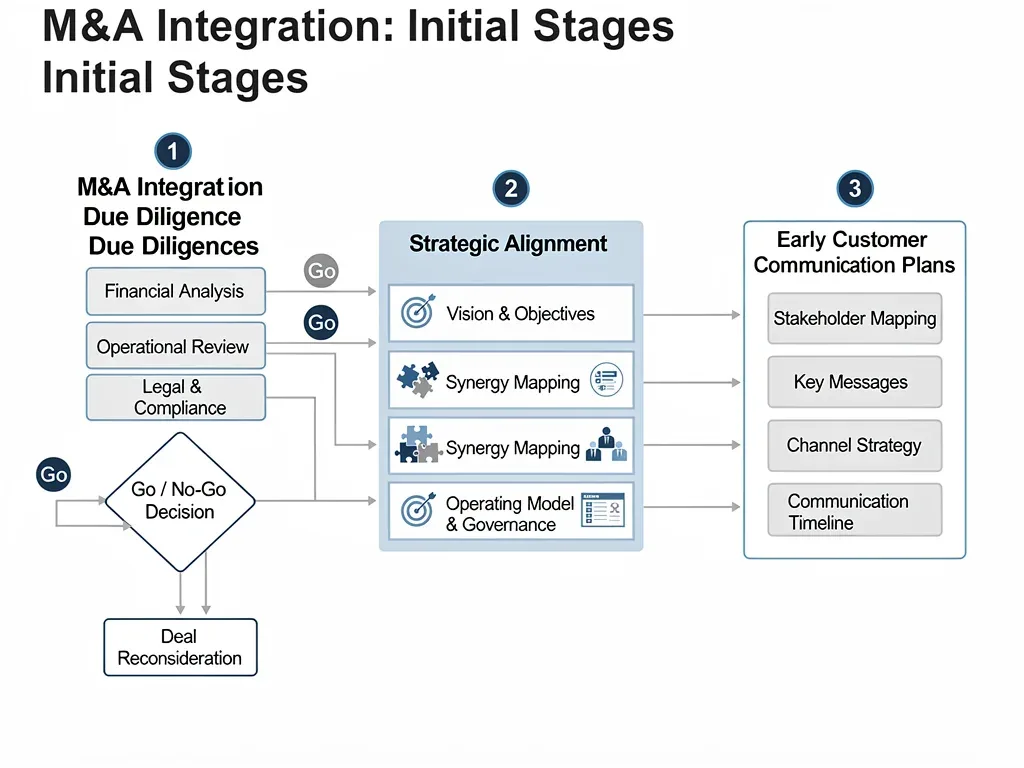
The foundation for successful customer equity preservation is laid long before the deal closes. Comprehensive pre-integration planning and due diligence are critical, extending beyond financial and legal assessments to include a detailed analysis of customer bases, value propositions, and potential integration challenges.
For private equity-backed businesses, this phase involves identifying key customer segments, understanding their loyalty drivers, and assessing potential overlaps or conflicts between the acquiring and target companies. It's about mapping out the customer journey for both entities and identifying points of friction that might arise during integration.
Strategic Customer Due Diligence
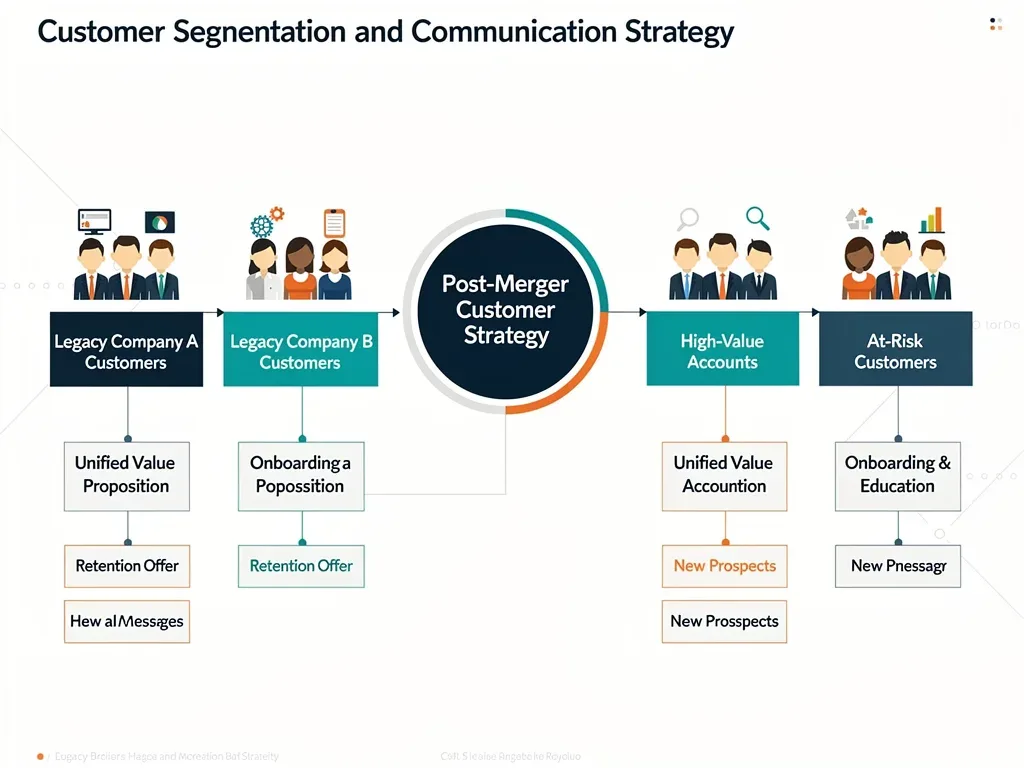
- Customer Segmentation Analysis: Identify high-value customers and their specific needs.
- Retention Risk Assessment: Pinpoint customers most likely to churn due to the merger.
- Value Proposition Alignment: Understand how existing value propositions will be maintained or enhanced.
- Communication Strategy Development: Plan initial messaging to address customer concerns proactively.
This early focus allows for the development of tailored retention strategies, ensuring that communication is clear, consistent, and reassuring. It's about building trust from day one, even before official announcements are made, by understanding what matters most to the customers involved.
Phase 2: Immediate Post-Merger Communication and Stabilization
The period immediately following the merger announcement is critical for customer retention. Uncertainty breeds anxiety, and anxious customers are prone to seeking alternatives. A robust communication plan is paramount to stabilize the customer base and reinforce confidence in the combined entity.
Private equity firms often emphasize speed in integration, but this should not come at the expense of clear, empathetic customer communication. The goal is to articulate the benefits of the merger for customers, addressing potential concerns about service disruption, price changes, or relationship shifts.
Key Communication Strategies
Transparency and consistency are the cornerstones of effective post-merger communication. Customers need to understand what the merger means for them, how their services will be affected, and who their points of contact will be. This requires a multi-channel approach, utilizing direct emails, website announcements, social media, and direct outreach from sales and account management teams.
Consider creating dedicated FAQ sections on websites and providing training for customer service teams to handle common inquiries. Proactive communication about minimal disruption and enhanced offerings can significantly calm fears and reinforce loyalty.
Operational Stability and Service Continuity
Beyond communication, ensuring operational stability is vital. Any disruption in service delivery, product quality, or customer support can quickly erode trust. Private equity-backed businesses must prioritize maintaining or even improving service levels during this period.
- Maintain Service Levels: Ensure existing service contracts and quality standards are upheld.
- Integrate Systems Carefully: Plan system migrations to minimize downtime and data loss.
- Empower Customer-Facing Teams: Provide tools and training for seamless customer interactions.
- Monitor Customer Feedback: Actively solicit and respond to customer feedback to identify issues early.
A stable operational environment provides tangible proof that the merger is beneficial, not detrimental, to customer experience, thereby reinforcing the positive messages conveyed through communication efforts.
Phase 3: Strategic Integration of Customer-Facing Functions
Once the initial stabilization period is complete, the focus shifts to the strategic integration of customer-facing functions. This includes sales, marketing, customer service, and product development. The objective is to leverage the strengths of both organizations to create a superior customer experience and a more compelling value proposition.
For private equity firms, this phase is about realizing synergies that were identified during due diligence, ensuring that the combined entity offers greater value than its individual parts. This might involve cross-selling opportunities, expanded product portfolios, or enhanced geographic reach.
Harmonizing Sales and Marketing Efforts
Integrating sales and marketing teams requires careful planning to avoid confusion and maintain a consistent brand message. This often involves developing a unified brand identity, aligning sales territories, and standardizing marketing collateral.
- Unified Brand Story: Develop a cohesive narrative that explains the combined entity's value.
- Sales Force Alignment: Train sales teams on new products, services, and cross-selling opportunities.
- Integrated Marketing Campaigns: Launch campaigns that highlight the benefits of the merger for customers.
- CRM System Integration: Merge customer data to create a holistic view of the customer base.
By effectively integrating these functions, businesses can present a united front to customers, demonstrating a clear vision for the future and their commitment to customer success.
Phase 4: Enhancing Customer Value and Loyalty Programs
Preserving customer equity isn't just about preventing churn; it's also about actively enhancing customer value and fostering loyalty. Post-merger, businesses have a unique opportunity to introduce new offerings, improve existing services, and build stronger relationships with their customers.
Private equity-backed companies often seek to accelerate growth, and this phase is crucial for unlocking that potential through customer-centric initiatives. This means going beyond basic service and actively seeking ways to delight customers and make them advocates for the new organization.
Developing Enhanced Value Propositions
The merger should ideally result in a stronger, more competitive entity. This strength should translate into tangible benefits for customers, such as:
- Expanded Product/Service Portfolio: Offering a wider range of solutions.
- Improved Customer Support: Better accessibility, faster response times, and more knowledgeable staff.
- Cost Efficiencies Passed On: Potential for more competitive pricing or value-added services.
- Innovation and R&D: Accelerating the development of new and improved offerings.
Clearly communicating these enhanced value propositions is key to retaining and growing customer equity. It transforms the merger from a source of anxiety into a source of excitement and opportunity for customers.
Phase 5: Continuous Monitoring and Adaptation
The M&A integration roadmap is not a static document; it's a living plan that requires continuous monitoring and adaptation. Customer needs and market dynamics evolve, and the integrated entity must be agile enough to respond effectively. This is particularly true for private equity firms, which operate in fast-paced environments and require constant performance optimization.
Establishing robust feedback mechanisms and performance metrics is essential to track customer sentiment, identify emerging issues, and measure the effectiveness of retention strategies. This data-driven approach allows businesses to make informed decisions and pivot as needed.
Key Performance Indicators for Customer Equity
- Customer Churn Rate: Monitor monthly or quarterly churn to identify trends.
- Net Promoter Score (NPS): Gauge customer loyalty and willingness to recommend.
- Customer Lifetime Value (CLTV): Track changes in the long-term value of customer relationships.
- Customer Satisfaction (CSAT) Scores: Measure satisfaction with specific interactions and services.
Regularly reviewing these KPIs allows businesses to assess the impact of their integration efforts on customer equity and make necessary adjustments to their strategies. This iterative process ensures that the M&A integration roadmap remains relevant and effective in achieving its goals.
Leveraging Technology for Seamless Integration
In today's digital landscape, technology plays an indispensable role in facilitating a seamless M&A integration. Private equity-backed businesses often have the resources and mandate to invest in advanced technological solutions that can streamline processes, enhance data management, and improve customer experience. The right technological infrastructure can be a significant differentiator in preserving customer equity.
Integrating disparate systems, from CRM and ERP to marketing automation platforms, can be complex but is crucial for creating a unified view of the customer and ensuring consistent interactions. This not only improves efficiency but also provides valuable insights into customer behavior and preferences, enabling more personalized and effective engagement strategies.
Critical Technological Considerations
- Data Migration and Integration: Ensure accurate and complete transfer of customer data without disruption.
- Unified CRM System: Implement a single source of truth for all customer interactions and data.
- Automation Tools: Leverage marketing and service automation to deliver consistent experiences.
- Analytics Platforms: Utilize advanced analytics to track customer sentiment and predict churn.
By strategically deploying and integrating technology, companies can not only maintain but also elevate the customer experience post-merger, making the transition smoother and more beneficial for all stakeholders. This proactive investment in technology underpins the ability to achieve high levels of customer equity preservation.
| Key Aspect | Brief Description |
|---|---|
| Pre-Integration Due Diligence | Thorough analysis of customer segments and retention risks before the merger closes. |
| Post-Merger Communication | Proactive, transparent communication to address customer concerns and build confidence. |
| Operational Stability | Ensuring service continuity and minimal disruption to customer experience during integration. |
| Value Enhancement | Introducing new offerings and improving services to increase customer loyalty. |
Frequently Asked Questions About M&A Customer Integration
Why is customer equity preservation so crucial in M&A for private equity firms?▼Preserving customer equity is vital because it directly impacts future revenue streams, market share, and the overall valuation of the combined entity. For private equity, it safeguards the investment and ensures a higher return upon exit, minimizing value erosion from churn.
What are the immediate steps to take post-merger to retain customers?▼Immediately post-merger, prioritize transparent and consistent communication. Address customer concerns proactively, explain the benefits of the merger, and ensure operational stability to prevent service disruptions. Empower customer-facing teams with clear messaging and support.
How does technology support customer equity preservation in M&A?▼Technology supports by enabling seamless data migration, integrating CRM systems for a unified customer view, automating communications, and providing analytics for tracking customer sentiment. This streamlines processes, enhances personalization, and helps identify churn risks early.
What metrics should be continuously monitored to assess customer retention?▼Key metrics include customer churn rate, Net Promoter Score (NPS), Customer Lifetime Value (CLTV), and Customer Satisfaction (CSAT) scores. These provide a comprehensive view of customer health and the effectiveness of integration strategies, allowing for timely adjustments.
Can an M&A integration truly enhance customer value?▼Yes, absolutely. A well-executed M&A integration can lead to expanded product portfolios, improved service offerings, greater innovation, and potentially more competitive pricing. These enhancements, when clearly communicated, significantly boost customer value and loyalty.
Conclusion
The journey of an M&A integration for private equity-backed businesses is fraught with challenges, yet it also presents immense opportunities for growth and value creation. By adhering to a meticulously crafted M&A integration roadmap that places customer equity at its core, businesses can navigate these complexities with confidence. From rigorous pre-integration due diligence to immediate post-merger communication, strategic functional integration, value enhancement, and continuous monitoring, each phase plays a critical role in safeguarding customer relationships. The ultimate goal is not just to merge two entities, but to forge a stronger, more customer-centric organization that not only preserves but also grows its invaluable customer base, ensuring sustained success and robust returns on investment.
