Real-Time Volumetric Video Compression: Streaming 12K Immersive Feeds
Advertisements
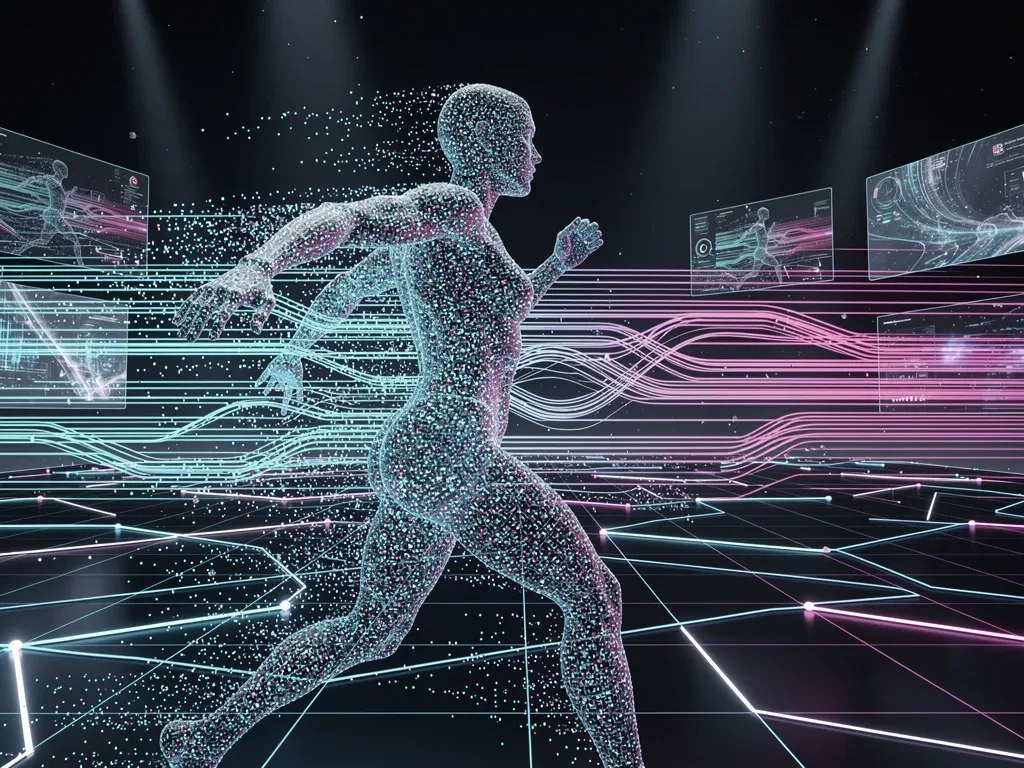
Real-time volumetric video compression is revolutionizing immersive experiences by enabling the streaming of 12K feeds with under 50 milliseconds latency, opening new frontiers for virtual reality, augmented reality, and telepresence.
Imagine stepping into a virtual world where every detail is as sharp as reality, and interactions feel instantaneous. The advent of real-time volumetric video compression is making this a tangible reality, pushing the boundaries of immersive experiences by enabling the streaming of 12K feeds with incredibly low latency, often under 50 milliseconds.
The Dawn of Volumetric Video: Beyond 2D and 3D
Volumetric video represents a monumental leap beyond traditional 2D and even conventional 3D video formats. Instead of merely capturing flat images or depth maps, volumetric video captures an entire scene, including subjects and their environments, as true three-dimensional data. This means viewers can move around within a captured scene, changing their perspective as if they were physically present, offering an unparalleled sense of immersion.
This technology is not just about visual fidelity; it’s about creating interactive, dynamic, and realistic digital representations of the physical world. The implications for industries ranging from entertainment and gaming to education, healthcare, and remote collaboration are profound, promising to redefine how we interact with digital content.
What defines volumetric video?
Volumetric video is fundamentally different because it captures spatial data, allowing for free viewpoint navigation. This contrasts sharply with traditional video, which is fixed to a single camera's perspective, or even 360-degree video, which still presents a limited, spherical view.
- True 3D Representation: Captures objects and environments in full three dimensions.
- Free Viewpoint Navigation: Users can move their perspective within the captured scene.
- Interactive Experiences: Enables deeper engagement and interaction with content.
- Realistic Presence: Offers a heightened sense of being 'there' compared to other media.
The ability to render a scene from any angle in real-time requires an immense amount of data. This data includes not only color and texture but also geometric information for every point in the captured volume. Managing this data efficiently is where the challenge, and the innovation, truly lies.
In essence, volumetric video is building a digital replica of reality, complete with depth, form, and movement. This digital twin can then be streamed and experienced in a multitude of ways, from virtual reality headsets to augmented reality overlays, providing a foundation for truly immersive digital interactions. The potential for creation and experience is vast, far surpassing what static media can offer.
Challenges of Streaming 12K Immersive Feeds
Streaming 12K immersive feeds presents a formidable technical challenge, primarily due to the sheer volume of data involved. A single 12K frame contains exponentially more information than a standard HD or even 4K frame, and when that frame is volumetric, the data burden multiplies significantly. This isn't just about pixels; it's about capturing and transmitting an entire spatial representation.
The demand for ultra-low latency, specifically under 50 milliseconds, further complicates matters. In immersive environments like VR and AR, any noticeable delay between a user's head movement and the visual update can lead to motion sickness and break the sense of presence. Achieving both high resolution and minimal latency simultaneously requires groundbreaking advancements in every stage of the pipeline, from capture to rendering.
Data Volume and Bandwidth Requirements
The raw data from a volumetric capture system can be overwhelming. Multiple cameras and depth sensors generate terabytes of information per minute, making uncompressed streaming impractical for almost any network infrastructure. This necessitates highly efficient compression.
- Geometric Data: Information about the shape and position of objects.
- Texture and Color Data: Visual appearance of surfaces.
- Temporal Data: How these elements change over time.
- Multi-camera Synchronization: Ensuring all data streams align perfectly.
Traditional video compression techniques are often insufficient for volumetric data, as they are designed for 2D images. Volumetric data requires algorithms that can efficiently compress spatial and temporal information while preserving the geometric integrity and visual quality essential for immersive experiences. The balance between compression efficiency and visual fidelity is delicate.
Furthermore, the bandwidth required to transmit uncompressed 12K volumetric data would saturate even the most robust internet connections. This makes advanced compression not just a desirable feature but an absolute necessity for widespread adoption and practical application of real-time immersive feeds. Without effective compression, the vision of shared virtual spaces remains largely theoretical.
Breakthroughs in Volumetric Video Compression
The journey to enable real-time 12K volumetric video streaming with under 50 milliseconds latency has been paved by significant breakthroughs in compression technology. These innovations move beyond traditional video codecs, which are ill-suited for the complex, multi-dimensional nature of volumetric data. Researchers and engineers have had to rethink how spatial and temporal information can be efficiently encoded and decoded.
One key area of advancement lies in point cloud compression. Volumetric data is often represented as a dense collection of points in 3D space (a point cloud), each with color and sometimes normal information. Efficiently compressing these point clouds while maintaining visual integrity and geometric accuracy is paramount. New algorithms leverage spatial coherence and temporal redundancy to drastically reduce data size without perceptible loss of quality.
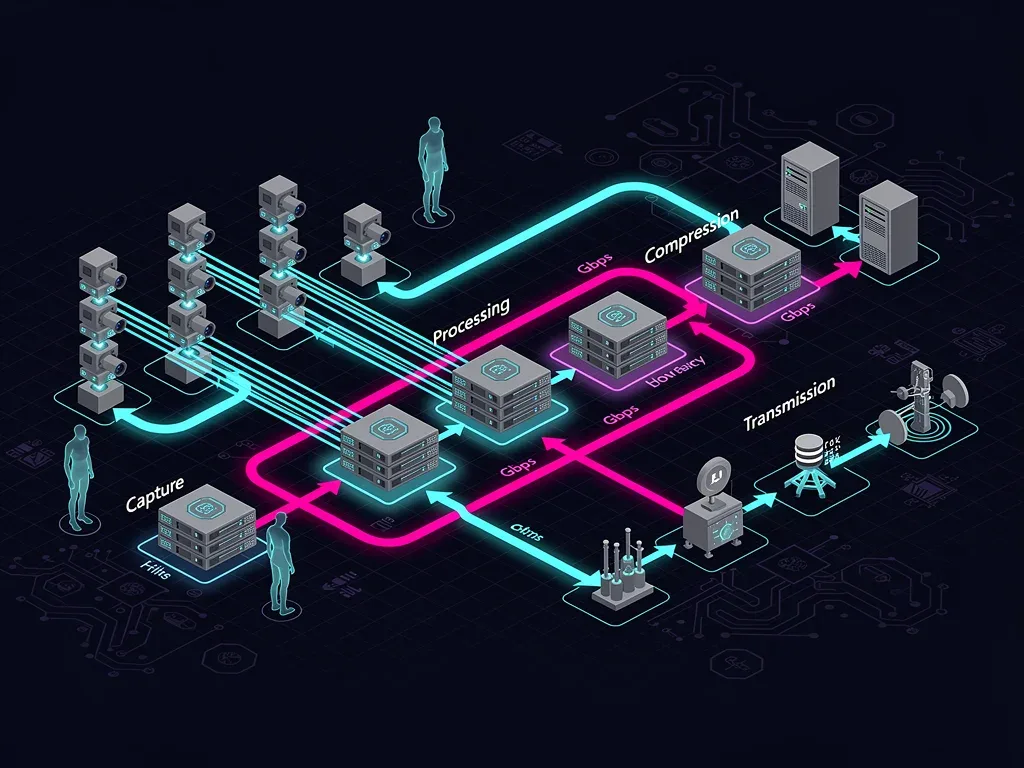
Advanced Encoding Techniques
Modern volumetric compression relies on a combination of techniques, often drawing from principles in computer graphics, signal processing, and machine learning. These methods aim to reduce the redundancy inherent in 3D data and exploit human perception limits.
- Octree-based Compression: Divides 3D space into hierarchical cubes, efficiently representing sparse and dense areas.
- Mesh-based Compression: Converts point clouds into simplified mesh structures for more efficient encoding.
- Deep Learning Compression: Neural networks are trained to predict and compress volumetric data, learning optimal representations.
- Perceptual Quantization: Discards information that is less perceptible to the human eye, reducing data size without noticeable quality degradation.
Another critical aspect is predictive coding, where algorithms predict future frames or parts of frames based on past data, only transmitting the differences. This temporal compression is vital for dynamic volumetric scenes. Furthermore, adaptive streaming techniques allow the quality of the volumetric stream to adjust based on available bandwidth, ensuring a continuous, albeit sometimes lower-fidelity, experience.
The integration of hardware acceleration, particularly specialized GPUs and custom ASICs, has also played a crucial role. These dedicated processors can handle the computationally intensive tasks of encoding and decoding volumetric data much faster than general-purpose CPUs, directly contributing to the achievement of sub-50ms latency. These combined efforts are rapidly transforming theoretical concepts into practical applications.
Achieving Sub-50 Milliseconds Latency
Achieving sub-50 milliseconds latency in real-time volumetric video streaming is not merely an impressive technical feat; it is a fundamental requirement for truly convincing immersive experiences. Latency, the delay between an action and its visual response, is a critical factor in user comfort and presence in VR and AR. Delays exceeding this threshold can induce motion sickness, degrade the sense of immersion, and make interactions feel unnatural.
The pursuit of ultra-low latency involves optimizing every single stage of the volumetric video pipeline. This begins at the capture stage, where highly synchronized cameras and sensors are essential. Any lag in data acquisition can propagate through the system, making it difficult to recover.
Optimizing the Entire Pipeline
Low latency isn't achieved by a single magic bullet but through a holistic approach that minimizes delays at every point from capture to display. Each millisecond saved contributes to a more fluid and comfortable user experience.
- High-Speed Data Capture: Utilizing cameras and sensors capable of extremely fast data acquisition and synchronization.
- Edge Computing: Processing data closer to the source to reduce transmission delays to central servers.
- Optimized Codecs: Employing compression algorithms designed for speed as much as for efficiency.
- Network Prioritization: Using Quality of Service (QoS) mechanisms to prioritize volumetric data traffic.
- Predictive Rendering: Anticipating user movements to pre-render frames, reducing perceived lag.
The role of network infrastructure cannot be overstated. The advent of 5G and future 6G networks, with their promise of extremely high bandwidth and ultra-low latency, is a perfect complement to advanced volumetric compression. These networks provide the necessary backbone to transmit compressed 12K data packets with minimal delay, making real-time streaming over wide areas feasible.
Furthermore, hardware advancements, particularly in GPU acceleration and specialized processing units, are crucial for rapid encoding and decoding. These dedicated units can perform complex mathematical operations required for volumetric data manipulation in parallel, significantly cutting down processing times. The combination of efficient algorithms, optimized hardware, and high-speed networks is the trifecta enabling this groundbreaking low-latency performance.
Applications and Impact on Immersive Experiences
The ability to stream 12K immersive feeds with under 50 milliseconds latency through advanced volumetric video compression is not just a technological marvel; it's a catalyst for a new era of immersive experiences across numerous sectors. This breakthrough transforms what was once futuristic speculation into practical applications, fundamentally altering how we interact with digital content and each other.
In entertainment, imagine attending a live concert from your living room, where you can freely walk around the stage, viewing performers from any angle, or experiencing a sports event as if you were on the field. Gaming will reach unprecedented levels of realism and interactivity, breaking down the barriers between player and digital world. These applications promise to deliver engagement far beyond current capabilities.
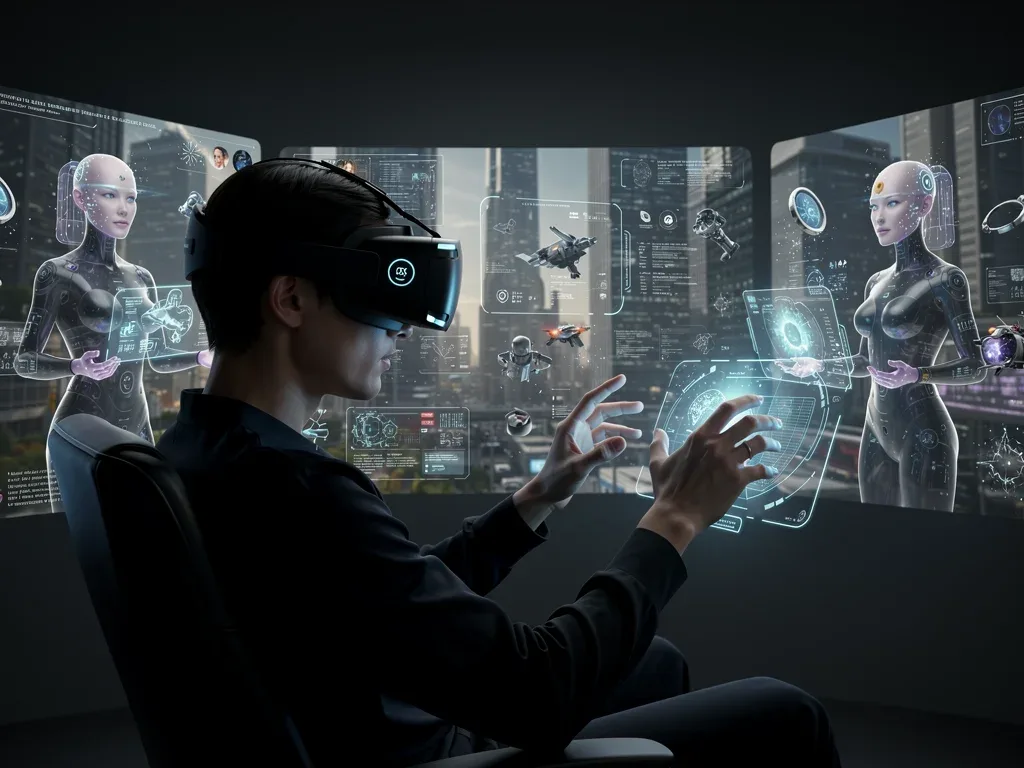
Transforming Industries
- Remote Collaboration: Enables highly realistic virtual meetings where participants feel truly present, fostering better communication and understanding.
- Education and Training: Provides immersive learning environments for complex subjects, from surgical training to historical recreations.
- Healthcare: Facilitates remote diagnostics, surgical planning, and therapy in incredibly realistic virtual settings.
- Retail and E-commerce: Allows customers to virtually 'try on' clothes or explore products in a 3D space before purchasing.
- Architecture and Design: Enables architects and clients to walk through digital models of buildings before construction begins.
The real-time nature and low latency are particularly crucial for these professional applications. In remote surgery, for example, even a small delay could have catastrophic consequences. The sub-50ms latency ensures that interactions in these critical environments are as responsive and natural as face-to-face interactions, building trust and efficacy.
Moreover, the ability to stream 12K resolution brings an unparalleled level of detail and fidelity, making virtual objects indistinguishable from real ones in many cases. This visual accuracy is vital for applications where precision is key, such as design review or medical imaging. As volumetric video compression continues to evolve, its integration into daily life will become increasingly seamless, blurring the lines between the physical and digital worlds.
The Future of Volumetric Content: 6G and Beyond
The current advancements in real-time volumetric video compression and low-latency streaming are merely the foundation for an even more exhilarating future. As technologies like 6G networks emerge, they promise to unlock unprecedented capabilities for volumetric content, pushing the boundaries of what is currently imaginable. 6G is projected to offer not just higher bandwidth and even lower latency than 5G, but also integrated AI and sensing capabilities that will profoundly enhance immersive experiences.
This next generation of wireless communication will enable the seamless streaming of not just 12K, but potentially even higher resolutions of volumetric data, with latencies so minimal they will be imperceptible to human perception. This level of performance will pave the way for truly photorealistic and interactive metaverses, where physical and digital realities merge effortlessly.
Emerging Technologies and Synergies
The evolution of volumetric content will be driven by a confluence of technological advancements, creating powerful synergies that will redefine digital interaction.
- Pervasive AI: AI will play a greater role in optimizing compression in real-time, predicting user intent, and dynamically rendering content.
- Haptic Feedback Systems: Integration with advanced haptics will allow users to 'feel' virtual objects and environments, adding another layer of immersion.
- Neural Rendering: Moving beyond traditional rendering, neural networks will generate highly realistic volumetric scenes with less computational overhead.
- Decentralized Computing: Blockchain and edge computing will enable more robust, secure, and distributed volumetric content delivery.
- Digital Twins: Real-time volumetric capture will create dynamic digital twins of physical spaces and objects, enabling remote monitoring and interaction.
Beyond technical specifications, the future of volumetric content will also involve greater accessibility and democratization. As compression algorithms become more efficient and hardware becomes more affordable, creating and experiencing volumetric content will no longer be limited to high-end studios or specialized professionals. This will foster a new wave of creativity and innovation, leading to diverse applications.
Ultimately, the synergy between advanced volumetric video compression, ultra-low latency networks like 6G, and emerging technologies such as AI and haptics will culminate in an era where digital presence is indistinguishable from physical presence. This will redefine social interaction, commerce, and work, creating a truly interconnected and immersive digital world.
Overcoming Future Hurdles in Volumetric Streaming
While the progress in real-time volumetric video compression and low-latency streaming is impressive, the journey is far from over. Several significant hurdles remain that require sustained innovation and collaborative effort across various fields. Addressing these challenges will be crucial for the widespread adoption and seamless integration of 12K immersive feeds into everyday life.
One primary challenge is the standardization of volumetric data formats and compression codecs. Currently, various proprietary solutions exist, which can hinder interoperability and limit the scalability of volumetric content. A universally accepted standard would facilitate broader development, content sharing, and hardware compatibility, much like JPEG or MPEG did for traditional image and video formats.
Key Obstacles and Solutions
The path forward requires addressing a multifaceted array of technical and practical challenges to ensure volumetric video reaches its full potential.
- Standardization: Developing open, interoperable formats and codecs for volumetric data to foster ecosystem growth.
- Computational Demands: Reducing the significant processing power required for both encoding and decoding, making it accessible on a wider range of devices.
- Scalability: Ensuring the technology can efficiently handle a vast number of simultaneous users and complex, large-scale volumetric environments.
- Ethical Considerations: Addressing privacy concerns related to capturing and transmitting highly detailed 3D representations of individuals and environments.
- Content Creation Tools: Developing user-friendly and efficient tools for artists and creators to produce high-quality volumetric content.
Another significant hurdle is the computational intensity of both capturing and rendering volumetric data. While specialized hardware helps, making these processes more efficient and less resource-intensive is vital for broader accessibility, especially on mobile and standalone AR/VR devices. Optimizing algorithms for lower-power consumption will be key to enabling untethered, all-day immersive experiences.
Furthermore, the infrastructure required for capturing and delivering high-fidelity volumetric content is still relatively expensive and complex. Reducing the cost and complexity of volumetric capture studios, as well as optimizing network delivery mechanisms for global reach, will be essential. Overcoming these future hurdles will solidify volumetric video's place as a cornerstone of the next generation of digital interaction.
| Key Aspect | Brief Description |
|---|---|
| Volumetric Video | Captures full 3D scenes allowing free viewpoint navigation, unlike traditional video. |
| 12K Immersive Feeds | Ultra-high resolution volumetric data for unparalleled realism in VR/AR experiences. |
| Sub-50ms Latency | Critical for preventing motion sickness and ensuring natural interaction in immersive environments. |
| Compression Breakthroughs | New algorithms and hardware enable efficient encoding of complex 3D spatial and temporal data. |
Frequently Asked Questions About Volumetric Video Compression
What is volumetric video and how is it different from 360-degree video?▼Volumetric video captures a scene in full three dimensions, allowing viewers to move freely within the environment and change their perspective. In contrast, 360-degree video is essentially a spherical 2D projection, offering a panoramic view but without true depth or the ability to alter one's viewpoint within the scene.
Why is low latency crucial for immersive 12K feeds?▼Low latency, especially under 50 milliseconds, is vital for immersive experiences to prevent motion sickness and maintain a strong sense of presence. Any noticeable delay between user movement and visual feedback can break immersion and lead to discomfort, making the experience unrealistic and unenjoyable.
What technical challenges does 12K volumetric streaming pose?▼Streaming 12K volumetric feeds presents immense challenges due to the massive data volume and high bandwidth requirements. Efficient compression algorithms are needed to reduce data size while preserving visual fidelity. Additionally, ensuring sub-50ms latency across capture, processing, and transmission demands significant optimization throughout the entire pipeline.
How do compression breakthroughs enable real-time volumetric streaming?▼Compression breakthroughs involve advanced algorithms that efficiently encode 3D spatial and temporal data, often using techniques like point cloud compression, octrees, and deep learning. These methods drastically reduce the data footprint without compromising quality, making it feasible to transmit complex 12K volumetric information in real-time over existing networks.
What are the key applications of real-time volumetric video compression?▼Key applications span various sectors, including entertainment (immersive gaming, virtual concerts), remote collaboration (realistic virtual meetings), education (interactive training simulations), healthcare (remote surgery, therapy), and retail (virtual product exploration). The technology promises to redefine how we engage with digital content and each other.
Conclusion
The remarkable progress in real-time volumetric video compression, enabling 12K immersive feeds with under 50 milliseconds latency, marks a pivotal moment in the evolution of digital interaction. This technological confluence is not merely about higher resolution or faster transmission; it’s about dissolving the barriers between the physical and digital, creating experiences that are profoundly more engaging, intuitive, and realistic. As we continue to refine these complex algorithms and leverage next-generation network infrastructures like 6G, the potential for volumetric content to transform industries and reshape human connection is boundless, ushering in an era where digital presence feels as tangible as reality itself.
