Reskill for Human-AI Collaboration: 30% Surge in Corporate America
Advertisements

The accelerating integration of AI necessitates a proactive approach to reskill for human-AI collaboration, as Corporate America anticipates a 30% surge in roles requiring these synergistic capabilities.
The landscape of work is undergoing a profound transformation, driven by the rapid advancements in artificial intelligence. As businesses in Corporate America increasingly integrate AI into their operations, a significant shift in job roles and required skills is emerging. Experts predict a staggering 30% surge in roles demanding robust human-AI collaboration, making it imperative for professionals to understand how to reskill for human-AI collaboration to thrive in this evolving environment.
Understanding the Human-AI Collaboration Imperative
The rise of artificial intelligence isn't about replacing human workers entirely; rather, it's about augmenting human capabilities and creating new forms of collaboration. This synergy between human intellect and AI's analytical power is becoming the cornerstone of productivity and innovation across various industries.
Businesses are realizing that the most effective use of AI isn't in automating every task, but in strategically deploying it to handle repetitive, data-intensive processes, thereby freeing human talent to focus on creativity, critical thinking, strategic planning, and complex problem-solving. This shift is creating a demand for a workforce that can fluidly interact with AI systems, interpret their outputs, and leverage their insights to make better decisions.
The Evolution of Workflows with AI
AI is reshaping traditional workflows, from customer service and data analysis to product development and supply chain management. Understanding these evolving dynamics is the first step toward effective reskilling.
- Automated Data Processing: AI handles vast datasets, identifying patterns and anomalies far quicker than humans.
- Enhanced Decision Support: AI tools provide predictive analytics and recommendations, empowering human decision-makers.
- Personalized Customer Interactions: AI-powered chatbots and virtual assistants streamline initial customer engagement.
- Optimized Resource Allocation: AI algorithms can optimize schedules, logistics, and resource deployment.
The essence of this transformation lies in recognizing that AI is a powerful co-pilot, not just a tool. It demands a new mindset where humans and machines work in concert, each bringing their unique strengths to the table. This collaborative paradigm requires individuals to develop specific competencies that bridge the gap between human intuition and algorithmic logic, ensuring that the combined output is greater than the sum of its parts.
Identifying Key Skills for the AI-Augmented Workforce
As the demand for human-AI collaboration roles grows, certain skills are becoming indispensable. These are not merely technical competencies but also encompass critical soft skills that enable effective interaction with AI systems and other human collaborators.
Technical proficiency, while important, is only one piece of the puzzle. The ability to understand AI's limitations, ethical implications, and potential biases is equally crucial. Furthermore, the capacity to communicate effectively with both AI interfaces and human teams about AI-driven insights will distinguish top performers in this new era.
Technical Competencies for AI Collaboration
While you don't need to be an AI developer, a foundational understanding of AI concepts is increasingly beneficial.
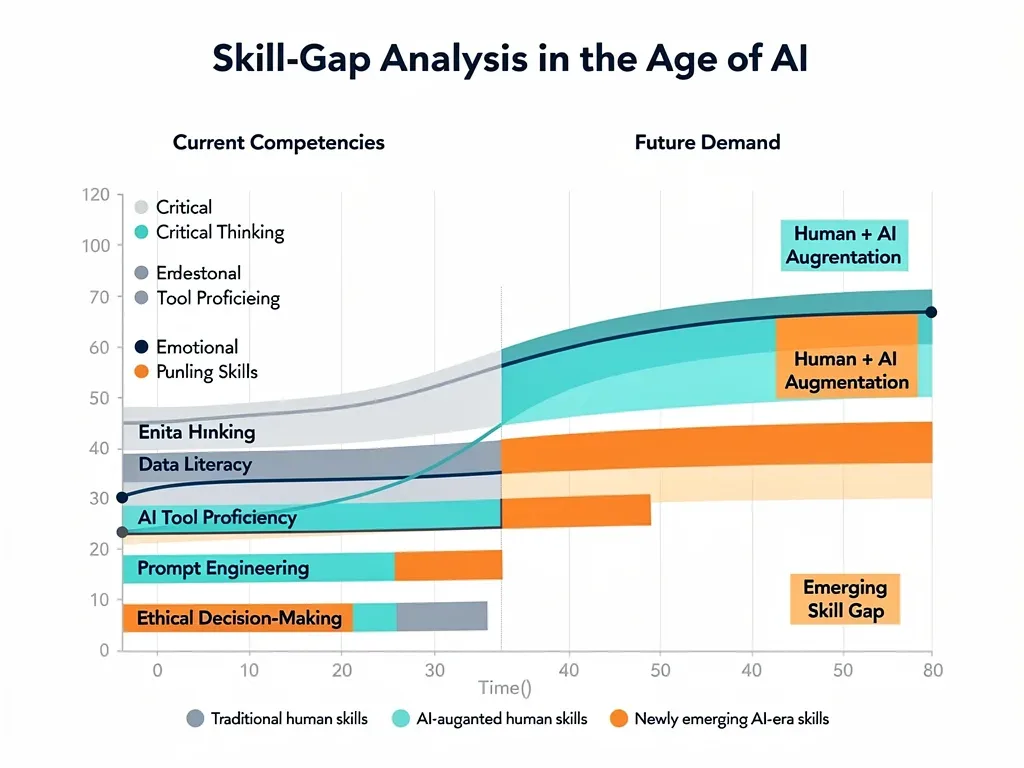
- Data Literacy: Ability to understand, interpret, and communicate data insights, especially those generated by AI.
- AI Tool Proficiency: Familiarity with common AI platforms, machine learning tools, and automation software relevant to your industry.
- Prompt Engineering: Skill in crafting effective queries and instructions for generative AI models to achieve desired outputs.
- Basic AI Understanding: Grasp of core AI concepts like machine learning, natural language processing, and predictive analytics.
Beyond these technical skills, the emphasis shifts to how humans can best leverage these tools. This means developing a critical eye for AI-generated results, understanding how to validate them, and knowing when human intervention is necessary. It's about becoming a skilled orchestrator of AI's capabilities.
Essential Soft Skills for Human-AI Synergy
Soft skills are arguably more critical than ever, as they enable humans to lead, innovate, and adapt alongside AI.
- Critical Thinking: Evaluating AI outputs, identifying potential errors or biases, and applying human judgment.
- Problem-Solving: Framing complex problems for AI to assist in solving, and interpreting AI solutions in real-world contexts.
- Creativity & Innovation: Leveraging AI to generate new ideas, prototypes, or solutions, then refining them with human ingenuity.
- Adaptability & Lifelong Learning: The AI landscape is constantly changing, requiring continuous learning and skill updates.
- Ethical Reasoning: Understanding and navigating the ethical implications of AI deployment and data usage.
These soft skills are not easily replicable by machines, making them uniquely human assets in the AI-driven workplace. They empower individuals to guide AI, ensuring its use aligns with organizational values and societal well-being. Developing these competencies is paramount for anyone looking to successfully navigate the future of work.
Strategies for Effective Reskilling and Upskilling
Reskilling is not a one-time event but an ongoing process. Companies and individuals alike must adopt proactive strategies to build and maintain the skills necessary for human-AI collaboration. This involves a blend of formal education, continuous learning, and practical application.
Organizations need to invest in robust training programs, while individuals must take ownership of their professional development. The focus should be on practical, applicable skills that can be immediately integrated into existing or emerging roles. This might mean exploring new certifications, online courses, or even internal mentorship programs.
Corporate Initiatives and Training Programs
Forward-thinking companies are already launching comprehensive programs to prepare their workforce for AI integration.
- Internal Academies: Creating dedicated learning hubs for AI literacy and application.
- Cross-Functional Training: Encouraging employees to learn about AI's impact on different departments.
- Partnerships with EdTech: Collaborating with online learning platforms to offer specialized AI courses.
- Mentorship Programs: Pairing experienced AI users with those new to the technology.
These initiatives are crucial for fostering a culture of continuous learning and ensuring that employees feel supported in their journey to adapt. Companies that prioritize reskilling not only retain valuable talent but also build a more agile and future-ready workforce capable of leveraging AI for competitive advantage.
Individual Learning Pathways
For individuals, taking charge of your learning journey is key. There are numerous resources available to help you acquire new skills.
- Online Courses & Certifications: Platforms like Coursera, edX, and Udacity offer courses in AI, data science, and related fields.
- Workshops & Bootcamps: Intensive programs designed to quickly impart practical skills.
- Industry Conferences & Webinars: Staying updated on the latest AI trends and applications.
- Hands-on Projects: Applying learned concepts to real-world problems to solidify understanding.
The most successful individuals will be those who actively seek out learning opportunities and apply their new knowledge in practical settings. This proactive approach not only enhances personal career prospects but also contributes significantly to an organization's overall AI readiness. Remember, continuous learning is not just a buzzword; it's a necessity in the rapidly evolving AI landscape.
The Role of Education and Government in Facilitating Reskilling
The transformation spurred by AI is too vast for businesses and individuals to tackle alone. Educational institutions and government bodies have a critical role to play in creating an ecosystem that supports widespread reskilling and upskilling for human-AI collaboration.
Academic institutions can adapt curricula to include AI literacy and ethical considerations, while government policies can incentivize training and provide support for displaced workers. This multi-stakeholder approach ensures that the transition to an AI-augmented workforce is equitable and efficient, minimizing disruption and maximizing opportunity for all.

Adapting Academic Curricula
Universities and colleges must evolve their offerings to meet the demands of the future workforce. This means integrating AI and data science into various disciplines, not just computer science.
- Interdisciplinary Programs: Combining AI with business, humanities, and arts to foster holistic understanding.
- Practical, Project-Based Learning: Emphasizing hands-on experience with AI tools and applications.
- Ethics and AI Governance: Incorporating discussions on responsible AI development and deployment.
- Lifelong Learning Initiatives: Offering continuing education programs for working professionals.
By producing graduates who are not only skilled in their chosen fields but also AI-literate and adaptable, educational institutions can significantly contribute to building a resilient and innovative workforce. This proactive adaptation will ensure that the next generation of professionals is well-equipped to thrive in human-AI collaborative roles.
Government Policies and Support
Governments can implement policies that encourage reskilling and support workers through this transition. These policies can range from funding for training programs to regulatory frameworks that promote ethical AI use.
- Funding for Training: Subsidizing AI-related training programs for workers.
- Tax Incentives for Companies: Encouraging businesses to invest in employee reskilling.
- Public-Private Partnerships: Collaborating with industries to identify skill gaps and develop targeted training.
- Digital Literacy Initiatives: Promoting basic digital and AI literacy across the general population.
Such governmental support is vital for creating an inclusive transition, ensuring that individuals from all backgrounds have access to the resources needed to adapt to the changing job market. It also helps to mitigate potential social and economic disruptions that could arise from rapid technological advancement.
Navigating the Ethical and Societal Implications
As we embrace human-AI collaboration, it’s crucial to address the ethical and societal implications that come with this technological shift. Reskilling efforts must also encompass an understanding of responsible AI use, data privacy, and the impact on diverse populations.
Ignoring these aspects would be a disservice to both individuals and society. A truly future-proof workforce is one that not only possesses technical prowess but also a strong ethical compass to guide AI deployment. This involves ongoing dialogue, policy development, and a commitment to fairness and transparency.
Ensuring Responsible AI Deployment
The ethical use of AI is paramount. Reskilling programs should incorporate modules on AI ethics to foster a responsible workforce.
- Bias Detection & Mitigation: Understanding how AI algorithms can perpetuate or amplify biases and learning strategies to address them.
- Data Privacy & Security: Adhering to best practices and regulations regarding data handling and protection.
- Transparency & Explainability: Demanding and understanding how AI systems arrive at their conclusions.
- Accountability Frameworks: Establishing clear lines of responsibility for AI-driven decisions.
By embedding ethical considerations into reskilling initiatives, we can ensure that the workforce is not just technically capable but also morally grounded in its interaction with AI. This will help prevent unintended consequences and build public trust in AI technologies.
Addressing Workforce Displacement and Equity
While human-AI collaboration creates new opportunities, it also poses challenges related to job displacement and ensuring equitable access to new roles.
- Transition Support: Providing resources and training for workers whose roles may be automated.
- Inclusive Reskilling: Ensuring training programs are accessible to individuals from diverse backgrounds and skill levels.
- Policy Development: Crafting social safety nets and employment policies to support affected workers.
- Focus on Human-Centric Roles: Emphasizing skills that AI cannot easily replicate, such as empathy, creativity, and complex social intelligence.
A just transition requires proactive measures to support those most affected by automation and to ensure that the benefits of AI are broadly distributed. This includes investing in fundamental education, providing career counseling, and fostering a culture of adaptability and continuous learning for everyone, not just a select few.
The Future is Collaborative: Embracing Continuous Evolution
The projected 30% surge in human-AI collaboration roles in Corporate America is not merely a forecast; it's a call to action. The future of work is undeniably collaborative, with AI acting as a powerful partner rather than a mere tool. Embracing this reality means committing to continuous evolution, both at an individual and organizational level.
The journey to effectively reskill for human-AI collaboration is ongoing, requiring curiosity, resilience, and a willingness to learn. Those who proactively adapt will not only secure their own professional futures but also drive innovation and growth for their organizations in an increasingly AI-driven world. The synergy between human ingenuity and artificial intelligence promises a future rich with possibilities, provided we prepare ourselves for it.
Measuring Reskilling Success and Impact
As organizations invest heavily in reskilling initiatives to prepare for the human-AI collaboration surge, it becomes critical to establish robust metrics for measuring the success and impact of these programs. Without clear indicators, it's challenging to assess ROI, identify areas for improvement, and ensure that the efforts are truly moving the needle in terms of workforce readiness.
Effective measurement goes beyond mere completion rates of training modules. It delves into observable changes in employee performance, innovation, and overall productivity when working with AI. This data-driven approach helps refine strategies and justify continued investment in human capital development for the AI era.
Key Performance Indicators for Reskilling
Defining clear KPIs is essential to track progress and demonstrate the value of reskilling efforts. These indicators should reflect both individual and organizational growth.
- Skill Acquisition Rates: Percentage of employees achieving proficiency in targeted AI-related skills.
- Application in Projects: Frequency and effectiveness of AI tools and techniques applied in daily tasks and projects.
- Productivity Gains: Measurable improvements in efficiency or output attributed to human-AI collaboration.
- Innovation Metrics: Number of new ideas, processes, or products generated through AI-augmented creativity.
- Employee Engagement & Retention: Impact of reskilling on job satisfaction and willingness to stay with the organization.
By consistently monitoring these KPIs, organizations can gain valuable insights into the efficacy of their reskilling programs. This allows for agile adjustments to training content, delivery methods, and resource allocation, ensuring that the investment translates into tangible benefits for both the workforce and the business.
Long-Term Organizational Impact
The ultimate goal of reskilling for human-AI collaboration is to build a future-proof organization. Measuring long-term impact involves looking at broader strategic outcomes.
- Competitive Advantage: How effectively the organization leverages AI for market differentiation and leadership.
- Talent Pipeline Strength: The organization's ability to attract and retain top talent with human-AI collaboration skills.
- Adaptability to Change: The workforce's resilience and speed in adapting to new AI technologies and market shifts.
- Cost Efficiency: Reductions in operational costs through AI automation and optimized human processes.
These long-term indicators provide a holistic view of how reskilling initiatives contribute to the organization's strategic objectives. They underscore the importance of viewing workforce development not as an expense, but as a critical investment in sustained growth and innovation in the AI-driven economy. A well-reskilled workforce is a strategic asset that fuels continuous evolution and ensures enduring success.
| Key Point | Brief Description |
|---|---|
| AI Collaboration Surge | Corporate America anticipates a 30% increase in roles requiring human-AI synergy. |
| Essential Skills | Data literacy, AI tool proficiency, critical thinking, and adaptability are crucial. |
| Reskilling Strategies | Companies and individuals should utilize online courses, internal training, and continuous learning. |
| Ethical AI Use | Understanding AI biases, data privacy, and accountability is fundamental for responsible collaboration. |
Frequently Asked Questions About Human-AI Collaboration
What does human-AI collaboration mean for my job security?▼Human-AI collaboration is about augmenting, not replacing, human roles. It means your job will likely evolve to include working alongside AI tools, requiring new skills in interpreting AI outputs and leveraging them for better decision-making and creativity, ultimately enhancing your value.
What are the most crucial skills to acquire for AI collaboration?▼Key skills include data literacy, proficiency with AI tools, critical thinking to evaluate AI outputs, problem-solving, and adaptability. Soft skills like creativity, ethical reasoning, and communication are equally vital for effective human-AI synergy in the workplace.
How can I start reskilling if my company doesn't offer programs?▼Many online platforms like Coursera, edX, and Udacity offer courses and certifications in AI and data science. You can also attend industry webinars, workshops, or engage in personal projects to gain hands-on experience and build a portfolio of AI-related skills.
Will AI collaboration lead to job displacement in the long term?▼While some routine tasks may be automated, the overall trend is toward job transformation and the creation of new roles that require human oversight, ethical judgment, and creative problem-solving alongside AI. Reskilling focuses on adapting to these evolving demands.
What ethical considerations should I be aware of when collaborating with AI?▼It's crucial to understand potential AI biases, ensure data privacy and security, and demand transparency in AI decision-making processes. Ethical reasoning and accountability are essential to deploy AI responsibly and ensure its benefits are distributed fairly without adverse societal impacts.
Conclusion
The imperative to reskill for human-AI collaboration is undeniable, with Corporate America bracing for a significant surge in roles demanding these integrated capabilities. This transformation is not a threat but an unprecedented opportunity for individuals and organizations to redefine productivity, creativity, and innovation. By proactively embracing continuous learning, developing both technical and soft skills, and fostering an ethical approach to AI, the workforce can seamlessly transition into this collaborative future. The journey ahead requires a strategic commitment from all stakeholders—individuals, businesses, educational institutions, and governments—to cultivate a resilient, adaptable, and human-centric workforce ready to harness the full potential of artificial intelligence for collective progress.
