Solid-State EV Batteries: 800-Mile Range & Fleet Readiness
Advertisements
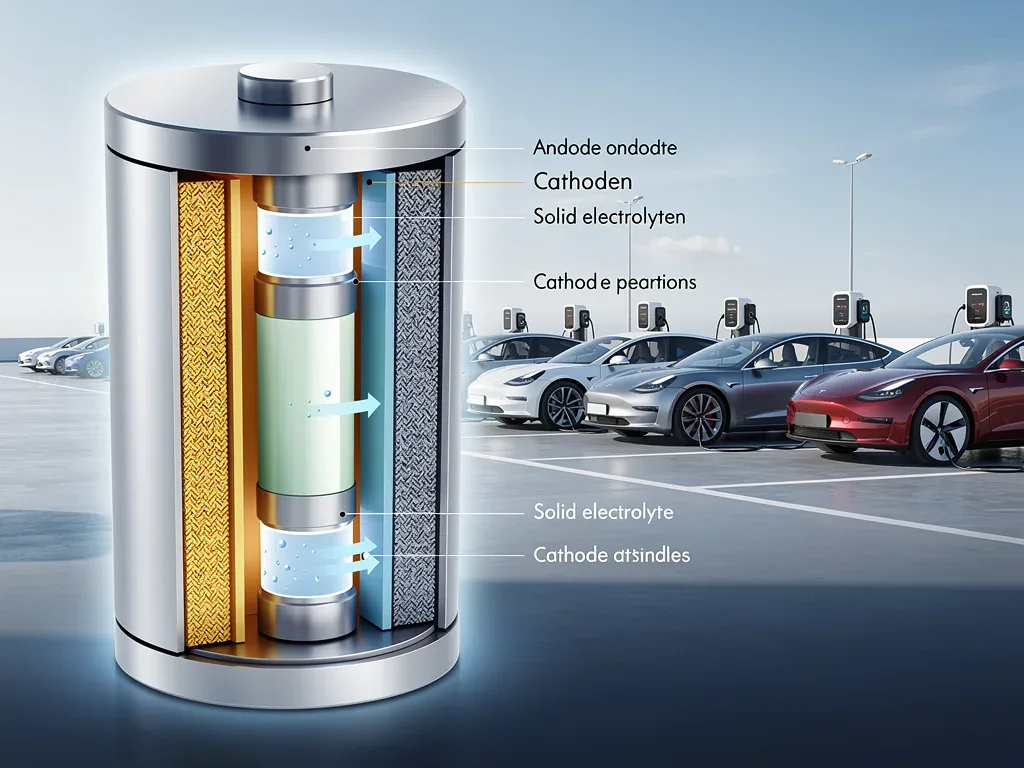
Solid-state EV batteries are rapidly approaching readiness for mass fleet deployments, with recent 800-mile range tests showcasing their immense potential to transform electric vehicle performance and operational efficiency across various industries.
The automotive industry is buzzing with anticipation regarding whether solid-state EV batteries are truly ready for mass fleet deployments, especially after groundbreaking 800-mile range tests. This article delves into the technological advancements, challenges, and future prospects of solid-state batteries, exploring their potential to redefine electric vehicle performance and adoption.
The Promise of Solid-State Battery Technology
Solid-state battery technology represents a monumental leap forward in energy storage, promising to address many of the limitations associated with current lithium-ion batteries. Unlike their liquid-electrolyte counterparts, solid-state batteries utilize a solid electrolyte, which offers significant advantages in terms of safety, energy density, and charging speed. This fundamental shift in battery architecture is not just an incremental improvement; it's a paradigm shift that could unlock the full potential of electric vehicles, particularly for demanding applications like commercial fleets.
The inherent safety of solid electrolytes is a primary driver for their development. Traditional lithium-ion batteries, with their flammable liquid electrolytes, pose a risk of thermal runaway and fires if damaged or improperly manufactured. Solid electrolytes, being non-flammable, drastically reduce this risk, making them safer for both passenger and commercial vehicles. This enhanced safety profile is particularly critical for fleet operators, where vehicle downtime due to safety incidents can have substantial financial implications. Moreover, the design flexibility offered by solid-state materials allows for more compact and robust battery packs, which can be integrated more efficiently into vehicle chassis.
Enhanced Energy Density and Range
One of the most compelling advantages of solid-state batteries is their potential for significantly higher energy density. This means more energy can be stored in a smaller, lighter package, directly translating to extended driving ranges for electric vehicles. The much-discussed 800-mile range tests are a testament to this capability, demonstrating a performance level that was once considered aspirational for EVs. Achieving such ranges could effectively eliminate range anxiety, a major barrier to EV adoption.
- Longer Driving Distances: Enables EVs to travel significantly further on a single charge, comparable to or exceeding gasoline vehicles.
- Reduced Weight: Lighter battery packs contribute to overall vehicle efficiency and potentially greater payload capacity for commercial vehicles.
- Compact Design: Allows for more flexible vehicle design and increased interior space.
- Improved Performance: Higher energy density can also translate to better acceleration and power delivery.
The implications of such extended ranges for fleet operations are profound. Delivery trucks, long-haul transportation, and public transit systems could operate for longer periods without needing to recharge, optimizing routes and reducing operational costs. This efficiency gain is not merely a convenience; it's an economic imperative that can accelerate the transition to electric fleets.
In conclusion, the promise of solid-state battery technology extends beyond mere performance enhancements. It encompasses a holistic improvement in safety, efficiency, and design flexibility, positioning it as a cornerstone for the next generation of electric vehicles. The ability to achieve unprecedented ranges like 800 miles is a clear indicator of its transformative potential for both individual consumers and large-scale fleet deployments.
Understanding the 800-Mile Range Tests
The recent reports of electric vehicles achieving an 800-mile range on a single charge using solid-state battery prototypes have sent ripples of excitement throughout the automotive world. These tests, often conducted under controlled laboratory or specific road conditions, are crucial benchmarks in validating the theoretical benefits of solid-state technology. While not yet representative of everyday driving conditions for mass-produced vehicles, they unequivocally demonstrate the raw potential of these advanced batteries.
These tests typically involve rigorous cycles of charging and discharging, often simulating various driving scenarios to assess battery longevity and performance under stress. The methodology usually includes evaluating energy retention, power output consistency, and thermal management under sustained operation. Such extensive testing is vital to ensure that the impressive range figures are not just theoretical but can be consistently replicated and scaled for real-world applications. Researchers meticulously monitor every aspect of the battery's behavior, from voltage stability to internal resistance, to gain a comprehensive understanding of its characteristics.
Key Factors Enabling Extended Range
Several critical factors contribute to the ability of solid-state batteries to achieve such remarkable ranges. Foremost among these is the inherent chemical stability of solid electrolytes, which allows for the use of higher-voltage cathode materials and lithium metal anodes. Lithium metal anodes, in particular, boast a significantly higher theoretical energy density compared to the graphite anodes used in conventional lithium-ion batteries, contributing directly to the extended range.
- Lithium Metal Anodes: Offer superior energy density compared to traditional graphite, enabling more energy storage per unit volume.
- Solid Electrolyte Stability: Allows for safer operation at higher voltages and temperatures, optimizing performance.
- Improved Packaging Efficiency: The absence of liquid components can lead to more compact and lighter battery designs.
- Enhanced Thermal Management: Solid-state designs often exhibit better thermal stability, reducing the need for complex cooling systems.
Moreover, advancements in manufacturing processes and material science have played a pivotal role. Developing solid electrolytes that can conduct ions efficiently at room temperature, while remaining physically robust, has been a significant hurdle. Breakthroughs in polymer, sulfide, and oxide-based solid electrolytes are steadily bringing these batteries closer to commercial viability. The combination of these innovations creates a synergistic effect that pushes the boundaries of what's possible for EV range.

In essence, the 800-mile range tests are not merely publicity stunts; they are scientific validations of a technology that is maturing rapidly. They highlight the incredible progress made in solid-state battery development and provide a clear roadmap for what electric vehicles can achieve in the very near future, especially for fleets requiring extensive operational ranges without frequent recharging stops.
Challenges for Mass Fleet Deployment
While the potential of solid-state batteries is undeniable, transitioning from impressive laboratory results to mass fleet deployment presents a complex array of challenges. The journey from prototype to widespread commercialization is fraught with hurdles, ranging from manufacturing scalability to cost-effectiveness and long-term durability. Fleet operators, in particular, demand reliability, consistency, and a proven track record, which solid-state batteries are still in the process of establishing.
One of the most significant obstacles is the cost of production. Current solid-state battery manufacturing processes are intricate and expensive, relying on specialized materials and precise fabrication techniques. For fleet operators, the total cost of ownership (TCO) is a critical metric, and if solid-state batteries significantly inflate the initial purchase price of EVs, their adoption will be hampered. Economies of scale are yet to be achieved, and until production costs can be brought down to competitive levels, widespread deployment will remain a distant goal. This cost factor extends beyond just the battery cells themselves, encompassing the entire battery pack integration and management systems.
Manufacturing Scalability and Durability
Scaling up the manufacturing of solid-state batteries to meet the demands of the global automotive industry is an immense undertaking. Current production capabilities are limited, and developing gigafactories specifically designed for solid-state technology requires substantial investment and time. The unique material properties of solid electrolytes, such as their brittleness or sensitivity to moisture, necessitate entirely new manufacturing processes that differ significantly from those used for liquid-electrolyte batteries. Ensuring consistent quality and performance across millions of battery cells is a monumental task.
- Complex Production Processes: Requires new machinery and techniques, increasing initial capital expenditure.
- Material Availability: Sourcing and processing specialized solid electrolyte materials at scale can be challenging.
- Quality Control: Maintaining uniformity and defect-free production across high volumes is critical.
- Supply Chain Development: Establishing a robust and resilient supply chain for new materials and components is essential.
Furthermore, the long-term durability and cycle life of solid-state batteries in real-world, demanding fleet conditions are still under rigorous evaluation. Fleet vehicles often operate for extended hours, accumulate high mileage, and are subjected to frequent fast charging cycles and varying environmental conditions. While laboratory tests show promising cycle life, validating these results over years of commercial operation is paramount. Issues such as interfacial resistance growth, dendrite formation at high current densities, and electrode-electrolyte interface stability over thousands of cycles need to be thoroughly addressed and mitigated.
In summary, while solid-state batteries offer an enticing vision for the future of EVs, their path to mass fleet deployment is paved with considerable manufacturing, cost, and durability challenges. Overcoming these hurdles will require sustained investment, innovative engineering solutions, and collaborative efforts across the automotive and battery industries.
Economic Impact on Fleet Operations
The introduction of solid-state EV batteries, particularly with their touted 800-mile range, stands to profoundly alter the economics of fleet operations. For businesses managing large vehicle fleets, the total cost of ownership (TCO) is a paramount consideration. Solid-state technology promises to improve several key components of TCO, offering both direct and indirect financial benefits that could accelerate the transition to electric fleets across various sectors, from logistics to public transportation.
One of the most immediate economic impacts stems from the extended range. Vehicles capable of traveling 800 miles on a single charge would significantly reduce the need for frequent recharging, translating into less downtime and increased operational efficiency. For long-haul trucking, this could mean fewer stops, faster delivery times, and more productive use of driver hours. In urban delivery fleets, it could allow vehicles to complete entire shifts or even multiple routes without needing to return to a charging depot, streamlining logistics and reducing the number of vehicles required to cover a given service area. This enhanced utilization directly impacts labor costs and vehicle depreciation.
Reduced Charging Infrastructure Needs
The extended range capabilities of solid-state batteries could also lead to a substantial reduction in the required charging infrastructure for fleets. If vehicles need to charge less frequently, and potentially only overnight at a central depot, the capital expenditure on extensive fast-charging networks could be significantly lowered. This is a critical consideration for businesses, as installing and maintaining high-power charging stations represents a considerable investment.
- Lower Upfront Investment: Fewer fast chargers needed means reduced initial costs for depot electrification.
- Simplified Grid Integration: Less strain on local power grids if charging can be spread out or done off-peak.
- Optimized Land Use: Less space dedicated to elaborate charging stations, freeing up valuable real estate.
- Reduced Maintenance Costs: Fewer complex charging units translate to lower ongoing maintenance expenses.
Beyond infrastructure, the enhanced safety profile of solid-state batteries could lead to lower insurance premiums for fleet vehicles, further improving TCO. The reduced risk of thermal events means less potential for vehicle damage, cargo loss, and liability claims. Additionally, the longer lifespan and superior durability expected from solid-state batteries could extend the service life of fleet EVs, delaying replacement cycles and amortizing the initial vehicle cost over a longer period. This resilience is particularly valuable in commercial settings where vehicles endure rigorous daily use.
In essence, solid-state EV batteries have the potential to fundamentally reshape fleet economics by offering superior range, reduced infrastructure requirements, enhanced safety, and extended vehicle longevity. These combined factors present a compelling business case for their eventual mass adoption, driving efficiency and profitability for fleet operators.
Safety and Durability Improvements
The evolution of battery technology has always been a balance between performance, cost, and safety. With solid-state EV batteries, the emphasis on safety and durability marks a significant departure from the challenges faced by liquid-electrolyte lithium-ion cells. The inherent properties of solid electrolytes address many of the fundamental safety concerns, paving the way for more robust and reliable electric vehicles, especially crucial for high-utilization fleet applications.
One of the primary safety advantages of solid-state batteries is the elimination of flammable liquid electrolytes. In traditional lithium-ion batteries, these liquids can ignite if the battery is punctured, overheated, or overcharged, leading to thermal runaway. Solid electrolytes, being non-flammable, drastically mitigate this risk, making solid-state batteries inherently safer. This improved safety profile is not just a theoretical benefit; it translates into reduced fire hazards for vehicles, safer operation for drivers and passengers, and lower risks for cargo in commercial applications. For fleet managers, this means less concern about vehicle integrity and operational continuity.
Enhanced Thermal Stability and Cycle Life
Solid-state batteries generally exhibit superior thermal stability compared to their liquid counterparts. The solid electrolyte can withstand higher temperatures without degrading or posing a fire risk, which is beneficial for both performance and safety. This thermal resilience allows for more aggressive charging and discharging profiles without compromising battery integrity, a key advantage for fleet vehicles that often require rapid turnaround times.
- Reduced Thermal Runaway Risk: Non-flammable solid electrolytes significantly lower the chance of battery fires.
- Wider Operating Temperature Range: Better performance and safety in extreme hot or cold environments.
- Improved Mechanical Integrity: Solid electrolytes can act as a physical barrier, preventing dendrite formation that can short-circuit cells.
- Extended Lifespan: Greater stability contributes to a longer cycle life, reducing the frequency of battery replacements.
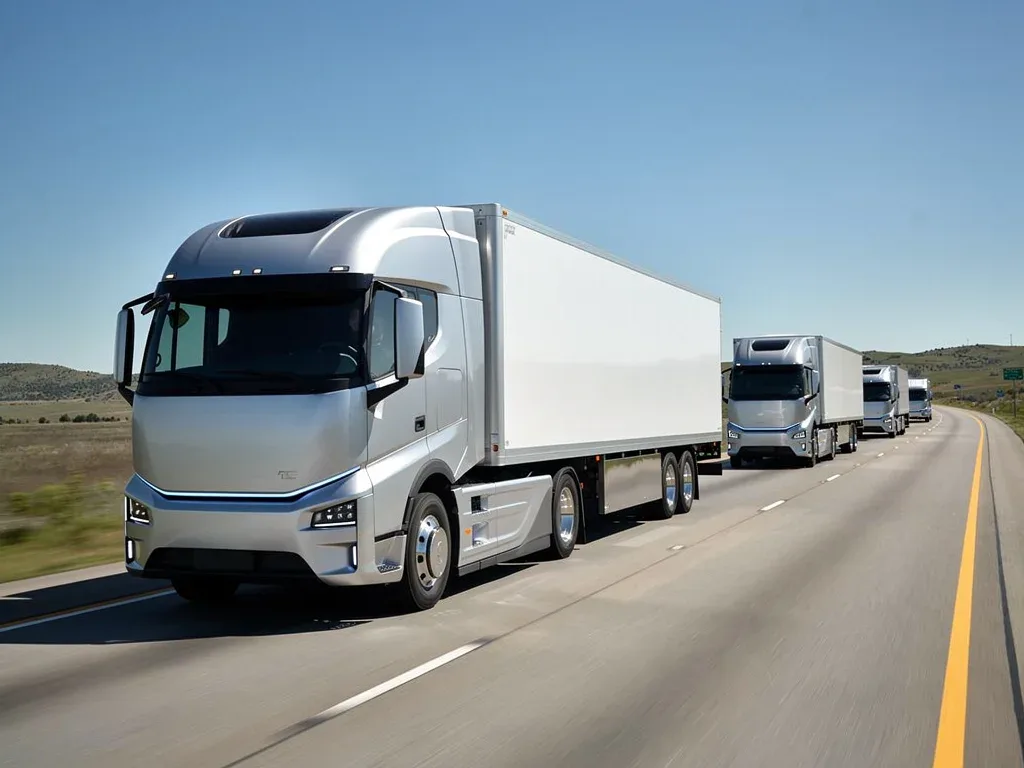
Beyond safety, solid-state batteries are also expected to offer enhanced durability and a longer cycle life. The stable nature of solid electrolytes helps to suppress the formation of lithium dendrites, which are metallic structures that can grow from the anode and puncture the separator in liquid-electrolyte batteries, leading to short circuits and premature degradation. By preventing dendrite growth, solid-state batteries can maintain their capacity and power output over a greater number of charge-discharge cycles, making them ideal for the demanding operational cycles of fleet vehicles. This longevity translates directly into lower maintenance costs and a more sustainable investment for fleet operators.
In conclusion, the safety and durability improvements offered by solid-state EV batteries are transformative. By addressing the fundamental weaknesses of traditional lithium-ion technology, solid-state batteries promise a future where electric vehicles are not only high-performing but also exceptionally safe and long-lasting, fulfilling critical requirements for widespread fleet adoption.
Key Players and Development Status
The race to commercialize solid-state EV batteries is a global endeavor, with numerous automotive giants, battery manufacturers, and innovative startups pouring significant resources into research and development. The competitive landscape is intense, driven by the immense potential rewards for the first companies to successfully bring this technology to market at scale. Understanding the key players and their current development status provides insight into the timeline for mass fleet deployments.
Major automotive manufacturers, including Toyota, Volkswagen, and Hyundai, are heavily invested in solid-state battery development, often through partnerships with specialized battery companies or by establishing their own research divisions. Toyota, in particular, has been a long-standing pioneer in the field, holding numerous patents and frequently making pronouncements about their progress. Their strategy often involves a phased approach, initially targeting niche applications before a broader rollout. Volkswagen has partnered with QuantumScape, a startup that has demonstrated promising results in lab tests, while Hyundai is also pushing forward with its own solid-state initiatives.
Leading Innovators and Their Progress
Beyond the traditional automotive sector, several dedicated battery technology companies are at the forefront of solid-state innovation. These companies are often characterized by their specialized expertise and focused approach to overcoming the technical hurdles of solid-state chemistry and manufacturing.
- QuantumScape: A U.S.-based company backed by Volkswagen, known for its anode-less battery cell technology and impressive lab test results on cycle life and fast charging.
- Solid Power: Collaborating with Ford and BMW, Solid Power is developing sulfide-based solid-state batteries and has already produced multi-layer cells.
- Factorial Energy: Working with Mercedes-Benz and Stellantis, Factorial Energy focuses on solid-state electrolytes that are compatible with high-voltage and high-capacity electrodes.
- StoreDot: While primarily known for extreme fast charging (XFC) in liquid-ion, StoreDot is also exploring solid-state solutions to enhance energy density and safety further.
The development status varies significantly among these players. Some are still in the advanced prototype stage, focusing on perfecting cell chemistry and manufacturing processes, while others are beginning pilot production and integration into test vehicles. The 800-mile range tests are often a result of these cutting-edge developments, showcasing what is achievable under optimal conditions. However, transitioning from these impressive demonstrations to reliable, cost-effective, and scalable products for mass fleet deployment still requires overcoming significant engineering and economic challenges. The next few years will be critical in determining which technologies and companies emerge as leaders in this transformative space.
In essence, the landscape of solid-state battery development is dynamic and highly competitive. While significant progress has been made by key players, the journey to mass commercialization and widespread fleet adoption is still ongoing, marked by continuous innovation and strategic partnerships.
Future Outlook and Adoption Timeline
The future of solid-state EV batteries, particularly for mass fleet deployments, appears promising, though the adoption timeline remains a subject of considerable debate and speculation. While the technological breakthroughs, exemplified by the 800-mile range tests, are undeniably exciting, the path to widespread commercialization is a complex one, influenced by manufacturing capabilities, cost reductions, and market acceptance. Predicting the exact timing is challenging, but a phased rollout seems most likely.
Initially, solid-state batteries are expected to appear in high-end passenger vehicles or specialized commercial applications where the premium cost can be justified by superior performance, extended range, or enhanced safety. This could include luxury EVs, performance cars, or specific fleet segments that require maximum uptime and range, such as long-haul premium logistics or emergency services. These early deployments will serve as crucial real-world testbeds, providing valuable data on long-term durability, performance under varying conditions, and overall reliability. The feedback from these initial applications will be instrumental in refining the technology for broader adoption.
Phased Rollout and Market Integration
A phased rollout strategy is critical for managing the transition to solid-state technology. This approach allows manufacturers to gradually scale production, optimize processes, and steadily drive down costs as economies of scale are achieved. It also enables the development of a robust supply chain for the specialized materials required for these batteries.
- Early Adopters (2026-2028): Niche markets, luxury EVs, and specialized commercial fleets.
- Mid-Tier Integration (2029-2032): Broader passenger EV segments and mainstream commercial fleets as costs decrease.
- Mass Market Adoption (Post-2032): Widespread availability across all EV segments, including budget-friendly options.
- Continuous Improvement: Ongoing R&D to further enhance energy density, charging speed, and reduce costs.
For mass fleet deployments, the timeline will likely lag slightly behind passenger vehicles due to the stringent requirements for reliability, cost-effectiveness, and operational consistency. Fleet operators typically have longer procurement cycles and require proven, robust technologies before making large-scale investments. However, once solid-state batteries demonstrate consistent performance and competitive pricing, their benefits—such as extended range, reduced charging infrastructure, and lower maintenance—will make them an irresistible choice for fleets. Analysts generally anticipate significant adoption in commercial fleets by the early to mid-2030s, with pilot programs potentially starting earlier.
In conclusion, while solid-state EV batteries are not yet ready for immediate mass fleet deployments, the trajectory of their development, underscored by impressive range tests, points towards a highly impactful future. A gradual, phased approach to market integration will allow the technology to mature, costs to decrease, and the necessary infrastructure to be established, ultimately revolutionizing electric transportation.
| Key Aspect | Brief Description |
|---|---|
| Energy Density | Solid-state batteries offer significantly higher energy density, enabling 800-mile EV ranges. |
| Safety | Non-flammable solid electrolytes reduce thermal runaway risks, enhancing vehicle safety. |
| Fleet Readiness | Challenges remain in manufacturing scalability, cost reduction, and long-term durability for mass deployment. |
| Economic Impact | Potential for reduced charging infrastructure, lower TCO, and increased operational efficiency for fleets. |
Frequently Asked Questions About Solid-State EV Batteries
What are solid-state EV batteries?▼Solid-state EV batteries are a type of electric vehicle battery that use a solid electrolyte instead of the liquid or gel electrolyte found in traditional lithium-ion batteries. This design offers potential advantages in energy density, safety, and charging speed, crucial for advanced electric vehicles.
How do solid-state batteries achieve an 800-mile range?▼The 800-mile range is primarily achieved due to the higher energy density of solid-state batteries, often utilizing lithium metal anodes. These anodes can store more energy in a smaller volume compared to conventional graphite anodes, allowing vehicles to travel significantly longer distances on a single charge.
Are solid-state batteries safer than current EV batteries?▼Yes, solid-state batteries are generally considered safer. The use of a non-flammable solid electrolyte eliminates the risk of thermal runaway and fires associated with the flammable liquid electrolytes in traditional lithium-ion batteries, enhancing overall vehicle safety.
When can we expect solid-state batteries in mass-produced EVs?▼While prototypes show great promise, mass production and widespread adoption are still several years away. Experts predict a phased rollout, with initial integration into high-end vehicles by 2026-2028, and more general mass market and fleet deployment by the early to mid-2030s.
What are the main challenges for solid-state battery deployment?▼Key challenges include manufacturing scalability, reducing production costs to be competitive with lithium-ion, ensuring long-term durability and cycle life under real-world conditions, and establishing robust supply chains for new materials. These require significant investment and technological refinement.
Conclusion
The exploration into whether solid-state EV batteries are ready for mass fleet deployments, particularly in light of the impressive 800-mile range tests, reveals a technology on the cusp of revolutionizing electric transportation. While the promise of enhanced safety, superior energy density, and extended range is undeniable, the journey from laboratory breakthroughs to widespread commercialization for fleets is still navigating significant hurdles. Manufacturing scalability, cost reduction, and rigorous long-term durability validation remain critical challenges that the industry is actively addressing. However, the economic incentives for fleet operators, coupled with continuous innovation from key players, suggest that solid-state batteries are not a question of 'if,' but 'when.' Their eventual integration will fundamentally redefine the capabilities and operational efficiencies of electric fleets, marking a new era for sustainable and high-performance electric vehicles.
