US Tech Firms: Spatial Computing Cuts Onboarding by 45%
Advertisements
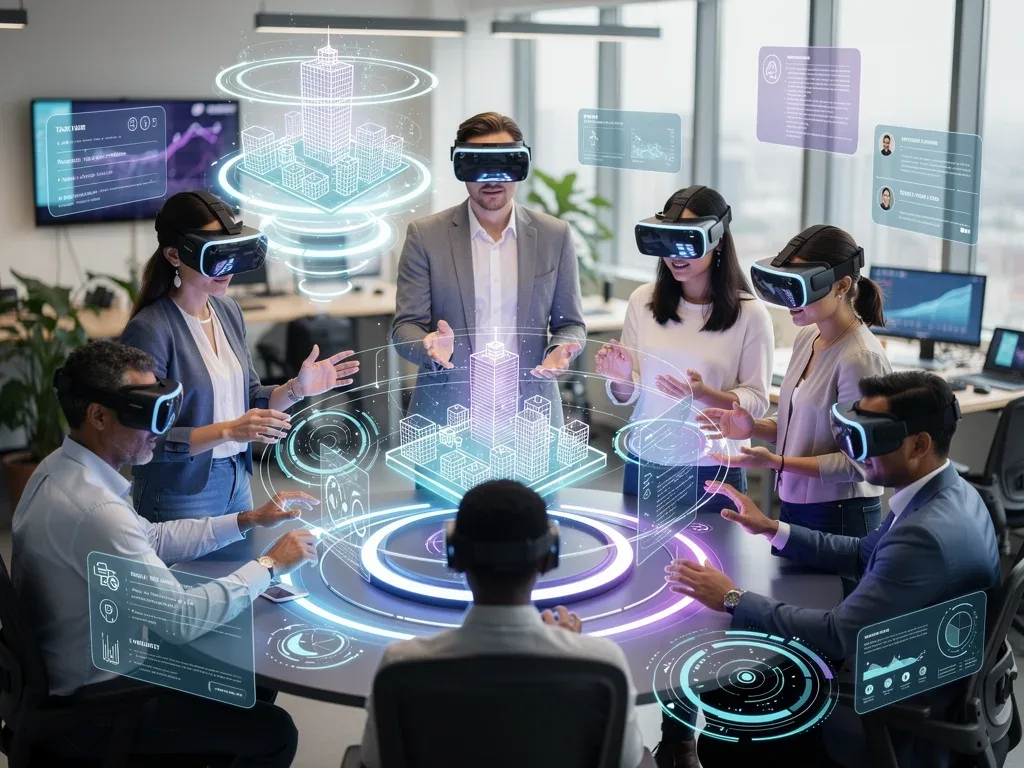
US tech firms are cutting new employee onboarding time by up to 45% by integrating spatial computing and interactive sandboxes, creating immersive and highly effective training environments that accelerate skill acquisition and cultural integration.
The landscape of talent acquisition and integration is undergoing a profound transformation. As technology continues its relentless march forward, US tech firms are discovering innovative ways to optimize every facet of their operations, including the crucial initial phase of bringing new talent into the fold. A groundbreaking shift is emerging with the adoption of spatial computing and interactive sandboxes, proving to significantly accelerate the onboarding process. Indeed, reports indicate that companies leveraging these advanced technologies are witnessing a remarkable reduction in onboarding time, with some firms cutting it by as much as 45%.
The Evolution of Onboarding: From Manual to Metaverse
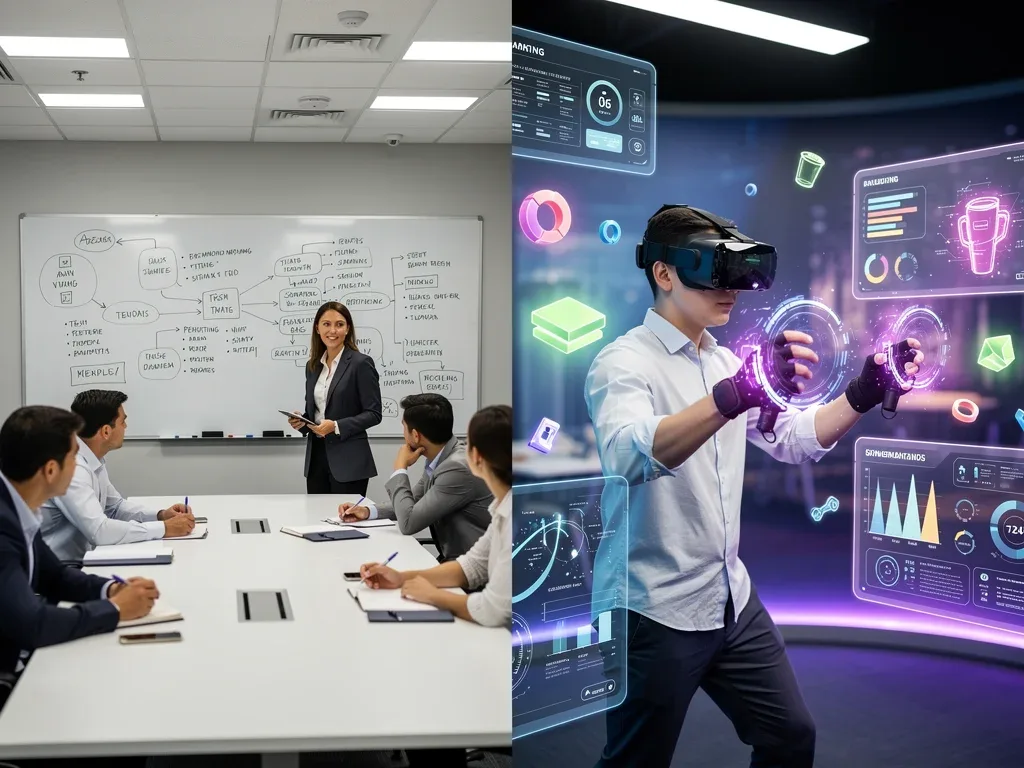
Onboarding, traditionally a time-consuming and often inconsistent process, has long been a bottleneck for productivity in rapidly evolving tech environments. The conventional methods, often involving stacks of paperwork, lengthy presentations, and sporadic one-on-one sessions, can overwhelm new hires and delay their full contribution to the team. However, the advent of immersive technologies is rewriting this narrative, ushering in an era where the initial days and weeks of a new employee are not just efficient but truly transformative.
Spatial computing, encompassing augmented reality (AR), virtual reality (VR), and mixed reality (MR), offers an unprecedented opportunity to create dynamic, engaging, and highly effective learning environments. By moving beyond two-dimensional screens, these technologies allow new employees to interact with virtual content in a three-dimensional space, mirroring real-world scenarios and fostering a deeper understanding of complex systems and company culture. This shift from passive learning to active engagement is fundamental to the accelerated onboarding reported by leading US tech firms.
Traditional Onboarding Challenges
- Information Overload: New hires are often bombarded with too much information too quickly, leading to poor retention.
- Lack of Practical Application: Theoretical training often fails to provide hands-on experience crucial for tech roles.
- Inconsistent Experience: Onboarding quality can vary significantly depending on the trainer or department.
- Time and Resource Intensive: Traditional methods demand substantial time from existing employees and resources.
The transition to a more technologically advanced onboarding approach is not merely about adopting new tools; it's about fundamentally rethinking how we integrate new talent. It acknowledges that modern learners thrive in interactive, self-paced, and experiential settings. The goal is to move beyond simply informing new hires to truly immersing them in their roles and the company's ecosystem from day one, making them productive contributors much faster.
This section highlights the critical need for innovation in onboarding, setting the stage for how spatial computing provides a compelling answer to long-standing challenges. The evolution signifies a move towards more personalized, engaging, and ultimately, more effective integration strategies that benefit both the employee and the organization.
Understanding Spatial Computing and Its Onboarding Potential
Spatial computing is a paradigm shift that integrates digital information with our physical world, allowing us to interact with data and applications in three dimensions. Unlike traditional computing, which is largely confined to screens, spatial computing enables users to experience and manipulate digital content as if it were part of their physical environment. This immersive capability is what makes it such a powerful tool for transforming the onboarding experience, especially within the demanding context of US tech firms.
For new hires, this means stepping into a virtual or augmented environment where they can immediately begin to explore, experiment, and learn in a hands-on manner. Imagine a new software engineer being able to walk through a virtual representation of a company's entire network infrastructure, identifying potential vulnerabilities or understanding data flow, all before touching a live system. Or a product designer collaboratively prototyping a new interface in a shared virtual space, receiving instant feedback and iterating in real-time. These scenarios, once futuristic, are now becoming standard practice.
Key Components of Spatial Computing for Onboarding
- Virtual Reality (VR): Fully immersive digital environments that block out the physical world, ideal for highly focused training simulations.
- Augmented Reality (AR): Overlays digital information onto the real world, excellent for contextual learning and on-the-job assistance.
- Mixed Reality (MR): Blends VR and AR, allowing digital objects to interact with the real world, offering the most versatile immersive experiences.
- Haptic Feedback Systems: Devices that provide tactile sensations, enhancing the realism and engagement of virtual interactions.
The power of spatial computing lies in its ability to create highly realistic and consequence-free training environments. New employees can make mistakes, learn from them, and refine their skills without impacting live systems or requiring direct supervision. This self-directed, experiential learning accelerates skill acquisition and builds confidence, which are critical for new hires to feel competent and integrated quickly. Moreover, the gamified nature of many spatial computing applications can make learning more enjoyable and memorable, further boosting engagement.
By providing a safe and interactive space for exploration, spatial computing helps bridge the gap between theoretical knowledge and practical application. It allows new hires to internalize complex procedures, understand intricate systems, and even practice soft skills like collaboration and problem-solving in a dynamic setting. This foundational understanding is invaluable for reducing the initial learning curve and enabling new employees to contribute meaningfully much sooner than with traditional methods.
Interactive Sandboxes: The Core of Accelerated Learning
Interactive sandboxes are at the heart of how spatial computing is revolutionizing onboarding. These are controlled, simulated environments where new hires can safely experiment with tools, systems, and scenarios without fear of real-world consequences. Think of them as digital playgrounds designed specifically for learning and development. In the context of tech firms, this often means virtual replicas of complex software platforms, network architectures, or hardware systems where new employees can freely explore, troubleshoot, and build.
The beauty of an interactive sandbox is its ability to provide hands-on experience that is often difficult or impossible to replicate in a live production environment. For instance, a new cybersecurity analyst can practice responding to simulated cyberattacks, identifying vulnerabilities, and implementing countermeasures in a virtual network. A new developer can deploy code, test features, and even intentionally break systems to understand their failure modes, all within a safe, isolated environment. This experiential learning is far more effective than simply reading manuals or watching demonstrations.

Benefits of Interactive Sandboxes in Onboarding
- Risk-Free Experimentation: New hires can learn by doing without affecting live systems or customer data.
- Personalized Learning Paths: Sandboxes can adapt to individual learning speeds and styles, offering customized challenges.
- Immediate Feedback: Systems can provide instant corrections and guidance, accelerating the learning cycle.
- Cost-Effective Training: Reduces the need for physical resources, travel, and dedicated trainer time.
- Enhanced Engagement: The interactive nature keeps learners motivated and invested in the process.
These sandboxes are not just about technical skills; they can also be designed to simulate team collaboration, client interactions, or even crisis management scenarios, allowing new employees to practice soft skills in a realistic setting. The ability to replay scenarios, review performance, and receive targeted feedback further enhances the learning process, ensuring that critical lessons are absorbed and retained.
The integration of interactive sandboxes powered by spatial computing transforms onboarding from a passive information transfer into an active, engaging, and highly effective learning journey. This approach not only speeds up the time to proficiency but also fosters a sense of accomplishment and belonging, setting new hires up for long-term success within the organization.
Case Studies: Real-World Impact in US Tech Firms
The theoretical benefits of spatial computing and interactive sandboxes are compelling, but their real impact is best illustrated through the tangible results achieved by pioneering US tech firms. These companies, ranging from Silicon Valley giants to innovative startups, are reporting significant reductions in onboarding time and corresponding improvements in new hire productivity and satisfaction. Their experiences provide a blueprint for how others can leverage these technologies.
One prominent example comes from a leading cloud services provider that implemented a VR-based sandbox for new network engineers. Traditionally, it took new hires up to six months to become fully proficient in managing complex network configurations. After introducing the VR sandbox, which allowed engineers to build, test, and troubleshoot virtual networks, the average time to proficiency dropped to just over three months – a 50% reduction. This dramatic improvement was attributed to the ability to gain extensive hands-on experience in a fraction of the time, without the risks associated with live environments.
Examples of Success Stories
- Software Development Firm: Reduced time-to-first-contribution by 40% using AR-guided code reviews and virtual collaborative programming environments. New developers could quickly understand complex legacy codebases.
- Hardware Manufacturer: Cut assembly line training from weeks to days with MR overlays that provided step-by-step instructions and real-time performance feedback on physical products.
- Data Analytics Company: Accelerated training on proprietary data visualization tools by 45% using VR environments where analysts could manipulate large datasets in 3D, uncovering insights more intuitively.
Another impactful case involves a major e-commerce platform that utilized AR for its customer service representatives. New reps used AR headsets to visualize customer account information and guided troubleshooting flows overlaid on their physical workspace. This contextual information reduced call handling times for new hires by 30% within their first month, significantly improving customer satisfaction and reducing the burden on senior staff who previously had to constantly assist new reps.
These case studies underscore a common theme: immersive technologies provide a level of experiential learning that traditional methods simply cannot match. By allowing new employees to "do" rather than just "observe" or "read," these firms are not only accelerating skill acquisition but also fostering a deeper sense of confidence and competence, leading to higher retention rates and a more engaged workforce from the outset.
Integrating Spatial Computing into Existing Onboarding Programs
The prospect of integrating spatial computing into an existing onboarding program might seem daunting, but many US tech firms are demonstrating that it's an achievable and highly beneficial endeavor. The key lies in a phased approach, identifying critical areas where immersive experiences can deliver the most significant impact, and then gradually expanding the scope.
The first step typically involves a thorough assessment of the current onboarding process to pinpoint bottlenecks and areas where new hires struggle most. Is it understanding complex software architectures? Learning specific hardware assembly procedures? Or perhaps grasping the nuances of company culture and collaboration tools? Once these pain points are identified, targeted spatial computing solutions can be developed or acquired.
Strategies for Seamless Integration
- Pilot Programs: Start with a small group or specific department to test the effectiveness and gather feedback before a wider rollout.
- Modular Content Creation: Develop VR/AR training modules that can be easily updated and adapted to different roles or company changes.
- Hybrid Approaches: Combine immersive training with traditional methods to leverage the strengths of both, ensuring a well-rounded experience.
- Trainer Buy-in and Training: Equip existing trainers with the skills to facilitate immersive learning experiences and understand the technology.
- Technology Infrastructure: Ensure adequate hardware (headsets, powerful PCs) and network capabilities are in place to support the immersive experiences.
Furthermore, successful integration often involves creating a "spatial computing champion" within the HR or L&D department – someone who can advocate for the technology, manage its implementation, and serve as a resource for both new hires and existing staff. This person helps ensure that the technology is not just adopted but effectively utilized to its full potential.
Measuring the impact of this integration is also crucial. Firms are tracking metrics such as time-to-proficiency, new hire satisfaction, early turnover rates, and direct feedback from participants. These data points provide valuable insights into the effectiveness of the immersive programs and guide continuous improvement. By carefully planning and executing the integration, companies can unlock the full potential of spatial computing to create a more efficient, engaging, and impactful onboarding journey for every new employee.
Overcoming Challenges and Future Outlook
While the benefits of using spatial computing for onboarding are clear, its widespread adoption is not without challenges. US tech firms implementing these solutions are navigating issues ranging from initial investment costs to content creation complexities and user adoption. However, proactive strategies are emerging to address these hurdles, paving the way for a future where immersive onboarding becomes the norm rather than the exception.
The initial investment in hardware (VR/AR headsets) and software development can be substantial. To mitigate this, many firms are opting for a phased rollout, starting with high-impact roles or departments where the return on investment (ROI) is most evident. They are also exploring subscription-based platforms and off-the-shelf solutions that offer more accessible entry points into immersive training. As the technology matures and becomes more mainstream, hardware costs are expected to decrease, making it more attainable for a broader range of companies.
Common Challenges and Solutions
- High Initial Cost: Phased implementation, focus on high-ROI areas, explore subscription models.
- Content Creation Complexity: Utilize specialized agencies, leverage existing 3D assets, invest in user-friendly authoring tools.
- Technical Support: Establish dedicated IT support teams for immersive tech, provide clear troubleshooting guides.
- User Adoption: Emphasize benefits, provide comprehensive training, make experiences engaging and intuitive.
- Motion Sickness/Discomfort: Design experiences carefully, offer breaks, ensure comfortable hardware, provide alternatives.
Another significant challenge is the creation of compelling and effective immersive content. Developing realistic simulations and interactive sandboxes requires specialized skills in 3D modeling, game design, and instructional design. To overcome this, many firms are partnering with external agencies or investing in upskilling their internal teams. The rise of user-friendly authoring tools is also democratizing content creation, allowing subject matter experts to contribute more directly to the development of training modules.
Looking ahead, the future of onboarding with spatial computing is incredibly promising. Advances in AI are expected to personalize training even further, adapting content in real-time based on a new hire's performance and learning style. Haptic feedback will become more sophisticated, offering even greater realism in simulations. Furthermore, the development of open standards and interoperable platforms will make it easier for companies to integrate diverse immersive tools and content, creating a seamless and comprehensive onboarding ecosystem. The journey has just begun, and the potential for transforming how we welcome and integrate talent is immense.
The Strategic Advantage: Beyond Just Time Savings
While the 45% reduction in onboarding time is a compelling metric, the strategic advantages of leveraging spatial computing and interactive sandboxes extend far beyond mere efficiency gains. For US tech firms, this innovative approach translates into a significant competitive edge, impacting everything from talent attraction and retention to overall organizational agility and innovation capacity. It's about building a stronger, more capable workforce from the ground up.
In a highly competitive talent market, offering a cutting-edge onboarding experience can be a powerful differentiator. Prospective employees, particularly those in the tech sector, are increasingly drawn to companies that embrace advanced technologies and demonstrate a commitment to employee development. An immersive, engaging onboarding program signals a forward-thinking culture, making a firm more attractive to top-tier talent and enhancing its employer brand.
Long-Term Strategic Benefits
- Higher Employee Retention: Engaged and well-trained employees are more likely to stay with the company long-term.
- Improved Employee Satisfaction: A positive onboarding experience fosters early loyalty and job satisfaction.
- Enhanced Productivity: Faster time-to-proficiency means new hires contribute meaningfully much sooner.
- Reduced Training Costs: Over time, immersive solutions can be more cost-effective than repetitive traditional training.
- Greater Agility: Ability to quickly scale training for new projects or technologies, adapting to market demands.
- Innovation Catalyst: Exposure to cutting-edge tech during onboarding can inspire new ideas and approaches within the company.
Moreover, the quality of onboarding directly correlates with employee retention. New hires who feel supported, competent, and integrated early on are far more likely to remain with the company. By fostering a sense of belonging and providing the tools for rapid success, spatial computing helps reduce costly early turnover, protecting the investment made in recruiting and training.
Ultimately, the adoption of spatial computing in onboarding is not just a technological upgrade; it's a strategic investment in human capital. It empowers tech firms to build a highly skilled, adaptable, and engaged workforce capable of driving future innovation and maintaining a leadership position in a rapidly changing global landscape. The 45% time savings is merely the most visible indicator of a much deeper, more profound transformation in how companies nurture their most valuable asset: their people.
| Key Aspect | Impact on Onboarding |
|---|---|
| Spatial Computing | Enables immersive, 3D learning experiences, mirroring real-world scenarios for deeper understanding. |
| Interactive Sandboxes | Provides risk-free environments for hands-on experimentation, accelerating skill acquisition. |
| Time Reduction | US tech firms report up to 45% decrease in overall onboarding duration. |
| Strategic Advantage | Boosts talent attraction, retention, new hire satisfaction, and overall organizational agility. |
Frequently Asked Questions About Spatial Computing in Onboarding
What is spatial computing in the context of onboarding?▼Spatial computing for onboarding involves using technologies like VR, AR, and MR to create immersive, three-dimensional training environments. New hires interact with digital content in a physical space, allowing for hands-on learning and practical application of skills in a simulated setting.
How do interactive sandboxes contribute to faster onboarding?▼Interactive sandboxes provide risk-free virtual environments where new employees can experiment with complex systems and scenarios without real-world consequences. This safe space for practice accelerates skill acquisition, builds confidence, and allows for immediate feedback, speeding up proficiency.
What kind of tech firms are seeing these onboarding improvements?▼A wide range of US tech firms, including cloud service providers, software development companies, hardware manufacturers, and data analytics firms, are successfully implementing these technologies and reporting significant reductions in onboarding time.
Are there significant challenges in adopting spatial computing for onboarding?▼Yes, challenges include initial investment costs for hardware and software, the complexity of creating immersive content, and ensuring seamless user adoption. However, these are being addressed through phased rollouts, specialized partnerships, and user-friendly tools.
Beyond time savings, what are the strategic benefits?▼The strategic benefits include enhanced talent attraction and retention, higher employee satisfaction, improved early productivity, reduced long-term training costs, and increased organizational agility. It positions firms as innovative leaders in the competitive tech landscape.
Conclusion
The remarkable 45% reduction in onboarding time achieved by US tech firms leveraging spatial computing onboarding and interactive sandboxes marks a pivotal moment in human resources and talent development. This isn't merely an incremental improvement; it's a fundamental redefinition of how organizations integrate new employees, transforming a traditionally passive process into an immersive, engaging, and highly effective experience. Beyond the immediate gains in efficiency, these technologies are fostering a more skilled, confident, and satisfied workforce, ultimately providing a powerful strategic advantage in a rapidly evolving industry. As spatial computing continues to mature, its role in shaping the future of work and accelerating human potential will only grow, making it an indispensable tool for any forward-thinking tech enterprise.
