Subscription Fatigue Shift: 55% Households Cut Auto-Renew Services
Advertisements

A significant 55% of US households are actively reducing their auto-renew subscriptions to fewer than three monthly services, indicating a prominent shift in consumer behavior driven by subscription fatigue and a reevaluation of digital spending priorities.
The landscape of consumer spending is undergoing a profound transformation, with a notable phenomenon termed the subscription fatigue shift taking center stage. This refers to the growing trend where a remarkable 55% of households are actively re-evaluating and subsequently reducing their auto-renew services, aiming for fewer than three monthly subscriptions. This pivotal change signals a broader recalibration of how individuals and families perceive and manage their digital and recurring expenditures.
Understanding the Rise of Subscription Fatigue
Subscription fatigue is more than just a buzzword; it's a tangible economic and psychological phenomenon affecting millions of consumers. It describes the overwhelming feeling experienced by individuals who are juggling too many recurring payments, often leading to a sense of being overcommitted and financially strained. This weariness is driving a mass exodus from the once-ubiquitous subscription model, forcing businesses to adapt or risk being left behind.
The initial appeal of subscriptions was undeniable: convenience, access, and often, a perceived cost-saving. However, as the number of available services exploded across entertainment, software, fitness, and even everyday essentials, the cumulative cost and mental load began to outweigh the benefits for many. Consumers are now taking a critical look at their monthly statements, identifying non-essential services, and making difficult choices to streamline their digital lives.
The Proliferation Problem
The sheer volume of subscription options contributed significantly to this fatigue. From streaming platforms to meal kits, and from productivity software to gaming passes, the market became saturated. Each new service promised unique value, but collectively, they created a labyrinth of recurring charges that became difficult to track and manage.
- Streaming Services: The fragmentation of content across multiple platforms (Netflix, Hulu, Disney+, Max, etc.) often requires multiple subscriptions to access desired shows and movies.
- Software as a Service (SaaS): Many individuals and small businesses accumulate numerous SaaS subscriptions for everything from email management to graphic design.
- Lifestyle Boxes: Monthly deliveries of curated products, while exciting initially, can become redundant or unwanted over time.
- Gaming Subscriptions: Online multiplayer access, game passes, and cloud gaming services add to the recurring expense.
This proliferation meant that even budget-conscious consumers inadvertently accumulated a significant monthly outlay. The convenience of auto-renewal, once a selling point, became a silent drain on finances, often going unnoticed until a comprehensive review was conducted.
Financial Strain and Economic Pressure
The current economic climate, characterized by inflation and rising living costs, has undeniably accelerated the subscription fatigue shift. Households are feeling the pinch, and discretionary spending is often the first area to be scrutinized. What was once a small, manageable monthly fee for a single service now represents a substantial portion of a household's budget when multiplied across several platforms.
Consumers are becoming more conscious of every dollar spent, leading to a prioritization of essential services over perceived luxuries. This financial pressure is a primary catalyst for the widespread reduction in auto-renew subscriptions, as households seek to regain control over their finances and ensure their spending aligns with their current economic realities.
In conclusion, subscription fatigue stems from both the overwhelming number of services available and the increasing financial burden they represent. This combination has pushed a significant portion of the population to simplify their digital lives and re-evaluate the true value of each recurring expense.
The Impact on Household Budgets and Consumer Behavior
The widespread reduction in auto-renew services has profound implications for household budgets, shifting how consumers allocate their discretionary income. This isn't merely about cutting costs; it's a strategic realignment of spending priorities, reflecting a more deliberate and conscious approach to consumption. The days of signing up for every new service without much thought are rapidly fading, replaced by a scrutinizing eye on value and necessity.
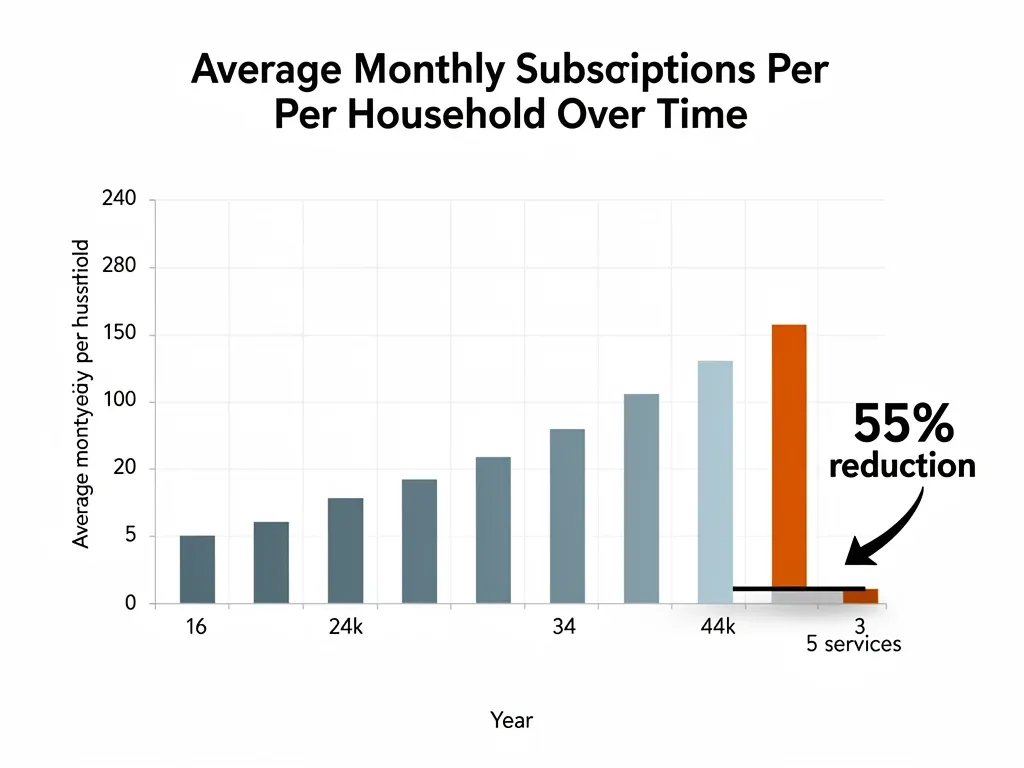
Households are increasingly adopting a minimalist approach to their digital subscriptions, opting for quality over quantity. This means they are more likely to retain services that offer indispensable value or unique content, while shedding those that are rarely used or have become redundant. This behavioral shift is creating a more discerning consumer base, one that demands clear benefits and a strong return on investment for their recurring payments.
Prioritizing Essential vs. Non-Essential
A key aspect of this behavioral change is the clear distinction consumers are making between essential and non-essential subscriptions. Essential services often include utility-like offerings such as internet access, mobile phone plans, or critical productivity software. Non-essential services, while enjoyable, are typically entertainment-based or convenience-driven, and are therefore more susceptible to being cut.
- Entertainment Streaming: Many households are consolidating their streaming services, perhaps keeping one or two primary platforms and rotating others seasonally.
- Fitness Apps: While popular, these are often among the first to go if engagement wanes or if free alternatives are available.
- Digital News and Magazines: Consumers are becoming more selective, often opting for free news sources or library access over multiple paid subscriptions.
- Cloud Storage: While essential for some, many re-evaluate if they truly need premium tiers or if free options suffice.
This prioritization reflects a growing awareness of perceived value. If a service isn't being utilized regularly or providing a distinct, irreplaceable benefit, it's increasingly seen as a prime candidate for cancellation. This selective approach helps households not only save money but also reduce digital clutter and decision fatigue.
The Search for Value and Flexibility
Consumers are no longer content with simply having access; they are actively seeking flexibility and demonstrable value from their subscription providers. This means services that offer annual payment discounts, pause options, or transparent usage data are likely to retain customers more effectively. The demand for clear, tangible benefits has never been higher.
The impact on household budgets is significant. By reducing the number of subscriptions, families free up funds that can be reallocated to savings, debt repayment, or other essential expenditures. This financial agility is a direct consequence of the subscription fatigue shift, empowering consumers to exert greater control over their money in an uncertain economic climate. The shift reflects a broader trend towards mindful spending and a rejection of passive consumption, leading to more intentional financial management within households.
Strategies for Consumers to Combat Subscription Overload
For consumers feeling overwhelmed by the sheer volume and cost of their subscriptions, there are practical and effective strategies to regain control. The key lies in systematic review, conscious decision-making, and proactive management. It’s about transforming a passive financial drain into an active, intentional choice, ensuring every dollar spent on a subscription provides genuine value.
One of the most crucial first steps is to gain a clear understanding of exactly what subscriptions are active and what they cost. Many services are set up for auto-renewal, and it's easy to lose track of them over time. A thorough audit can reveal surprising insights into forgotten or underutilized services that are still draining funds from your account.
Conducting a Subscription Audit
The most effective way to combat overload is to perform a regular, comprehensive audit of all recurring payments. This involves more than just glancing at a bank statement; it requires a detailed investigation.
- Review Bank and Credit Card Statements: Go through the last 12 months of statements to identify all recurring charges. Many forgotten subscriptions resurface during this process.
- Utilize Subscription Management Apps: Several apps are designed to help track and manage subscriptions, often identifying services you may have overlooked.
- Create a Spreadsheet: List each subscription, its monthly/annual cost, renewal date, and perceived value. This visual aid can be incredibly helpful.
Once identified, evaluate each subscription critically. Ask yourself: how often do I use this service? Does it bring significant value or joy? Are there free or cheaper alternatives that meet my needs? This audit provides the necessary data to make informed decisions about what to keep, what to pause, and what to cancel entirely.
Implementing a Rotation or Consolidation Strategy
Instead of maintaining all subscriptions simultaneously, consumers can adopt a rotation strategy, particularly for entertainment services. This involves subscribing to one or two streaming platforms for a few months, canceling them, and then subscribing to others to catch up on new content. This cyclical approach ensures access to a variety of content without the cumulative cost.
Another effective strategy is consolidation. For instance, if you have multiple news subscriptions, consider consolidating to one comprehensive news source that covers most of your interests. Similarly, for fitness apps, choose one that offers a broad range of workouts rather than several niche ones. This approach minimizes redundancy and maximizes the value of each remaining subscription.
By actively auditing and strategically managing subscriptions, consumers can significantly reduce financial strain and the mental burden of too many recurring payments. This proactive stance empowers individuals to curate a digital ecosystem that truly serves their needs and budget, aligning with the broader subscription fatigue shift.
The Business Response: Adapting to the New Consumer Reality
The significant shift in consumer behavior, marked by the subscription fatigue shift, is not going unnoticed by businesses. Companies that once thrived on the auto-renew model are now facing a new reality: customers are more discerning, less tolerant of unused services, and actively seeking greater value. This forces a critical re-evaluation of business models, pricing strategies, and customer retention efforts. Simply acquiring new subscribers is no longer enough; retaining them requires a deeper understanding of their evolving needs.
The most successful businesses in this new landscape will be those that prioritize transparency, flexibility, and demonstrable value. They are moving away from a 'set it and forget it' mentality for their customers and towards a more dynamic relationship where the customer feels in control and genuinely valued. This adaptation is crucial for long-term sustainability in a market where consumers are increasingly empowered to make active choices about their subscriptions.
Enhancing Value Proposition and Personalization
To combat cancellations, businesses are focusing on strengthening their value proposition. This means not just offering a service, but constantly proving its worth. Personalization plays a crucial role here, ensuring that the content, features, or products delivered are highly relevant to individual subscribers.
- Personalized Content Recommendations: Streaming services are refining algorithms to ensure users discover content they love, increasing engagement.
- Tiered Pricing Models: Offering different subscription tiers allows consumers to choose a plan that best fits their usage and budget, reducing the likelihood of overpaying for unused features.
- Exclusive Member Benefits: Providing unique perks, early access, or discounts to loyal subscribers can create a stronger sense of belonging and value.
Businesses are also investing in user experience, making it easier for subscribers to manage their accounts, pause subscriptions, or even switch tiers. This flexibility is a direct response to consumer demand for greater control over their recurring payments.
Focus on Retention and Churn Prevention
With acquisition costs often high, retaining existing customers is more critical than ever. Businesses are employing sophisticated data analytics to identify at-risk subscribers and proactively engage with them. This includes personalized outreach, offering incentives for continued loyalty, or even providing a temporary pause option rather than a full cancellation.

Another strategy is to offer annual plans with significant discounts, encouraging a longer-term commitment from customers who are confident in the service's value. Businesses are also experimenting with bundled offerings, partnering with other services to create more comprehensive and cost-effective packages that appeal to consumers looking to consolidate their expenses. The business response to the subscription fatigue shift is characterized by innovation and a renewed focus on understanding and meeting the evolving needs of a more discerning consumer base. By adapting to these changes, companies can transform potential churn into sustained loyalty.
The Future of the Subscription Economy: Beyond Fatigue
The current subscription fatigue shift is not an indicator of the demise of the subscription economy, but rather a necessary evolution. The future will likely see a more refined and sustainable model, driven by consumer demand for greater value, flexibility, and transparency. Businesses that successfully navigate this transition will emerge stronger, offering services that genuinely integrate into consumers' lives rather than merely adding to their monthly expenses. The focus will shift from sheer volume to meaningful engagement and personalized utility.
The era of passive auto-renewals is giving way to an age of active consumer choice. This means subscription providers will need to continuously innovate, justify their recurring cost, and foster a relationship built on trust and mutual benefit. The market will undoubtedly become more competitive, with a stronger emphasis on differentiation and customer-centric strategies.
Emergence of Curated Bundles and Micro-Subscriptions
One potential future trend is the rise of highly curated bundles. Instead of subscribing to multiple individual services, consumers might opt for bespoke packages that combine several complementary offerings at a reduced price. These bundles could be tailored to specific interests, life stages, or professional needs, offering greater convenience and perceived value.
- Family Entertainment Bundles: Combining a few select streaming services with educational apps for children.
- Productivity Suites: Integrating various software tools essential for remote work or specific industries.
- Wellness Packages: Bundling fitness apps, meditation guides, and healthy meal planning services.
Conversely, we might also see an increase in micro-subscriptions, offering access to specific features or content on a pay-per-use or short-term basis. This allows consumers to dip in and out of services without the commitment of a full monthly plan, catering to sporadic usage patterns and enhancing flexibility.
Emphasis on Value-Driven Engagement
The future subscription model will heavily rely on providing continuous, measurable value. Services will need to demonstrate their utility and impact on subscribers' lives, moving beyond mere access. This could involve more personalized insights, proactive recommendations, and features that genuinely save time, money, or enhance well-being.
Furthermore, ethical considerations and corporate social responsibility may play a larger role in consumer choices. Subscribers might increasingly favor companies that align with their values, contributing to a more conscious consumption model. The future of the subscription economy is bright for those willing to adapt, innovate, and truly put the customer at the center of their strategy, moving beyond the current fatigue towards a more valuable and sustainable model.
Re-evaluating Digital Consumption Habits
The subscription fatigue shift is prompting a broader re-evaluation of digital consumption habits across American households. This introspection extends beyond just recurring payments, influencing how individuals interact with technology, manage their time online, and perceive the value of digital services. It's a movement towards intentionality, where consumers are asking not just what they are paying for, but also what they are gaining and, critically, what they are sacrificing in terms of time and attention.
This re-evaluation is leading to a more mindful approach to digital engagement. Instead of passively consuming endless streams of content or accumulating unused apps, individuals are becoming more selective. They are seeking digital experiences that genuinely enrich their lives, support their goals, or provide meaningful entertainment, rather than contributing to digital clutter or decision overload.
The Quest for Digital Minimalism
A growing number of consumers are embracing principles of digital minimalism, applying them to their subscription choices. This philosophy advocates for consciously reducing digital noise and distractions to focus on what truly matters. In the context of subscriptions, this means carefully curating a small, high-value selection of services that align with personal priorities.
- Decluttering Apps: Regularly uninstalling unused apps that may have hidden subscription features or contribute to notification fatigue.
- Time Management: Being more intentional about how time is spent on subscribed platforms, ensuring active engagement rather than passive scrolling.
- Prioritizing Well-being: Choosing subscriptions that support mental or physical health, such as meditation apps or fitness programs, over purely entertainment-driven ones if a choice must be made.
This quest for digital minimalism is a direct counter-movement to the overwhelming digital abundance that characterized the past decade. It’s about creating a more focused and less distracting online environment, which naturally extends to a leaner subscription portfolio.
Shifting Perceptions of Ownership vs. Access
The subscription model fundamentally shifted consumer perception from ownership to access. However, the fatigue is causing some consumers to re-evaluate this trade-off. While access offers flexibility and reduces upfront costs, the cumulative recurring payments can feel less like a benefit and more like a never-ending rental fee. This is leading to a renewed interest in purchasing digital content outright for certain categories, or at least a more critical assessment of when access truly outweighs ownership.
This re-evaluation of digital consumption habits is a powerful force shaping the future market. Businesses that understand this desire for intentionality, minimalism, and a clear return on investment will be best positioned to thrive. It’s about providing solutions that simplify, rather than complicate, the digital lives of consumers.
Future-Proofing Your Subscription Portfolio
In an evolving market shaped by the subscription fatigue shift, future-proofing your subscription portfolio is essential for both individuals and businesses. For consumers, it means adopting proactive strategies to maintain control over spending and digital clutter. For businesses, it involves creating resilient and adaptable service offerings that continuously meet changing consumer expectations. The goal is to build a subscription ecosystem that is sustainable, valuable, and resistant to the ebbs and flows of consumer sentiment and economic pressures.
This process requires foresight and a willingness to adapt. For individuals, it's about making conscious choices that align with long-term financial goals and personal values. For companies, it's about fostering innovation and maintaining a deep understanding of their customer base, ensuring that their services remain indispensable and relevant in a crowded market.
For Consumers: Building a Lean, Mean Subscription Machine
To future-proof your personal subscription portfolio, consider these strategies:
- Annual Reviews: Schedule a yearly (or bi-annual) audit of all subscriptions, treating it as a financial check-up.
- Budget Allocation: Set a strict budget for discretionary subscriptions and stick to it, forcing prioritization.
- Utilize Free Trials Wisely: Be mindful of free trials; cancel before the auto-renewal if you're not fully committed.
- Consolidate and Rotate: Actively look for opportunities to bundle services or rotate entertainment subscriptions to maximize value without increasing cost.
- Prioritize Needs Over Wants: Distinguish between subscriptions that are truly necessary for daily life or work and those that are purely for entertainment or convenience.
By adopting these habits, consumers can create a lean, efficient subscription portfolio that provides maximum value without contributing to financial stress or digital overload. It empowers them to be active managers of their digital consumption rather than passive recipients.
For Businesses: Innovating for Loyalty and Value
Businesses must innovate to future-proof their offerings in the face of subscription fatigue:
- Flexible Pricing Models: Offer options like pause features, seasonal subscriptions, or pay-per-use for specific content.
- Enhanced Personalization: Leverage data to provide highly relevant content, features, and recommendations that make the service indispensable.
- Transparent Value Communication: Clearly articulate the benefits and return on investment for the subscription, constantly reminding customers of its worth.
- Focus on Community and Exclusivity: Build a sense of community around the brand or offer exclusive content/features that cannot be found elsewhere.
- Seamless Cancellation Process: While counterintuitive, making cancellations easy can build trust and encourage re-subscription in the future, rather than fostering resentment.
Ultimately, future-proofing involves a symbiotic relationship where consumers are empowered to make informed choices, and businesses are committed to delivering continuous, undeniable value. This collaborative approach ensures the subscription economy can evolve sustainably, moving beyond the current fatigue towards a more robust and mutually beneficial future.
| Key Trend | Brief Description |
|---|---|
| Subscription Fatigue | Overwhelm from managing too many auto-renew services, leading to cancellations. |
| Household Reduction | 55% of US households are cutting subscriptions to fewer than three per month. |
| Value-Driven Choices | Consumers prioritize services offering clear, consistent value and flexibility. |
| Business Adaptation | Companies are innovating with personalization, retention, and flexible models. |
Frequently Asked Questions About Subscription Fatigue
What is subscription fatigue and why is it happening?▼Subscription fatigue is the exhaustion consumers feel from managing numerous recurring digital services. It's happening due to the overwhelming proliferation of subscription options, coupled with rising living costs, which forces households to scrutinize and reduce non-essential expenditures to regain financial control.
How many households are affected by this subscription fatigue shift?▼A significant 55% of US households are actively cutting down their auto-renew services. This trend shows a clear move towards having fewer than three monthly subscriptions, indicating a major re-evaluation of digital spending habits and a desire for simplified financial management.
What are consumers doing to combat subscription overload?▼Consumers are conducting regular subscription audits, reviewing bank statements, and using management apps to identify and cancel unused services. Many are also adopting rotation strategies for entertainment platforms and consolidating similar services to maximize value and minimize costs effectively.
How are businesses responding to the subscription fatigue trend?▼Businesses are adapting by enhancing value propositions through personalization, offering tiered pricing, and focusing heavily on customer retention. They are also exploring flexible options like pause features and curated bundles to better meet consumer demand for control and demonstrable value from their services.
What does the future hold for the subscription economy?▼The future of the subscription economy will likely be more refined, with a focus on curated bundles, micro-subscriptions, and value-driven engagement. Businesses will need to prioritize transparency, flexibility, and continuous innovation to thrive, moving towards a more sustainable model that deeply integrates into consumers' lives.
Conclusion
The subscription fatigue shift is more than a fleeting trend; it represents a fundamental recalibration of consumer behavior and expectations within the digital economy. The fact that 55% of US households are reducing their auto-renew services to fewer than three monthly subscriptions underscores a collective desire for financial control, simplified digital lives, and a clearer return on investment for their recurring payments. For consumers, this means embracing proactive management strategies and a discerning approach to digital consumption. For businesses, it necessitates a pivot towards greater transparency, personalization, and flexible offerings that consistently deliver tangible value. The subscription economy is not disappearing, but it is undoubtedly evolving, demanding innovation and a renewed focus on the customer to ensure its long-term viability and growth.
