Voice-Commerce Surge: AI Drives 28% of US Household Reorders
Advertisements

Voice-commerce reorders are rapidly increasing across the United States, with conversational AI driving 28% of routine household purchases, fundamentally reshaping consumer shopping habits and market dynamics.
The landscape of consumer purchasing is undergoing a profound transformation, with conversational AI at the forefront. The latest data reveals a remarkable trend: voice commerce reorders now account for an astonishing 28% of routine household purchases across the United States. This isn't just a minor shift; it represents a significant evolution in how consumers interact with brands and manage their daily needs, driven by the increasing sophistication and accessibility of voice-activated technologies.
The rise of conversational AI in daily shopping
Conversational AI has evolved from a futuristic concept to an integral part of our daily lives. Smart speakers, virtual assistants, and AI-powered interfaces are no longer novelties but essential tools that simplify tasks, including shopping. This integration is particularly evident in the realm of routine household reorders, where convenience is paramount.
The ability to simply speak a command to reorder groceries, cleaning supplies, or pet food has eliminated friction points associated with traditional online or in-store shopping. Consumers are embracing this hands-free, intuitive method, making it a preferred channel for repetitive purchases.
Understanding the underlying technology
- Natural Language Processing (NLP): This technology allows AI to understand and interpret human language, making voice commands feel natural and intuitive.
- Machine Learning (ML): Algorithms learn from user behavior, improving accuracy and personalization over time, anticipating needs and suggesting relevant products.
- Speech Recognition: Advanced speech-to-text capabilities ensure that voice commands are accurately transcribed, even in varying accents or noisy environments.
The seamless integration of these technologies creates a powerful and user-friendly experience. As AI continues to refine its understanding of nuances in human speech and intent, the adoption of voice commerce is only set to accelerate.
Furthermore, the convenience offered by voice assistants extends beyond simple product identification. They can track past purchases, suggest optimal reorder times, and even compare prices from different retailers, all through a simple conversation. This level of personalized service, delivered effortlessly, is a key driver behind the surge in voice commerce adoption.
The shift towards conversational AI in shopping also reflects a broader societal trend towards instant gratification and efficiency. In an increasingly busy world, consumers value solutions that save time and reduce mental effort. Voice commerce perfectly aligns with this demand, turning mundane reordering tasks into quick, almost thoughtless actions.
Companies that invest in robust conversational AI platforms are positioning themselves at the forefront of this retail revolution. They are not just selling products; they are selling convenience, a highly valued commodity in today's fast-paced consumer landscape. This strategic advantage is becoming critical for retaining customer loyalty and capturing new market segments.
The growth of voice commerce is also influenced by the widespread availability of smart devices. From smartphones to smart home hubs, these devices provide ubiquitous access to AI assistants, making voice shopping an ever-present option for consumers. This accessibility lowers the barrier to entry, encouraging even technophobes to give voice ordering a try for simple, recurring needs.
In essence, the rise of conversational AI in daily shopping is a testament to technological progress meeting consumer demand for simplicity and speed. It's a fundamental change that redefines the shopping experience, making it more integrated into the fabric of daily life rather than a separate, scheduled activity.
Consumer behavior shifts: why voice is winning reorders
The significant 28% penetration of voice commerce in routine household reorders isn't accidental; it's a direct consequence of evolving consumer behaviors and preferences. Modern consumers prioritize efficiency, convenience, and a streamlined experience, all of which voice technology delivers exceptionally well for repetitive tasks.
Consider the typical scenario of realizing you're out of a common household item. Instead of stopping what you're doing, pulling out a phone, opening an app, searching, and adding to a cart, a voice command offers an immediate solution. This instant gratification is a powerful motivator, especially for low-consideration purchases.
Key drivers of voice reorder adoption
- Unparalleled Convenience: Voice commands eliminate the need for screens, keyboards, or even specific apps, making reordering possible from anywhere in the home.
- Time-Saving: The speed of a voice command compared to navigating a website or app significantly reduces the time spent on mundane shopping tasks.
- Hands-Free Operation: Ideal for multitasking, such as cooking, cleaning, or caring for children, allowing consumers to reorder without interrupting other activities.\
- Reduced Cognitive Load: For routine items, consumers often know exactly what they want, making voice a direct and simple interface for execution.
The psychological aspect also plays a role. Voice interaction feels more natural and less like a chore. It mimics human conversation, which is a comfortable and familiar mode of communication. This ease of interaction lowers resistance, encouraging frequent use for recurring needs.
Moreover, as consumers become more accustomed to interacting with AI, their trust in the technology grows. Initial skepticism gives way to reliance, especially when the AI consistently delivers accurate and timely reorders. This built-up trust is crucial for sustaining long-term adoption.
The impact of this shift is particularly pronounced in households where multiple members contribute to shopping. A shared smart speaker allows anyone to add items to a shopping list or place an order, simplifying coordination and ensuring that essentials are always in stock. This collaborative aspect further enhances its appeal.
Retailers are also contributing to this shift by optimizing their platforms for voice search and ordering. Companies that offer seamless integration with popular voice assistants are gaining a competitive edge, as they meet consumers where they are and how they prefer to shop.
Ultimately, voice is winning reorders because it aligns perfectly with the modern consumer's desire for an effortless and integrated shopping experience. It's not just about technology; it's about empowering consumers to manage their household needs with unprecedented ease and efficiency.
Technological advancements fueling the surge
The remarkable growth in voice commerce reorders isn't solely a result of changing consumer habits; it's also profoundly driven by continuous and rapid advancements in conversational AI technology. These innovations make voice assistants more accurate, intelligent, and capable of handling complex requests, thereby enhancing user satisfaction and trust.
One of the most significant breakthroughs has been in natural language understanding (NLU). Early voice assistants often struggled with accents, colloquialisms, or ambiguous phrasing. Modern NLU models, powered by deep learning, can now interpret a much wider range of human speech with high accuracy, reducing frustration and improving the overall user experience.
Innovations driving voice commerce
- Enhanced Contextual Understanding: AI systems can now maintain context across multiple turns of a conversation, allowing for more natural and fluid interactions when reordering.\
- Personalized Recommendations: Leveraging vast amounts of user data, AI can offer highly relevant product suggestions and anticipate reorder needs based on past behavior.\
- Multi-modal Integration: While primarily voice-driven, some systems integrate visual feedback on smart displays, offering a richer experience for product comparison or selection.\
- Improved Security Features: Advancements in voice biometrics and secure payment integrations are building consumer confidence in making purchases through voice.
The integration of AI with vast product databases and supply chain logistics has also been critical. Voice assistants can instantly check inventory, compare prices from various vendors, and even schedule deliveries, all in real-time. This behind-the-scenes efficiency is what makes the front-end experience so seamless for the user.
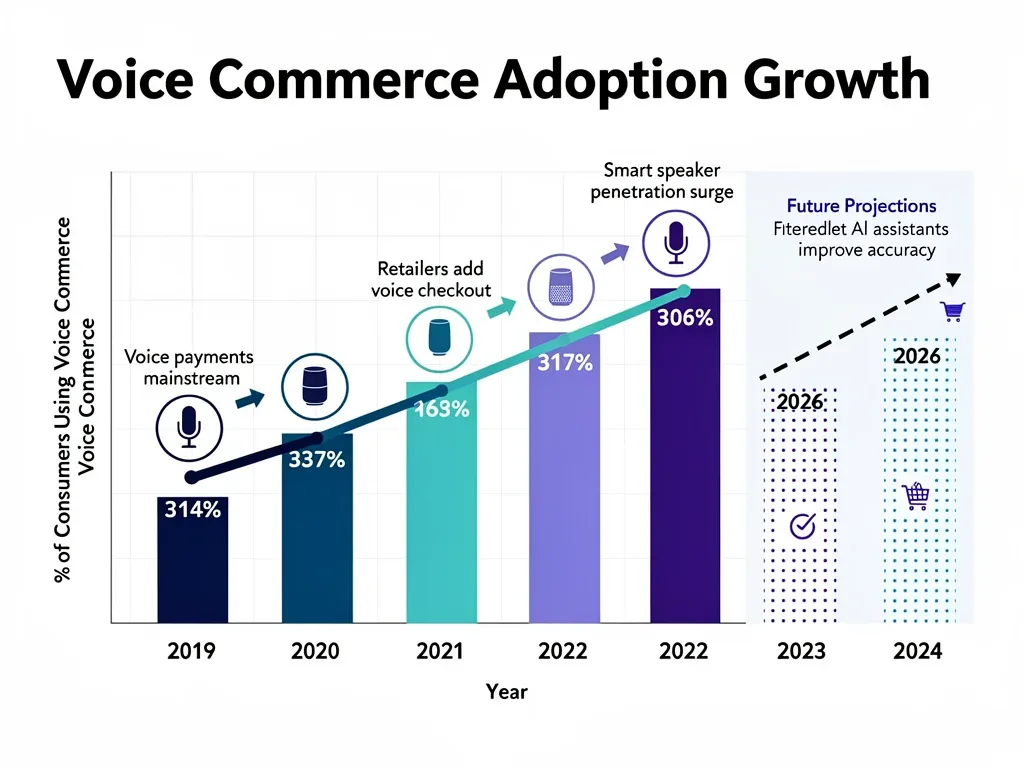
Furthermore, the ability of AI to learn and adapt from every interaction is continuously refining the voice commerce ecosystem. Each query, each reorder, provides valuable data that improves the algorithms, making the next interaction even more efficient and personalized. This iterative improvement cycle is a powerful growth engine.
The development of more sophisticated voice user interfaces (VUIs) also plays a role. Designers are increasingly focused on creating intuitive and forgiving voice interactions, ensuring that even if a user doesn't use the exact phrasing, the AI can still understand their intent. This user-centric design approach is crucial for widespread adoption.
Another area of advancement is in the integration of voice assistants with a wider array of smart home devices. As more appliances become 'smart,' the potential for integrated voice-activated reordering expands, creating a truly interconnected and convenient living environment. Imagine your smart refrigerator automatically suggesting items to reorder based on its contents, and you confirming with a voice command.
These technological advancements collectively create a compelling value proposition for consumers. They transform voice assistants from simple command-response tools into intelligent shopping partners, capable of managing complex reordering needs with minimal effort. This continuous innovation is the bedrock upon which the voice commerce surge is built.
Impact on retailers and brands
The burgeoning trend of voice commerce reorders presents both significant opportunities and challenges for retailers and brands. Adapting to this new purchasing channel is no longer optional; it's a strategic imperative for maintaining relevance and capturing market share in a rapidly evolving retail landscape.
For brands, the shift to voice means a fundamental change in how products are discovered and chosen. Traditional SEO, focused on visual search results, needs to evolve into Voice SEO, where brevity, clarity, and brand recall become paramount. If a consumer simply says, "reorder paper towels," the brand that is top-of-mind or has a strong default position with the voice assistant will win the sale.
Challenges and opportunities for businesses
- Optimizing for Voice Search: Brands must ensure their products are easily discoverable and selectable through voice commands, often requiring simplified product names and robust metadata.\
- First-Party Data Collection: Voice interactions provide invaluable data on consumer preferences and reordering patterns, which can be leveraged for personalized marketing and product development.\
- Brand Loyalty in a Voice-First World: Building and maintaining brand loyalty becomes more challenging when purchases are made through an AI intermediary, necessitating strong brand recognition and consistent product quality.\
- Seamless Integration: Retailers need to ensure their inventory and order fulfillment systems are seamlessly integrated with major voice assistant platforms to provide a smooth customer experience.
The "skill" or "action" development for voice assistants also offers a new avenue for brand engagement. Companies can create custom voice experiences that allow consumers to not only reorder but also get product information, receive personalized offers, or even troubleshoot issues, all through voice.
However, the rise of voice commerce also introduces a layer of abstraction between the consumer and the brand. The voice assistant often acts as a gatekeeper, potentially influencing purchasing decisions based on its algorithms or pre-set preferences. Brands must work to ensure their products are favorably positioned within these AI ecosystems.
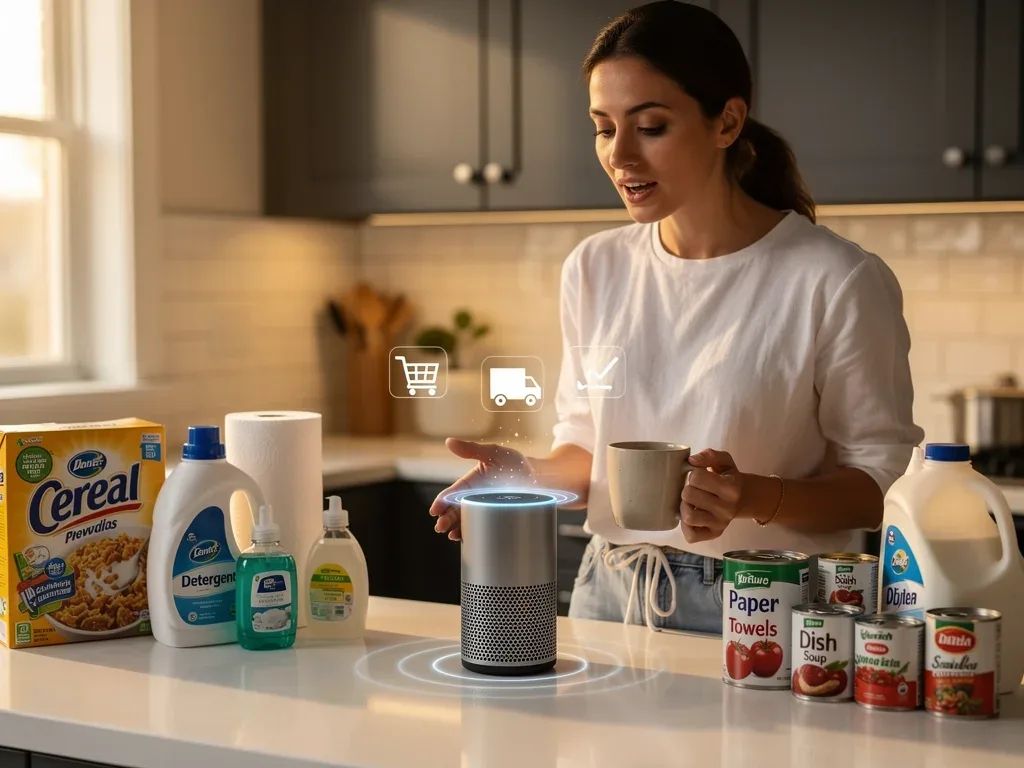
Moreover, the competition for the "default" product in voice reorders is intense. Once a consumer establishes a preference through voice, they are less likely to switch, making the initial capture of that default position incredibly valuable. This emphasizes the importance of early adoption and optimization for voice channels.
For smaller businesses, the barrier to entry might seem high, but third-party platforms and tools are emerging to help them integrate with voice commerce. The key is to understand the voice-first customer journey and adapt marketing and sales strategies accordingly.
Ultimately, retailers and brands that proactively embrace voice commerce, investing in the necessary technology and strategic adjustments, will be well-positioned to thrive in this new era of retail. Those that hesitate risk being left behind as consumers increasingly opt for the convenience of voice-activated reorders.
Security and privacy considerations in voice commerce
As voice commerce reorders become more commonplace, the critical issues of security and privacy take center stage. Consumers are entrusting their personal information, payment details, and purchasing habits to AI systems, making robust safeguards essential for maintaining trust and encouraging continued adoption.
The very nature of voice interaction raises unique privacy concerns. Smart speakers are always listening for their wake word, leading to questions about what data is collected, how it's stored, and who has access to it. Consumers are increasingly aware of these issues and demand transparency and control over their data.
Addressing key concerns
- Data Encryption: Ensuring that all voice commands, personal data, and payment information are encrypted both in transit and at rest is fundamental to preventing breaches.\
- User Authentication: Implementing strong authentication methods, such as voice biometrics, PINs, or confirmation questions, is crucial to prevent unauthorized purchases.\
- Transparent Data Policies: Companies must clearly communicate how user data is collected, used, and protected, giving consumers the ability to opt-out or manage their privacy settings.\
- Minimizing Data Collection: Adopting a principle of collecting only necessary data for transactions and service improvement, rather than indiscriminate recording.
Beyond data security, there's the concern of accidental purchases. A child's command or a snippet of conversation overheard by a smart speaker could potentially trigger an unwanted order. While most platforms have safeguards like confirmation prompts, continuous improvement in this area is vital.
The regulatory landscape is also evolving to address these new challenges. Governments and consumer protection agencies are scrutinizing how voice technology handles personal data, and new regulations may emerge to ensure consumer rights are protected in the voice commerce ecosystem.
For companies operating in the voice commerce space, building and maintaining consumer trust is paramount. A single security breach or privacy scandal could severely damage adoption rates and brand reputation. Therefore, investing heavily in security infrastructure and ethical data practices is not just a compliance issue, but a business imperative.
Furthermore, educating consumers about the security features available and how to best protect their privacy is also a shared responsibility. Clear, accessible information empowers users to make informed decisions about their voice commerce interactions.
Ultimately, the long-term success of voice commerce hinges on its ability to offer both unparalleled convenience and unwavering security and privacy. As technology advances, so too must the measures put in place to protect the users who embrace it.
The future outlook: beyond reorders
While voice commerce reorders represent a significant current trend, they are merely the tip of the iceberg for what conversational AI holds for the future of retail. The capabilities of voice technology are rapidly expanding, promising an even more integrated and sophisticated shopping experience that extends far beyond routine repurchases.
Imagine a future where your voice assistant not only reorders your laundry detergent but also proactively suggests a new, eco-friendly alternative based on your stated preferences and recent news. Or a scenario where you can plan an entire weekend getaway, from booking flights and accommodation to ordering travel essentials, all through a single voice conversation.
Envisioning the next wave of voice commerce
- Proactive and Predictive Shopping: AI will anticipate needs even before consumers realize them, based on usage patterns, calendar events, and external data.\
- Complex Purchase Journeys: Voice assistants will facilitate more intricate shopping tasks, including product research, comparison, and personalized recommendations for higher-consideration items.\
- Integrated Service Ecosystems: Voice commerce will merge seamlessly with other smart home functionalities, personal finance management, and entertainment, creating a holistic digital assistant.\
- Hyper-Personalization: AI will learn individual tastes and preferences to an unprecedented degree, offering tailored product selections and shopping experiences that feel truly bespoke.
The development of more sophisticated AI that can engage in truly natural, multi-turn conversations will unlock new possibilities. This will allow for nuanced product discussions, where consumers can describe their needs in detail, and the AI can respond with intelligent suggestions, much like an expert sales associate.
Another exciting prospect is the integration of augmented reality (AR) and virtual reality (VR) with voice commerce. Imagine describing a piece of furniture you want, and the voice assistant not only finds it but also overlays it virtually into your living room via AR, allowing you to visualize the purchase before committing.
The role of AI in guiding consumers through complex decision-making processes will also grow. For instance, when purchasing electronics, a voice assistant could explain technical specifications, compare models, and even read reviews, helping consumers make informed choices without ever touching a screen.
Furthermore, voice commerce could become a crucial tool for accessibility, empowering individuals with visual impairments or mobility challenges to shop independently and efficiently. This inclusive aspect highlights the broader societal benefits of advancing voice technology.
The future outlook for voice commerce is one of continuous innovation and expansion. From simple reorders to comprehensive shopping experiences, conversational AI is set to redefine how we discover, evaluate, and acquire goods and services, making shopping more intuitive, intelligent, and integrated into our lives than ever before.
Navigating the evolving retail landscape with AI
The dramatic shift towards voice commerce reorders underscores a fundamental truth about the modern retail landscape: it is in constant flux, driven by technological innovation and evolving consumer expectations. For businesses to thrive, or even survive, they must not only adapt but actively embrace these changes, particularly the transformative power of conversational AI.
Navigating this evolving landscape requires a proactive and strategic approach. It's no longer enough to have an online presence; businesses must consider how their products and services interact with voice assistants and how they can create seamless, voice-first experiences for their customers. This means rethinking everything from product naming to marketing strategies.
Strategies for retail success in the voice era
- Invest in Voice Optimization: Ensure product descriptions, metadata, and brand names are optimized for voice search and clear pronunciation by AI assistants.\
- Develop Voice Skills/Actions: Create proprietary voice applications that offer unique value, such as exclusive deals, personalized advice, or enhanced customer service.\
- Prioritize Data Analytics: Leverage insights from voice interactions to understand consumer preferences, predict demand, and personalize future offerings.\
- Foster Brand Trust: In an environment where the AI often mediates the purchase, consistent product quality, reliable service, and transparent data practices are crucial for loyalty.\
- Embrace Omnichannel Integration: Voice commerce should not exist in a silo but be seamlessly integrated with other sales channels, offering a consistent brand experience across all touchpoints.
The competitive advantage will increasingly go to those who can master the art of "ambient commerce," where shopping becomes an invisible, integrated part of daily life. Voice AI is a primary enabler of this vision, allowing transactions to occur naturally within the flow of other activities.
Moreover, the ability to personalize the shopping experience at scale through AI is a game-changer. Voice assistants can remember past purchases, understand dietary restrictions, or even infer lifestyle preferences, offering recommendations that feel genuinely tailored and helpful, rather than intrusive.
The retail landscape is becoming less about physical stores or even traditional e-commerce websites, and more about accessible, intelligent interfaces that meet consumers wherever they are. Voice is a powerful, ubiquitous interface that is reshaping consumer expectations of convenience and service.
Businesses that view voice commerce not just as a technology trend but as a fundamental shift in consumer behavior will be best equipped to navigate this new era. By understanding the nuances of voice interaction and investing in the right AI capabilities, they can build stronger customer relationships and unlock new avenues for growth in an increasingly conversational world.
The evolution of retail is a continuous journey, and conversational AI, particularly in driving voice commerce reorders, marks a significant milestone. Businesses must remain agile, innovative, and customer-centric to thrive in this exciting and dynamic environment.
| Key Aspect | Brief Description |
|---|---|
| Voice Reorder Impact | 28% of routine household reorders are now driven by conversational AI in the US. |
| Consumer Drivers | Convenience, time-saving, hands-free operation, and reduced cognitive load are key adoption factors. |
| Tech Advancements | Improvements in NLP, NLU, contextual understanding, and personalization fuel voice commerce growth. |
| Retailer Adaptation | Businesses must optimize for voice search, develop voice skills, and ensure secure, seamless integration. |
Frequently asked questions about voice commerce
What is voice commerce and how does it work?▼Voice commerce refers to purchasing goods and services using voice commands through smart devices like speakers or smartphones. It works by utilizing conversational AI to understand user requests, process transactions, and confirm orders, often integrating with existing online retail platforms.
Why are routine household reorders a strong use case for voice commerce?▼Routine household reorders are ideal for voice commerce due to their repetitive nature and low-consideration status. Consumers often know exactly what they need, making a quick voice command more efficient and convenient than navigating a website or app, especially when multitasking.
What are the main benefits of voice commerce for consumers?▼Consumers benefit from unparalleled convenience, significant time savings, and hands-free operation. Voice commerce simplifies the purchasing process, reduces cognitive load for routine tasks, and allows for seamless integration into daily activities, enhancing overall shopping efficiency.
How can retailers adapt to the rise of voice commerce?▼Retailers must optimize their product listings for voice search, develop dedicated voice skills or actions, prioritize robust data analytics to understand voice-driven behaviors, and ensure secure, seamless integration with major voice assistant platforms to capture this growing market segment.
What are the security and privacy implications of voice commerce?▼Security and privacy are crucial concerns. Implications include data collection, encryption of personal and payment information, unauthorized purchases, and transparent data usage policies. Robust authentication, clear privacy settings, and continuous security enhancements are essential for building and maintaining consumer trust.
Conclusion
The remarkable surge in voice commerce reorders, now accounting for 28% of routine household purchases across the United States, signals a pivotal moment in the evolution of retail. Driven by sophisticated conversational AI, this trend reflects a profound shift in consumer behavior towards unparalleled convenience and efficiency. As technology continues to advance, and as retailers and brands strategically adapt to optimize for voice, the landscape of shopping will become even more integrated, personalized, and effortless. Addressing security and privacy concerns remains paramount to fostering sustained trust and adoption. Ultimately, voice commerce is not just a passing trend but a foundational change, reshaping how we interact with products and services in our daily lives.
