32-Hour Workweek Shift: US Companies Slash Hours 20%
Advertisements

The 32-hour workweek is emerging as a transformative model in the US, where companies are reducing employee hours by 20% without impacting base pay, leading to enhanced productivity and improved work-life balance.
The concept of the 32-hour workweek shift: how US companies are slashing hours by 20% without reducing base pay is no longer a distant dream, but a tangible reality for an increasing number of organizations across the United States. This paradigm shift challenges traditional notions of productivity and employee engagement, promising a future where work-life balance is not just a buzzword, but a fundamental aspect of professional life. How are these companies achieving this, and what does it mean for the broader American workforce?
the rise of the 32-hour workweek in the US
The movement towards a shorter workweek has been gaining significant momentum, particularly in the wake of global shifts in work culture. For decades, the 40-hour workweek was the undisputed standard, deeply ingrained in the fabric of American corporate life. However, a growing body of evidence and real-world trials suggest that working less might actually lead to more, especially when it comes to quality of output and employee well-being.
Companies experimenting with this model are not just reducing hours; they are fundamentally rethinking how work gets done. This often involves streamlining processes, minimizing unproductive meetings, and empowering employees with greater autonomy. The core idea is to focus on results rather than hours clocked, fostering an environment where efficiency and effectiveness are paramount.
historical context and modern catalysts
- Industrial Revolution Legacy: The 40-hour workweek originated during the Industrial Revolution to combat exploitative labor practices.
- Technological Advancements: Modern technology allows for greater efficiency, making shorter weeks more feasible.
- Pandemic Impact: The COVID-19 pandemic accelerated discussions around flexible work arrangements and employee well-being.
- Global Trials: Successful trials in countries like Iceland and the UK provide compelling data for US adoption.
The successful implementation of a 32-hour workweek requires a cultural shift within an organization. It's not simply about telling employees to work less; it's about providing the tools, training, and trust necessary for them to achieve the same, if not better, results in a compressed timeframe. This foundational change is crucial for the longevity and effectiveness of the model.
economic implications and business benefits
One of the primary concerns for businesses considering a shorter workweek is the potential impact on their bottom line. However, studies and early adopters suggest that the economic benefits can be substantial, often outweighing the perceived risks. Reduced operating costs, increased productivity, and enhanced talent attraction are just some of the advantages.
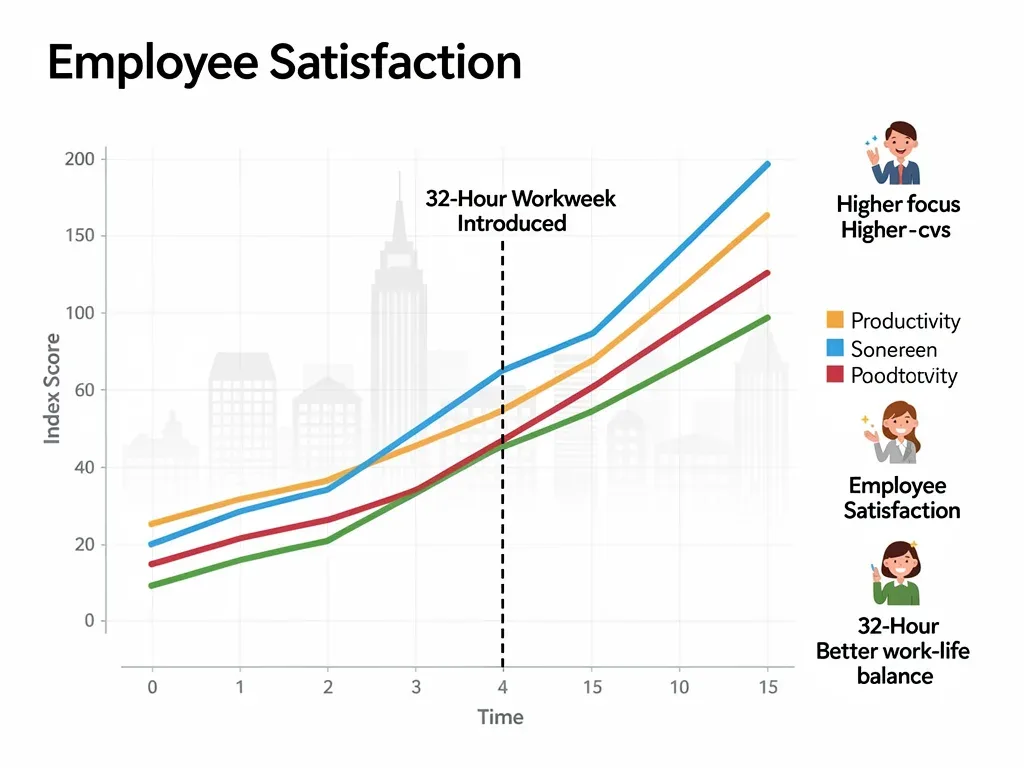
When employees are less stressed and more rested, they tend to be more focused and engaged during their working hours. This often translates into higher quality work and fewer errors, indirectly boosting a company's financial performance. Moreover, the novelty and attractiveness of a 32-hour workweek can be a powerful tool in a competitive labor market.
quantifiable gains for companies
- Increased Productivity: Employees become more efficient, prioritizing tasks and reducing distractions.
- Reduced Absenteeism: Better work-life balance leads to fewer sick days and improved overall health.
- Lower Turnover Rates: Employees are more satisfied, leading to higher retention and reduced recruitment costs.
- Enhanced Brand Reputation: Companies are seen as progressive and employee-centric, attracting top talent.
The financial argument for the 32-hour workweek extends beyond direct cost savings. It encompasses the intangible benefits of a highly motivated and loyal workforce, which can contribute significantly to long-term business success and innovation. The investment in employee well-being often yields substantial returns.
employee well-being and productivity paradox
The most compelling arguments for the 32-hour workweek often center on employee well-being. A shorter workweek provides individuals with more time for personal pursuits, family, and rest, leading to a significant reduction in stress and burnout. This improved well-being doesn't just benefit the individual; it creates a more resilient and productive workforce.
The productivity paradox suggests that working fewer hours can paradoxically lead to higher output. This is because employees are more energized, creative, and focused during their working hours. The pressure to complete tasks within a shorter timeframe often encourages better time management and a sharper focus on essential duties, eliminating time-wasting activities.
the human element of reduced hours
Beyond the quantitative metrics, the qualitative improvements in employee lives are profound. More time for hobbies, exercise, and family can lead to a richer, more fulfilling existence. This holistic approach to life ultimately translates into a happier, more engaged employee who brings their best self to work.
The mental health benefits are particularly noteworthy. Reduced work-related stress and anxiety can have a ripple effect, improving overall mental and physical health. This, in turn, contributes to a more positive and collaborative workplace culture, fostering an environment where innovation can thrive.

challenges and considerations for implementation
While the benefits of a 32-hour workweek are clear, its implementation is not without its challenges. Companies must carefully plan and execute the transition to ensure success. This involves thorough analysis of current workflows, clear communication with employees, and a willingness to adapt and iterate based on feedback.
Not all industries or roles are equally suited for a compressed work schedule. Service-oriented businesses, for example, might face different logistical hurdles compared to tech companies. Understanding these nuances and developing tailored strategies is crucial for a smooth transition and sustained success. Employee training on efficient work practices is also vital.
overcoming common hurdles
- Workflow Restructuring: Redesigning processes to maximize efficiency within fewer hours.
- Communication Strategy: Clearly communicating expectations and benefits to all stakeholders.
- Industry-Specific Adaptations: Customizing the model to fit the unique demands of different sectors.
- Performance Metrics: Establishing new ways to measure productivity and success beyond hours worked.
Addressing these challenges proactively can mitigate potential disruptions and ensure that the transition to a 32-hour workweek is as seamless as possible. A flexible and iterative approach, coupled with strong leadership, will be key to navigating these complexities effectively.
case studies: US companies leading the charge
Several US companies have already embraced the 32-hour workweek, providing valuable insights and demonstrating its viability. These pioneers span various industries, from technology startups to marketing agencies, showcasing the broad applicability of the model. Their experiences offer a roadmap for others considering a similar shift.
One notable example is Kickstarter, the crowdfunding platform, which transitioned to a four-day workweek in 2022. Their trial, part of a global program, reported positive outcomes in terms of employee well-being and productivity. Other smaller businesses have also seen similar successes, often finding that the benefits far outweigh the initial adjustments.
lessons from early adopters
- Clear Objectives: Companies with defined goals for the trial tend to see better results.
- Employee Involvement: Engaging employees in the planning process fosters buy-in and success.
- Iterative Approach: Being open to adjustments and learning from early experiences is crucial.
- Leadership Commitment: Strong leadership support is essential for overcoming resistance and driving change.
These case studies underscore the importance of a thoughtful and strategic approach to implementing a shorter workweek. They demonstrate that with careful planning and a commitment to employee well-being, businesses can indeed thrive on a 32-hour schedule, proving that the future of work is already here.
the future outlook: widespread adoption and policy changes
The trend towards a 32-hour workweek is not just a passing fad; it represents a fundamental reevaluation of how we approach work in the 21st century. As more companies report positive results, the pressure for widespread adoption will likely increase, potentially leading to significant policy changes at both state and federal levels. The conversation is shifting from 'if' to 'when' and 'how'.
Legislators and policymakers are beginning to take notice, with some advocating for pilot programs and even legislation to support shorter workweeks. This could have profound implications for the American economy, potentially creating a more equitable and sustainable labor market. The benefits of such a shift could extend beyond individual companies, impacting national productivity and public health.
potential societal impacts
- Environmental Benefits: Reduced commuting could lead to lower carbon emissions.
- Community Engagement: More leisure time could foster greater civic participation.
- Gender Equality: A more flexible work model could help balance domestic responsibilities.
- Economic Growth: Increased consumer spending on leisure activities could stimulate certain sectors.
The long-term vision for the 32-hour workweek involves not just individual company adoptions but a broader societal transformation. This shift could redefine our relationship with work, leading to a more balanced, sustainable, and fulfilling existence for millions of Americans. It's a future where efficiency, well-being, and progress go hand in hand.
| Key Aspect | Brief Description |
|---|---|
| Productivity Boost | Employees often achieve more in fewer hours due to increased focus and motivation. |
| Employee Well-being | Reduced stress, better work-life balance, and improved mental health for staff. |
| Business Benefits | Lower turnover, enhanced recruitment, and potential cost savings for companies. |
| Implementation Challenges | Requires careful planning, workflow restructuring, and clear communication. |
Frequently Asked Questions about the 32-Hour Workweek
What is the 32-hour workweek model?▼The 32-hour workweek model involves reducing standard working hours by 20% (typically from 40 to 32 hours) without a reduction in employees' base pay. This usually translates to a four-day workweek, allowing for a three-day weekend, aiming to improve work-life balance and productivity.
How do US companies maintain productivity with fewer hours?▼Companies maintain productivity by implementing efficiency measures such as streamlining meetings, reducing distractions, and empowering employees with greater autonomy. The increased focus and motivation from improved well-being often lead to higher quality output and better time management, compensating for fewer hours.
What are the main benefits for employees?▼Employees benefit from enhanced work-life balance, reduced stress and burnout, and more time for personal activities, family, and rest. This leads to improved mental and physical health, higher job satisfaction, and a more fulfilling personal life, contributing to overall well-being.
Are there any drawbacks or challenges for businesses?▼Challenges include the need for significant workflow restructuring, clear communication strategies, and adapting the model to specific industry demands. Some businesses might face initial logistical hurdles or resistance to change, requiring strong leadership and an iterative approach to overcome them effectively.
Is the 32-hour workweek a sustainable model for the long term?▼Based on successful trials globally and within the US, the 32-hour workweek appears to be a sustainable model. Its ability to boost productivity, improve employee well-being, and attract talent suggests it could become a standard practice, fostering a more balanced and efficient approach to work in the long run.
Conclusion
The shift towards a 32-hour workweek in US companies, characterized by a 20% reduction in hours without base pay cuts, represents a pivotal moment in the evolution of work. It challenges deeply ingrained norms, offering a compelling vision for a future where productivity and employee well-being are not mutually exclusive. As more organizations embrace this model, driven by tangible benefits in efficiency, talent retention, and employee satisfaction, it becomes increasingly clear that this isn't just a trend, but a fundamental re-imagining of our professional lives. The journey ahead will undoubtedly involve continued adaptation and learning, but the promise of a more balanced and effective workforce makes the 32-hour workweek a concept worth pursuing and, ultimately, adopting on a broader scale.
