Death of Annual Reviews: Agile Workplaces Embrace Continuous Feedback
Advertisements

Seventy percent of agile workplaces are replacing traditional annual performance reviews with continuous sprint feedback to foster real-time development, enhance engagement, and align performance with dynamic business goals.
The traditional annual performance review, once a cornerstone of corporate HR, is rapidly becoming a relic of the past. In today's dynamic business landscape, particularly within agile environments, there's a significant shift towards more immediate and impactful feedback mechanisms. This article delves into the death of annual performance reviews: why 70% of agile workplaces swapped to continuous sprint feedback, exploring the driving forces behind this transformation and the profound benefits it offers.
The Irrelevance of Annual Performance Reviews in Agile Contexts
Annual performance reviews, characterized by their infrequent and backward-looking nature, often fail to serve the needs of modern agile organizations. These reviews typically consolidate an entire year's worth of work into a single, high-stakes discussion, which can be daunting for both employees and managers. The information conveyed often feels outdated by the time the review takes place, diminishing its relevance and actionable impact.
Agile methodologies thrive on speed, adaptability, and continuous improvement. The very essence of agile development—short sprints, iterative cycles, and constant recalibration—stands in direct opposition to the static, retrospective nature of annual reviews. This fundamental mismatch has driven many forward-thinking companies to seek more effective alternatives.
Outdated Metrics and Bureaucracy
Traditional reviews often rely on generic key performance indicators (KPIs) that may not accurately reflect an individual's contribution within a rapidly evolving project. The process itself can be mired in bureaucracy, requiring extensive documentation and numerous sign-offs, which consume valuable time and resources without yielding proportional benefits.
- Lack of real-time relevance: Feedback is often too late to influence ongoing work.
- Cognitive biases: Managers may rely on recent events, overlooking earlier achievements.
- Administrative burden: Significant time spent on paperwork rather than development.
The conclusion is clear: for organizations embracing agility, the annual review system is not just inefficient; it actively hinders the continuous growth and responsiveness that agile frameworks aim to achieve. It creates a disconnect between daily work and performance assessment, making it difficult for employees to understand how their actions directly contribute to larger goals.
The Rise of Continuous Sprint Feedback
In contrast to the annual review, continuous sprint feedback is designed to be timely, specific, and actionable. It's woven directly into the fabric of daily and weekly agile operations, ensuring that employees receive insights when they are most relevant and can be immediately applied. This approach fosters a culture of ongoing learning and adaptation, which is crucial for success in fast-paced environments.
The shift to continuous feedback is not merely a procedural change; it represents a fundamental philosophical reorientation in how organizations view performance management. It moves away from judgment and toward development, emphasizing coaching and support over evaluation and ranking. This human-centric approach resonates deeply with modern workforce expectations.
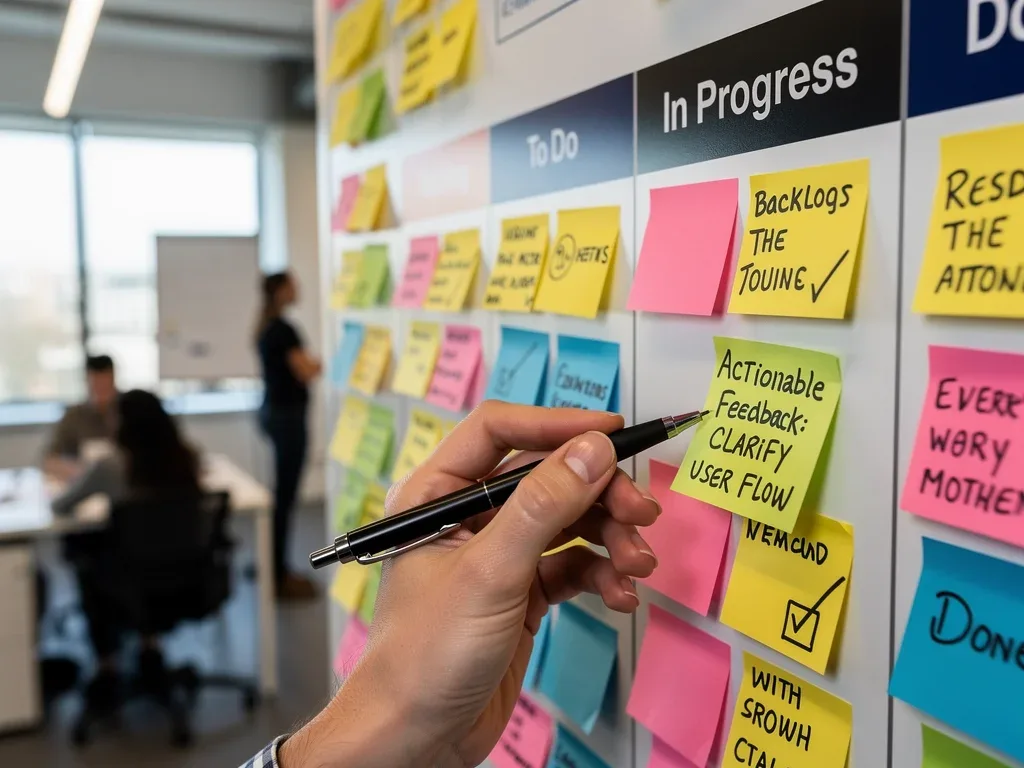
Sprint feedback, often delivered during daily stand-ups, sprint reviews, or dedicated one-on-one sessions, focuses on specific behaviors and outcomes related to the current sprint. This immediacy allows for quick adjustments, preventing small issues from escalating into larger problems and accelerating skill development.
Key Characteristics of Effective Sprint Feedback
Effective continuous sprint feedback is characterized by several core principles that differentiate it from traditional approaches. It's not just about frequency; it's about quality and intent.
- Timeliness: Delivered shortly after an event or task, making it highly relevant.
- Specificity: Focuses on concrete actions and their impact, not general traits.
- Actionability: Provides clear suggestions for improvement or reinforcement.
- Development-oriented: Aims to help individuals grow, rather than simply evaluate.
By embracing these characteristics, organizations can create a feedback loop that genuinely supports employee development and aligns individual contributions with team and organizational objectives. This continuous dialogue builds trust and psychological safety within teams, encouraging open communication.
Enhanced Employee Engagement and Development
One of the most significant advantages of continuous sprint feedback is its profound impact on employee engagement and development. When feedback is regular and constructive, employees feel more valued, understood, and connected to their work. They receive clear guidance on how to improve, leading to faster skill acquisition and greater job satisfaction.
The proactive nature of continuous feedback empowers employees to take ownership of their growth. Instead of passively waiting for an annual assessment, they are actively involved in ongoing conversations about their performance and career trajectory. This sense of agency is a powerful motivator, fostering a more engaged and self-directed workforce.
Fostering a Growth Mindset
Continuous feedback cultivates a growth mindset, where mistakes are viewed as learning opportunities rather than failures. This environment encourages experimentation and innovation, as employees feel safe to try new approaches knowing they will receive supportive feedback regardless of the outcome. It shifts the focus from avoiding errors to embracing learning.
- Increased motivation: Employees see direct links between effort and improvement.
- Faster skill development: Immediate feedback allows for rapid course correction.
- Stronger team cohesion: Regular communication builds trust and understanding.
Ultimately, this approach transforms performance management from a compliance exercise into a strategic tool for talent development. It ensures that employees are continuously growing, adapting, and contributing their best, which is essential for organizational resilience and success in a competitive market.
Improved Organizational Agility and Responsiveness
The move to continuous sprint feedback directly contributes to an organization's overall agility and responsiveness. In agile workplaces, projects are constantly evolving, and priorities can shift rapidly. Annual reviews are too slow to keep pace with these changes, often leading to misaligned efforts and missed opportunities. Continuous feedback, however, provides the necessary mechanisms to adapt quickly.
By integrating feedback into the sprint cycle, teams can identify and address performance gaps or process inefficiencies in real-time. This immediate course correction ensures that projects stay on track and that team members are always working towards the most current and relevant goals. It's about building a learning organization that can pivot with speed and precision.
Real-time Course Correction
Imagine a scenario where a team is off track for several months before an annual review highlights the issue. The damage is already done. With continuous feedback, deviations are spotted and corrected within days or weeks, minimizing waste and maximizing efficiency. This real-time visibility is invaluable for project success.
- Faster problem identification: Issues are caught and resolved early.
- Better resource allocation: Efforts are always directed towards high-priority tasks.
- Enhanced project outcomes: Continuous adjustments lead to higher quality deliverables.
The ability to respond quickly to feedback, both positive and constructive, creates a more adaptive and resilient organization. This ensures that the entire workforce is aligned with strategic objectives, fostering a culture where everyone is contributing to the collective success and adapting to market demands.
Implementing Continuous Feedback: Best Practices
Transitioning from annual reviews to continuous sprint feedback requires more than just a policy change; it demands a cultural shift and the implementation of effective practices. Organizations must invest in training managers and employees on how to give and receive feedback constructively, making it a natural and comfortable part of daily interactions.
Successful implementation hinges on creating a supportive environment where feedback is seen as a gift, not a judgment. This involves establishing clear guidelines, providing tools for easy feedback exchange, and modeling the desired behaviors from leadership down. Without these foundational elements, even the best intentions can fall short.

Key Elements for Effective Implementation
Several best practices can ensure a smooth and successful transition to a continuous feedback model. These elements focus on consistency, clarity, and a commitment to development.
- Regular one-on-ones: Scheduled, informal meetings between managers and direct reports.
- Peer feedback: Encouraging team members to provide constructive input to each other.
- Feedback tools: Utilizing software platforms that facilitate easy and documented feedback.
- Training and coaching: Equipping managers with the skills to deliver effective feedback.
By embedding these practices, organizations can build a robust continuous feedback system that supports both individual growth and collective performance. It ensures that feedback is not an event, but an ongoing process that fuels improvement and innovation across all levels of the organization.
Challenges and Considerations in the Transition
While the benefits of continuous sprint feedback are compelling, the transition from annual reviews is not without its challenges. Organizations may encounter resistance from employees and managers accustomed to the old system, and there can be initial difficulties in establishing a consistent and fair feedback culture. Overcoming these hurdles requires thoughtful planning and sustained effort.
One common challenge is ensuring consistency in feedback quality and frequency across different teams and managers. Without clear guidelines and training, feedback can become inconsistent, leading to perceptions of unfairness or a lack of clarity. Addressing these issues proactively is critical for the long-term success of the new system.
Overcoming Resistance and Ensuring Fairness
Resistance often stems from a fear of the unknown or a misunderstanding of the new system's benefits. Clear communication, pilot programs, and showcasing early successes can help alleviate concerns. Ensuring fairness involves standardizing feedback criteria where appropriate and providing robust training on unconscious bias.
- Manager training: Equipping managers with essential coaching and feedback skills.
- Employee education: Communicating the 'why' and 'how' of continuous feedback.
- Technology adoption: Implementing user-friendly tools to streamline the process.
Despite these challenges, the overwhelming evidence suggests that the rewards of adopting continuous sprint feedback far outweigh the difficulties of transition. Organizations that successfully navigate this change are better positioned to attract and retain top talent, drive innovation, and achieve sustainable growth in an increasingly competitive world.
| Key Aspect | Description |
|---|---|
| Annual Reviews | Infrequent, backward-looking, often bureaucratic, and misaligned with agile pace. |
| Continuous Feedback | Timely, specific, actionable, development-focused, and integrated into agile sprints. |
| Engagement & Development | Continuous feedback boosts motivation, accelerates skill growth, and fosters a growth mindset. |
| Organizational Agility | Enables real-time course correction, better resource allocation, and improved project outcomes. |
Frequently Asked Questions About Continuous Feedback
Why are annual performance reviews becoming obsolete in agile workplaces?▼Annual reviews are too slow and infrequent for agile environments, which prioritize rapid iteration and continuous adaptation. Their backward-looking nature means feedback is often outdated, failing to support real-time development and quick course corrections needed in fast-paced projects.
What is continuous sprint feedback?▼Continuous sprint feedback involves providing timely, specific, and actionable feedback throughout short work cycles (sprints). It's integrated into daily operations and aims to foster ongoing learning and development, allowing employees to adjust and improve their performance immediately.
How does continuous feedback benefit employee engagement?▼It significantly boosts engagement by making employees feel valued and heard. Regular, constructive feedback provides clear paths for growth, increases job satisfaction, and empowers individuals to take ownership of their development, fostering a more proactive and motivated workforce.
What challenges might organizations face when switching to continuous feedback?▼Challenges include resistance from managers and employees accustomed to traditional systems, ensuring consistency and fairness in feedback delivery, and the need for comprehensive training on effective feedback techniques. Overcoming these requires strong leadership and clear communication.
What are best practices for implementing continuous feedback successfully?▼Key practices include establishing regular one-on-one meetings, encouraging peer feedback, utilizing dedicated feedback tools, and providing extensive training for managers on coaching and feedback delivery. These elements help embed a culture of continuous improvement and open communication.
Conclusion
The transformation in performance management, marked by the death of annual performance reviews and the widespread adoption of continuous sprint feedback, is a testament to the evolving needs of modern workplaces. As 70% of agile organizations embrace this dynamic approach, they are not merely updating a process; they are fundamentally reshaping their culture to prioritize continuous learning, real-time adaptation, and enhanced employee engagement. This shift is not just a trend but a strategic imperative for organizations aiming to thrive in an increasingly agile and competitive global landscape.
