4-Day Compressed Workweek vs. 32-Hour Model: 2026 Analysis
Advertisements
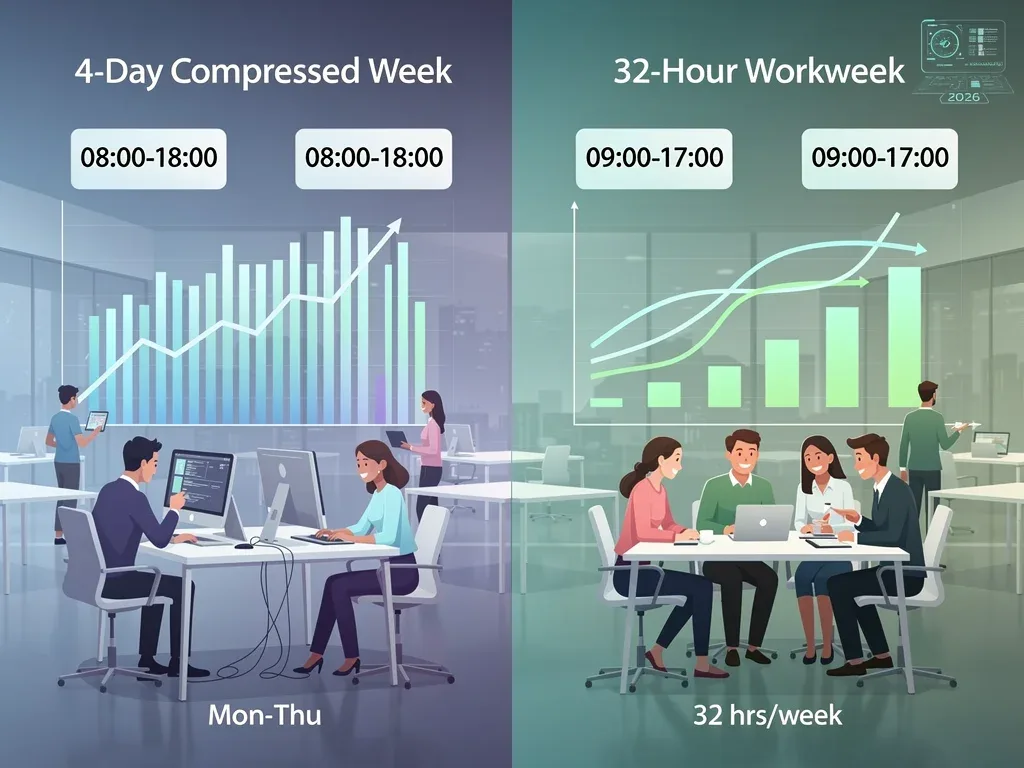
The 4-day compressed workweek involves working standard hours over fewer days, while the 32-hour model reduces total weekly hours, both aiming to boost productivity and employee well-being by 2026.
As we navigate the evolving landscape of work, the conversation around alternative work schedules has intensified. In 2026, two models stand out: the 4-day compressed workweek and the 32-hour workweek. But how do they truly stack up in terms of productivity and overall impact? Let's delve into a comprehensive comparison to understand their nuances.
Understanding the 4-Day Compressed Workweek
The 4-day compressed workweek is a model where employees work their standard full-time hours, typically 40 hours, but spread across four days instead of five. This usually means working ten-hour days. The allure of this model lies in the extended three-day weekend, offering a significant boost to work-life balance without reducing total work output.
This approach has gained considerable traction as companies seek innovative ways to retain talent and enhance employee satisfaction. The underlying assumption is that the increased leisure time will lead to refreshed, more focused employees during their working days, ultimately benefiting productivity.
Benefits for employees
For employees, the advantages are clear: more personal time for hobbies, family, or personal development. This can significantly reduce burnout and improve mental well-being.
- Enhanced work-life balance due to longer weekends.
- Reduced commuting time and costs.
- Greater flexibility for personal appointments and commitments.
- Improved mental health and reduced stress levels.
Challenges for businesses
However, businesses face challenges, such as ensuring adequate coverage and managing employee fatigue during longer workdays. The transition requires careful planning and communication to avoid disruption.
Despite these hurdles, many organizations report positive outcomes, including higher employee morale and lower turnover rates. The key is to implement the model strategically, considering the specific needs of the industry and workforce.
In summary, the 4-day compressed workweek offers a compelling proposition for balancing work and personal life by concentrating standard hours into fewer days. While it presents operational challenges, the potential for increased employee satisfaction and retention makes it a viable option for many forward-thinking companies in 2026.
Exploring the 32-Hour Workweek Model
In contrast to the compressed model, the 32-hour workweek involves a reduction in the total number of hours worked per week, typically from 40 to 32, without a corresponding decrease in pay. This model is often spread over four days, but with shorter, eight-hour shifts. The fundamental principle here is that employees can achieve the same, if not greater, output in fewer hours due to increased focus and reduced distractions.
This model is a more radical departure from traditional work structures, challenging the long-held belief that more hours equate to more productivity. Proponents argue that it fosters a culture of efficiency and encourages employees to prioritize tasks and work smarter.
The core philosophy
The 32-hour workweek is built on the idea that excessive working hours often lead to diminishing returns. By reducing the workweek, companies aim to create a more sustainable and humane work environment, where employees are less prone to exhaustion and more engaged in their roles.
- Focus on output and results, not just hours clocked.
- Encourages efficient time management and task prioritization.
- Promotes a healthier work-life integration.
- Potential for higher quality work due to reduced fatigue.
Implementation considerations
Implementing a 32-hour workweek requires a significant cultural shift and a re-evaluation of workflows. Companies must invest in tools and training that support efficiency and enable employees to maximize their reduced working hours. This often involves streamlining processes and eliminating unnecessary meetings.
Early adopters of this model have reported remarkable success, with studies indicating improvements in employee well-being, productivity, and even company profitability. The challenge lies in convincing stakeholders that less time can indeed lead to more value, a paradigm shift that requires robust data and successful case studies.
Ultimately, the 32-hour workweek represents a bold step towards a more human-centric approach to work, prioritizing employee well-being and efficiency over the conventional measure of time spent in the office. Its success hinges on careful planning, strong leadership, and a commitment to fostering a culture of trust and autonomy.
Comparative Productivity Analysis: The 2026 Outlook
As we project into 2026, a comparative productivity analysis between the 4-day compressed workweek and the 32-hour model reveals distinct pathways to achieving efficiency. Both models aim to enhance productivity, but they do so through different mechanisms. The compressed model relies on the restorative power of an extended weekend to recharge employees, who then bring renewed energy to their longer workdays. The 32-hour model, conversely, bets on the inherent efficiency gains derived from fewer total hours, forcing a re-evaluation of how work is done.
Research indicates that both models can lead to increased employee satisfaction and reduced absenteeism. However, the impact on actual output can vary significantly depending on the industry, job roles, and the effectiveness of implementation strategies. For instance, roles requiring constant client interaction might find the compressed model more challenging due to potential fatigue during extended shifts.
Measuring success beyond hours
In 2026, productivity metrics are evolving beyond simple hours worked. Companies are increasingly focusing on outcomes, quality of work, and employee engagement. The 32-hour model often prompts a deeper dive into process optimization, as the reduced time naturally encourages teams to identify and eliminate inefficiencies. This can lead to more sustainable productivity gains.
The 4-day compressed workweek, while offering a clear benefit in terms of work-life balance, might not always lead to a direct increase in per-hour productivity if the longer days result in burnout or diminished focus towards the end of the shift. The key differentiator lies in whether the model encourages fundamental changes in work processes or simply rearranges existing ones.
Technological integration and AI
The role of technology and artificial intelligence (AI) is pivotal in both scenarios. Automation and AI tools can significantly reduce the burden of repetitive tasks, making both compressed and shorter workweeks more feasible. By 2026, advanced AI is expected to be integrated into many workflows, further blurring the lines between traditional productivity measures and actual output.
Ultimately, the choice between these two models in 2026 will depend on an organization's specific goals, culture, and the nature of its work. Both offer compelling avenues for enhancing productivity, but their effectiveness is deeply intertwined with how well they are adapted and supported by technological advancements and thoughtful management.
Impact on Employee Well-being and Retention
Employee well-being and retention are increasingly recognized as critical drivers of long-term business success. Both the 4-day compressed workweek and the 32-hour model offer significant benefits in these areas, though through slightly different mechanisms. The common thread is the acknowledgment that a balanced life outside of work contributes directly to a more engaged and loyal workforce.
The allure of a three-day weekend in the compressed model provides a psychological boost, allowing employees more time for personal pursuits, rest, and family. This can lead to a marked reduction in stress and improved mental health, factors that directly influence job satisfaction and, consequently, retention rates. Employees who feel valued and have control over their personal time are less likely to seek opportunities elsewhere.

Reducing burnout and stress
The 32-hour workweek takes this a step further by reducing the overall weekly workload. This directly combats burnout by providing more time for recovery and preventing the accumulation of work-related stress. When employees are less stressed, they are more resilient, creative, and less prone to absenteeism. This model inherently promotes a healthier pace of life.
- Increased job satisfaction and morale.
- Lower rates of employee turnover.
- Improved physical and mental health.
- Greater sense of loyalty and commitment to the organization.
Attracting top talent
In the competitive labor market of 2026, offering a non-traditional workweek can be a powerful tool for attracting top talent. Both models signal a progressive, employee-centric culture, which is highly appealing to a new generation of workers prioritizing work-life balance. Companies adopting these models often report an increase in qualified applicants and a stronger employer brand.
The long-term benefits of enhanced well-being and retention extend beyond individual employees. A stable, satisfied workforce contributes to institutional knowledge, stronger team dynamics, and consistent productivity. Therefore, investing in either of these models is not just a perk but a strategic business decision that pays dividends in human capital.
In conclusion, both workweek models significantly contribute to employee well-being and retention by addressing core issues like burnout and the need for personal time. Their success in attracting and keeping talent makes them essential considerations for any forward-looking organization.
Challenges and Considerations for Implementation
Implementing either the 4-day compressed workweek or the 32-hour model is not without its challenges. While the benefits to productivity and employee well-being are clear, organizations must navigate a range of operational and cultural hurdles to ensure a successful transition. These challenges require careful planning, clear communication, and a willingness to adapt.
For the 4-day compressed workweek, one primary concern is employee fatigue during the longer shifts. Ten-hour days can be physically and mentally demanding, potentially leading to decreased focus and an increase in errors towards the end of the day. Ensuring adequate breaks and a supportive work environment is crucial. Additionally, customer service and client-facing roles may struggle with maintaining consistent coverage over extended hours, requiring staggered schedules or cross-training.
Operational hurdles for the 32-hour model
The 32-hour workweek, while offering reduced overall hours, presents its own set of operational challenges. The most significant is the need to maintain current output levels with fewer working hours. This often necessitates a complete overhaul of existing workflows, processes, and meeting structures. Companies must empower employees to be more efficient and autonomous, which may require investments in new technologies and training programs.
- Ensuring continuous service and coverage.
- Managing employee fatigue and potential burnout.
- Re-evaluating and optimizing existing workflows.
- Addressing client and partner expectations regarding availability.
Cultural shift and management buy-in
Beyond operational aspects, both models demand a significant cultural shift. Management buy-in is paramount; leaders must trust their teams to deliver results without constant oversight. Resistance to change from both employees and management can derail implementation. Clear communication about the rationale, expectations, and benefits is essential to foster acceptance and enthusiasm.
Furthermore, legal and regulatory considerations, particularly regarding overtime pay and employment contracts, must be thoroughly reviewed. Organizations must ensure compliance with all relevant labor laws, which can vary significantly by state and industry. A phased approach, starting with pilot programs, can help identify and mitigate potential issues before a full-scale rollout.
In conclusion, while the promise of increased productivity and well-being is strong, successful implementation of these workweek models requires proactive management of challenges related to employee fatigue, operational efficiency, cultural adaptation, and legal compliance. Thoughtful planning and a commitment to continuous improvement are key.
Case Studies and Early Adopters in 2026
By 2026, numerous companies across various sectors have experimented with and adopted both the 4-day compressed workweek and the 32-hour model, providing valuable case studies and insights. These early adopters offer a glimpse into the practical implications and potential successes of these alternative work structures.
One notable example in the tech sector embraced the 32-hour workweek across its entire organization. Initially, there were concerns about maintaining project deadlines and client responsiveness. However, after a six-month pilot, the company reported a 20% increase in employee satisfaction, a 15% reduction in project delays, and an unexpected rise in innovation. This was largely attributed to employees feeling more rested and motivated, leading to more focused work and creative problem-solving during their shorter hours.
Success stories with compressed workweeks
In the manufacturing industry, a medium-sized firm implemented a 4-day compressed workweek. Employees worked four 10-hour shifts, enjoying a three-day weekend. The company observed a significant drop in absenteeism, a 10% increase in production efficiency on workdays, and a substantial improvement in employee morale. The longer operating hours during the four days also allowed for better utilization of machinery, leading to increased output without additional capital expenditure.
- Increased employee satisfaction and reduced turnover.
- Improved operational efficiency and production output.
- Enhanced company reputation and attractiveness to talent.
- Better work-life balance leading to less burnout.
Lessons learned from implementation
These case studies underscore several key lessons. Firstly, clear communication and employee involvement in the planning phase are crucial. Companies that solicited feedback and adjusted their models based on employee input saw greater success. Secondly, technology played a vital role, with firms leveraging automation and collaboration tools to streamline tasks and maintain productivity. Thirdly, the success was often tied to a shift in management philosophy, moving from an hours-based to an outcomes-based approach.
While not every implementation was without hitches, the overall trend among early adopters points towards positive outcomes when these models are strategically planned and executed. These real-world examples serve as powerful evidence that alternative workweeks are not just theoretical concepts but viable, beneficial strategies for the modern workplace.
The Future of Work: A Blended Approach?
As we look beyond 2026, the future of work may not necessarily hinge on a strict adherence to either the 4-day compressed workweek or the 32-hour model. Instead, we are likely to see a blended approach, where organizations tailor work schedules to best suit their specific needs, industry demands, and employee preferences. This flexible paradigm acknowledges that a one-size-fits-all solution is rarely optimal in a diverse professional landscape.
The lessons learned from both models will likely inform the development of hybrid schedules that combine elements of both. For instance, a company might offer a 32-hour workweek but allow employees to compress those hours into four days if their role permits, or to spread them over five shorter days. This level of customization empowers employees and optimizes operational efficiency simultaneously.
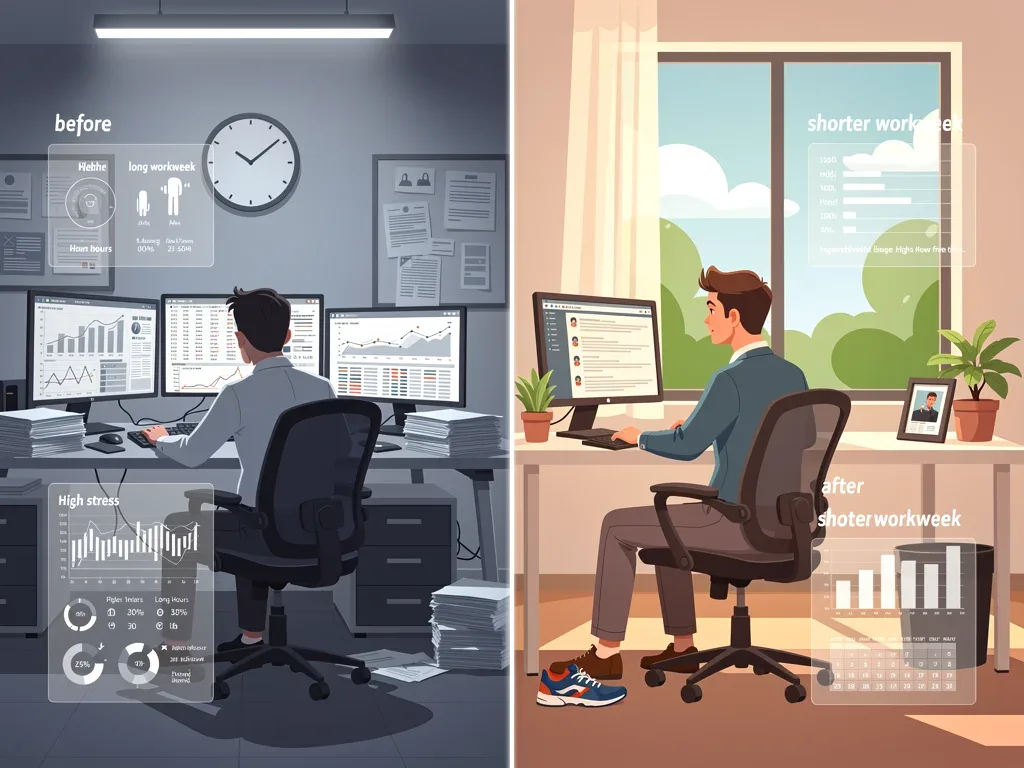
Personalization and AI-driven scheduling
The role of advanced analytics and AI in scheduling will become increasingly prominent. AI-driven platforms could analyze individual and team productivity patterns, employee preferences, and business needs to suggest optimal work schedules. This personalization could lead to unprecedented levels of efficiency and job satisfaction, moving beyond rigid workweek structures.
Furthermore, the emphasis on outcomes over hours will continue to grow. Companies will prioritize deliverables and quality of work, rather than the physical presence of employees for a set number of hours. This shift in mindset is fundamental to the success of any flexible work arrangement and will be a cornerstone of future work models.
Policy and cultural evolution
Government policies and societal norms will also evolve to support these flexible arrangements. As more organizations demonstrate the benefits of reduced or compressed workweeks, there will be increasing pressure to update labor laws and provide frameworks that encourage such innovations. The cultural acceptance of non-traditional work schedules will solidify, making them the norm rather than the exception.
In conclusion, the future of work in 2026 and beyond points towards a highly flexible and personalized approach, integrating the best aspects of the 4-day compressed and 32-hour workweeks. This evolution, driven by technology and a greater understanding of human productivity, promises a more balanced and efficient professional life for all.
| Key Aspect | Description |
|---|---|
| 4-Day Compressed Workweek | Standard full-time hours (e.g., 40) worked over four longer days, resulting in a three-day weekend. Focus on work-life balance through extended leisure time. |
| 32-Hour Workweek | Reduced total weekly hours (e.g., 32) without a pay cut, often spread over four shorter days. Focus on efficiency, reduced burnout, and higher per-hour productivity. |
| Productivity Impact | Both can boost productivity; compressed relies on rejuvenation, 32-hour on efficiency gains and reduced fatigue. Outcomes vary by industry and implementation. |
| Employee Well-being | Both models significantly improve work-life balance, reduce stress, and enhance job satisfaction, leading to better retention and attracting top talent. |
Frequently Asked Questions About Workweek Models
What is the main difference between a 4-day compressed workweek and a 32-hour workweek?▼A 4-day compressed workweek maintains standard full-time hours (e.g., 40) but distributes them over four longer days. In contrast, a 32-hour workweek reduces the total number of hours worked in a week, often without a pay cut, focusing on less time overall.
Which model is better for employee well-being?▼Both models generally improve employee well-being by offering more personal time and reducing stress. The 32-hour workweek might have a slight edge in directly combating burnout due to fewer total hours, while the compressed model offers the benefit of an extended weekend.
How do these models impact business productivity?▼Both can boost productivity. The compressed model often sees employees return refreshed, while the 32-hour model forces efficiency gains and better time management. Success depends on industry, job roles, and effective implementation strategies, often supported by technology.
Are there any challenges in implementing these workweek models?▼Yes, challenges include managing employee fatigue during longer shifts (compressed model), maintaining output with fewer hours (32-hour model), ensuring continuous service, and requiring significant cultural shifts and management buy-in. Legal compliance is also crucial.
What role does technology play in the success of these workweeks?▼Technology, particularly automation and AI, is pivotal. It helps streamline tasks, reduce manual effort, and enhance communication and collaboration, making it easier for employees to achieve their objectives within reduced or compressed working hours. This is crucial for maintaining productivity.
Conclusion
The debate between the 4-day compressed workweek and the 32-hour model is more relevant than ever in 2026, as organizations continue to seek optimal ways to balance productivity with employee well-being. Both models present compelling arguments and demonstrable benefits, from enhanced work-life balance and reduced burnout to increased employee retention and operational efficiency. While the compressed workweek focuses on redistributing existing hours to create longer weekends, the 32-hour model fundamentally challenges the notion of how many hours are truly necessary to achieve desired outcomes. The future, however, likely points towards a more nuanced, blended approach, where businesses leverage technology and data to create personalized work schedules that cater to individual and organizational needs. This evolution promises a more flexible, human-centric, and ultimately more productive work environment for all.
