Asynchronous Communication: Boosting or Killing Productivity?
Advertisements

Asynchronous communication productivity can significantly enhance productivity by reducing meeting overload and fostering focused work, but its success hinges on clear guidelines and effective implementation to avoid miscommunication and isolation.
The modern workplace is in constant flux, grappling with the challenge of maximizing efficiency while fostering collaboration. A central debate revolves around whether asynchronous communication productivity is a savior or a silent killer of output. Many organizations are reporting significant reductions in weekly meeting hours, some boasting up to a 15-hour decrease, all thanks to a deliberate shift towards asynchronous methods. But what does this really mean for the day-to-day grind, and is it truly sustainable?
Understanding asynchronous communication: more than just email
Asynchronous communication refers to any exchange of information where participants do not need to be present at the same time. Think emails, project management tools, recorded videos, and shared documents. This contrasts sharply with synchronous communication, which demands real-time interaction, like traditional meetings or instant messaging.
The core principle behind asynchronous communication is enabling individuals to engage with information and contribute at their own pace, whenever and wherever they are most productive. This flexibility is often cited as a major benefit, particularly for distributed teams or those operating across different time zones. It's about respecting individual workflows and deep work periods.
The shift from real-time demands
Historically, workplace communication has been heavily skewed towards synchronous methods. The expectation was often an immediate response, leading to constant interruptions and a fragmented workday. This real-time demand created a culture of urgency, sometimes at the expense of thoughtful consideration or focused work. Asynchronous communication seeks to rebalance this, providing space for more deliberate engagement.
- Allows for thoughtful responses and detailed contributions.
- Reduces pressure for immediate, on-the-spot decisions.
- Supports diverse work schedules and time zones effectively.
- Fosters a culture of documentation and clear record-keeping.
Ultimately, understanding asynchronous communication means recognizing its potential to transform how work gets done, moving away from a reactive, always-on mentality to a more proactive, intentional approach. This fundamental shift is crucial for unlocking the productivity gains many companies are now reporting.
The promise of reduced meeting hours and enhanced focus
One of the most compelling arguments for embracing asynchronous communication is its direct impact on meeting culture. Many organizations find themselves trapped in an endless cycle of meetings, often with questionable outcomes. The transition to asynchronous methods directly addresses this by providing alternatives for information sharing, decision-making, and collaboration that don't require everyone to be in the same virtual room at the same time.
By leveraging tools like recorded updates, detailed project notes, and structured discussions in platforms, teams can drastically cut down on the number and duration of live meetings. This isn't just about saving time; it's about reclaiming valuable hours for focused, uninterrupted work, which is critical for complex problem-solving and creative tasks.
Reclaiming deep work time
The constant interruption of meetings can severely hinder what's known as 'deep work' – periods of intense concentration without distraction. When teams adopt asynchronous communication, individuals gain more control over their schedules. They can dedicate specific blocks of time to deep work, knowing that they can catch up on communications and contribute at their convenience, rather than being pulled into a meeting every hour.
- Frees up calendars for concentrated, high-value tasks.
- Minimizes context switching, a major productivity killer.
- Empowers employees to structure their most productive hours.
- Leads to higher quality output due to sustained attention.
The promise here is not just about reducing meetings, but about fundamentally restructuring the workday to prioritize productive output over constant, real-time availability. This shift can lead to a significant boost in individual and team efficiency, directly impacting the bottom line.
Navigating the challenges: potential pitfalls of asynchronous communication
While the benefits of asynchronous communication are clear, its implementation is not without challenges. The very nature of non-real-time interaction can introduce new complexities that, if not properly managed, can actually hinder productivity rather than enhance it. Understanding and proactively addressing these pitfalls is crucial for successful adoption.
One primary concern is the potential for miscommunication. Without the immediate feedback and non-verbal cues present in synchronous interactions, messages can be misinterpreted, leading to confusion, delays, and rework. Clarity and conciseness become paramount, but even then, nuances can be lost.

The risk of isolation and delayed responses
Another significant challenge is the feeling of isolation, especially for team members who thrive on social interaction. The absence of spontaneous conversations and quick check-ins can lead to a disconnect among colleagues. Additionally, while delayed responses are inherent to asynchronous communication, excessive delays can stall progress and create bottlenecks, negating the intended productivity gains.
- Increased potential for misinterpretation without immediate clarification.
- Risk of team members feeling disconnected or isolated.
- Delays in decision-making if response times are not managed.
- Difficulty in building rapport and team cohesion remotely.
Addressing these challenges requires a deliberate strategy, focusing on clear communication guidelines, fostering virtual social connections, and setting realistic expectations for response times. Ignoring these potential downsides can quickly turn an asynchronous advantage into a productivity drain.
Strategies for successful asynchronous implementation
Successfully integrating asynchronous communication into a team's workflow requires more than just adopting new tools; it demands a cultural shift and a well-defined strategy. Without clear guidelines and a commitment from leadership, the transition can be messy and counterproductive. The goal is to leverage its strengths while mitigating its inherent weaknesses.
One fundamental strategy is to establish clear communication protocols. This includes defining which types of communication are best suited for asynchronous channels versus synchronous ones. For instance, urgent issues might still require a quick call, while detailed project updates are ideal for a written summary.
Building a culture of documentation and clarity
Effective asynchronous communication thrives on robust documentation. Every decision, update, and discussion point should be recorded in a centralized, accessible location. This ensures that all team members, regardless of when they log on, have access to the full context. Clarity in writing is also essential; messages should be concise, explicit, and leave little room for ambiguity.
- Develop a clear policy for when to use synchronous vs. asynchronous methods.
- Invest in and standardize project management and documentation tools.
- Train teams on effective written communication and context sharing.
- Encourage proactive information sharing and status updates.
By focusing on these strategies, organizations can create an environment where asynchronous communication truly enhances productivity, fostering independent work while maintaining strong team alignment and clear progress tracking.
Tools and technologies enabling the asynchronous revolution
The rise of asynchronous communication would not be possible without the robust ecosystem of digital tools and technologies available today. These platforms are specifically designed to facilitate non-real-time collaboration, documentation, and information sharing, acting as the backbone of an efficient asynchronous workflow. Choosing the right tools is critical for a smooth transition and sustained success.
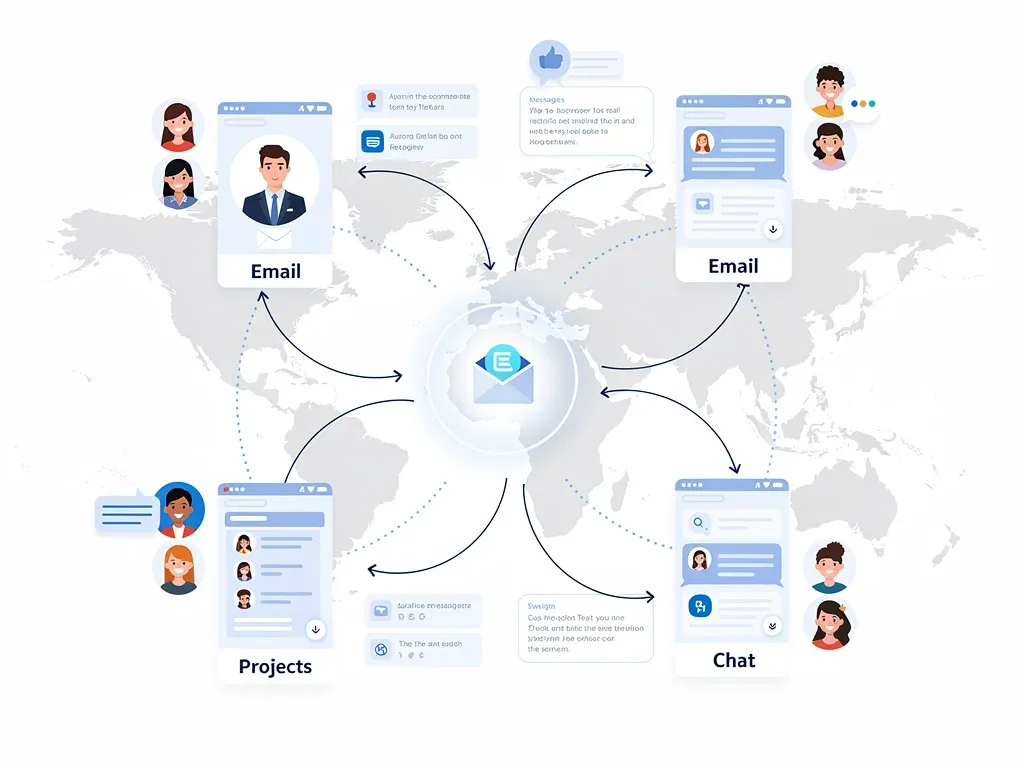
Project management software, for instance, allows teams to track tasks, share updates, and discuss progress without needing live meetings. Tools like Asana, Trello, or Jira provide a centralized hub for all project-related information, ensuring transparency and accountability at all times.
Beyond basic messaging: advanced collaboration platforms
While email and basic chat applications (like Slack or Microsoft Teams) are foundational, more advanced collaboration platforms offer features specifically tailored for asynchronous work. These include video messaging tools for quick, recorded updates, shared document collaboration (Google Docs, Notion), and dedicated knowledge bases (Confluence) where information can be stored and easily retrieved.
- Project Management Software: Centralizes tasks, deadlines, and discussions.
- Asynchronous Video Tools: For recorded updates, tutorials, and feedback.
- Shared Documentation Platforms: Ensures all information is accessible and editable.
- Internal Wikis/Knowledge Bases: Stores institutional knowledge for self-service.
The strategic deployment of these tools, coupled with proper training and usage guidelines, empowers teams to communicate effectively and maintain momentum without the constant demand for synchronous interactions. This technological infrastructure is fundamental to achieving significant meeting reductions and boosting overall productivity.
Measuring impact: the 15-hour meeting reduction and beyond
The claim of a 15-hour weekly meeting reduction is a bold one, but for many organizations, it's a tangible outcome of a successful shift to asynchronous communication. This reduction isn't just about freeing up time; it's about a fundamental reevaluation of how work gets done and how value is created. Measuring this impact goes beyond simple time tracking.
Organizations often track metrics such as the number of scheduled meetings, meeting duration, and participant feedback on meeting effectiveness. A decrease in these figures, coupled with an increase in project completion rates or individual contribution, signals a positive shift. The qualitative impact, such as improved employee satisfaction and reduced stress, is equally important.
Qualitative and quantitative benefits
Beyond the quantitative reduction in meeting hours, the qualitative benefits are often profound. Employees report feeling less overwhelmed, more focused, and empowered to manage their own schedules. This can lead to higher job satisfaction, better work-life balance, and ultimately, reduced turnover. From a business perspective, efficiency gains translate directly into cost savings and increased output.
- Reduced operational costs associated with meeting overhead.
- Improved employee morale and reduced burnout.
- Higher quality of work due to increased focus time.
- Enhanced ability to scale and support remote or distributed teams.
Measuring the true impact of asynchronous communication involves a holistic assessment of both the quantitative metrics and the qualitative experiences of the workforce. When successful, the benefits extend far beyond just time saved, creating a more productive, engaged, and resilient organization.
| Key Aspect | Impact on Productivity |
|---|---|
| Meeting Reduction | Frees up significant time for focused work, leading to higher output. |
| Deep Work Enhancement | Enables longer periods of uninterrupted concentration for complex tasks. |
| Communication Clarity | Requires deliberate, well-documented messages to avoid misinterpretation. |
| Tool Dependency | Relies heavily on effective digital platforms for seamless collaboration. |
Frequently asked questions about asynchronous communication
What exactly is asynchronous communication?▼Asynchronous communication involves exchanging information without requiring immediate, real-time responses. Examples include emails, project management tools, recorded video messages, and shared documents. It allows individuals to engage with content and contribute at their convenience.
How does it reduce meeting times?▼By shifting many discussions, updates, and decision-making processes to written or recorded formats, teams can minimize the need for live meetings. Information is shared proactively, allowing individuals to review and respond on their own schedules, thus freeing up calendar space.
What are the main benefits for productivity?▼Benefits include more time for deep, focused work, reduced interruptions, greater flexibility for diverse schedules, and improved documentation of decisions. This leads to higher quality output and a more empowered, less stressed workforce.
What are the biggest challenges of asynchronous communication?▼Key challenges include potential for miscommunication due to lack of immediate feedback, feelings of isolation among team members, and delays in critical decision-making if response expectations are not clearly set and managed effectively.
Which tools are best for asynchronous teams?▼Effective tools include project management software (Asana, Jira), communication platforms (Slack, Teams), shared documentation (Google Docs, Notion), and asynchronous video messaging. The best tools facilitate clear, centralized information sharing and collaboration.
Conclusion
The journey into widespread asynchronous communication is undoubtedly reshaping the modern workplace. While the promise of a 15-hour weekly meeting reduction and enhanced deep work is compelling, its success hinges on careful implementation and a commitment to new communication paradigms. Organizations embracing this shift must invest in the right tools, foster a culture of clear documentation, and proactively address potential pitfalls like miscommunication and isolation. Ultimately, asynchronous communication is not merely a trend but a strategic imperative for businesses aiming to optimize productivity, empower their workforce, and thrive in an increasingly distributed and dynamic global economy. Its ability to save or kill productivity rests entirely on how thoughtfully it is adopted and managed.
