Commercial Lease Restructuring: 15% TI Allowances in Modern Offices
Advertisements

Securing a 15% tenant improvement allowance during commercial lease restructuring is a critical strategy for businesses aiming to modernize their office spaces and enhance operational efficiency within current market dynamics.
In today's rapidly evolving business landscape, the ability to adapt and optimize operational costs is paramount. One often-overlooked yet incredibly powerful lever for businesses is commercial lease restructuring, particularly when it comes to securing substantial tenant improvement (TI) allowances. This strategic approach can not only significantly reduce your occupancy expenses but also transform your workspace to meet contemporary demands, ensuring your business remains competitive and attractive to top talent.
Understanding Commercial Lease Restructuring
Commercial lease restructuring involves renegotiating the terms of an existing lease agreement or crafting a new one that better suits a tenant's current and future needs. This process can be initiated for various reasons, including changes in market conditions, a company's growth or downsizing, or the desire to upgrade facilities. It's not merely about rent reduction; it's a holistic re-evaluation of the entire lease package to maximize value and flexibility.
The modern office market, characterized by hybrid work models and a premium on collaborative, technologically advanced spaces, makes restructuring an even more vital tool. Landlords are often willing to negotiate to retain quality tenants, especially when faced with high vacancy rates or the need to fill updated properties. Understanding their motivations and market pressures is key to successful negotiations.
Key Drivers for Lease Restructuring
Several factors can prompt a business to consider restructuring its commercial lease. These drivers often stem from internal strategic shifts or external market forces that necessitate a change in real estate strategy.
- Market Shifts: Fluctuations in rental rates, increased vacancies, or new developments can create opportunities for better terms.
- Business Growth/Contraction: A company outgrowing its space or needing to downsize requires lease adjustments.
- Operational Efficiency: The desire to implement new office layouts, technology, or sustainability features often necessitates a TI allowance.
- Lease Expiration: Approaching lease end dates provide a natural window for renegotiation.
Ultimately, a successful restructuring aims to align the lease terms with the business's strategic objectives, ensuring the office space serves as an asset rather than a liability. This involves a careful analysis of the existing lease, current market conditions, and future business projections to identify areas for improvement and leverage.
The Importance of Tenant Improvement Allowances
Tenant improvement (TI) allowances are funds provided by the landlord to help tenants customize their leased space to suit their specific business needs. These allowances are crucial, especially in modern office markets where the demand for flexible, amenity-rich, and technologically integrated workspaces is high. Securing a substantial TI allowance, such as 15% of the total lease value, can significantly offset the capital expenditure a business would otherwise incur for fit-outs and renovations.
Without adequate TI, businesses might be forced to compromise on their ideal workspace or deplete significant capital reserves. In a competitive environment, a well-designed office can boost employee morale, productivity, and attract new talent, making the TI allowance a critical component of any lease negotiation.

The scope of what a TI allowance can cover is broad, ranging from basic cosmetic changes to extensive structural modifications. It typically includes elements like flooring, lighting, partitioning, HVAC system modifications, and IT infrastructure. The key is to clearly define the desired improvements and their associated costs during the negotiation phase to ensure the allowance adequately covers the project.
Maximizing Your TI Allowance Value
To truly maximize the value of your tenant improvement allowance, a strategic approach is essential. This involves meticulous planning, detailed budgeting, and expert negotiation. Simply accepting the first offer for TI can leave significant money on the table.
- Detailed Space Planning: Work with architects and space planners to create a comprehensive design that meets current and future needs.
- Accurate Cost Estimation: Obtain multiple bids from contractors to ensure realistic cost projections for all improvements.
- Negotiate Scope: Clearly define what the TI allowance will cover and what remains the tenant's responsibility.
- Understand Amortization: Be aware of how the TI is amortized into the rent and its impact on the overall lease cost.
By treating the TI allowance as a critical financial component of the lease, businesses can ensure their new space is not only functional but also aligned with their brand and operational objectives, without incurring prohibitive upfront costs.
Strategies for Securing a 15% TI Allowance
Achieving a 15% tenant improvement allowance is ambitious but entirely feasible with the right strategies and market understanding. This level of allowance often requires a strong negotiating position and a clear articulation of value to the landlord. It's about demonstrating how your tenancy contributes positively to their property's value and overall portfolio.
One primary strategy involves highlighting the stability and reputation of your business. Landlords prefer long-term, reliable tenants, and a strong tenant profile can be leveraged to secure more favorable terms, including a higher TI allowance. Presenting a solid business plan and financial stability can significantly bolster your position.
Leveraging Market Conditions and Expertise
The current office market dynamics play a crucial role in negotiation. High vacancy rates, new developments, or a landlord's desire to attract specific types of tenants can all be used to your advantage. Engaging with experienced real estate brokers and legal counsel is indispensable.
- Market Analysis: Conduct thorough research on comparable properties and recent lease deals in your target area.
- Broker Representation: A skilled tenant representative can provide invaluable market insights and negotiation expertise.
- Legal Review: Ensure all TI terms are clearly defined and legally sound to avoid future disputes.
- Longer Lease Terms: Offering a longer lease term can often justify a higher initial TI allowance for the landlord.
Furthermore, consider the landlord's perspective. If your improvements enhance the building's overall appeal or increase its market value, they may be more inclined to offer a generous allowance. Presenting a compelling case that benefits both parties is a powerful negotiation tactic.
The Negotiation Process: Key Steps and Considerations
The negotiation process for commercial lease restructuring and TI allowances is intricate and requires careful planning and execution. It's not a one-time event but a series of discussions and concessions aimed at reaching a mutually beneficial agreement. Understanding each step can empower tenants to navigate this complex terrain effectively.
Initially, it's crucial to define your needs and priorities clearly. What specific improvements are essential? What is your budget for any overages? What are your ideal lease terms? Having these answers firmly in mind before entering negotiations will provide a solid foundation for your arguments and help you stay focused on your objectives.
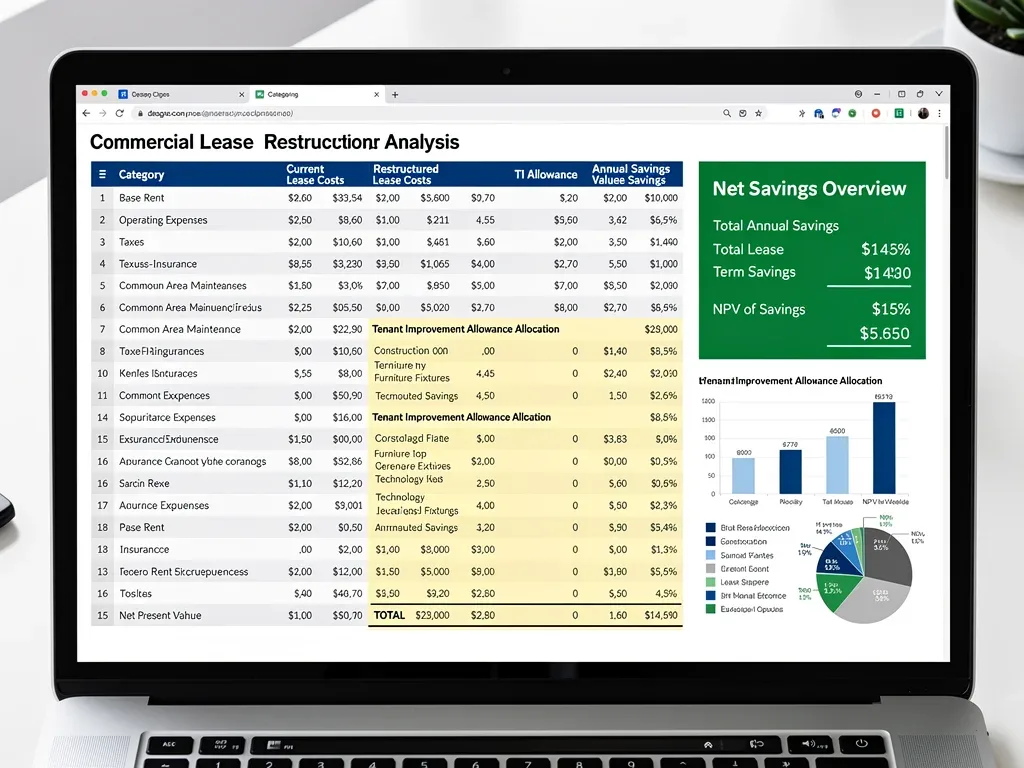
The negotiation itself is an iterative process. Be prepared for counter-offers and be willing to compromise on less critical points to secure your primary objectives. Patience and persistence are key virtues in this phase, as rushing the process can lead to suboptimal outcomes.
Essential Negotiation Tactics
Effective negotiation involves more than just asking for what you want; it requires strategic thinking and a deep understanding of the other party's position. Employing specific tactics can significantly improve your chances of securing favorable terms.
- Anchor High: Start with a higher request for TI to create room for negotiation.
- Justify Your Demands: Provide detailed justifications for your TI requests, including cost estimates and benefits to your business.
- Highlight Tenant Value: Emphasize your company's financial stability, growth potential, and positive impact on the property.
- Be Prepared to Walk Away: Having alternative options strengthens your negotiating hand.
- Engage Professionals: Leverage the expertise of real estate brokers and legal advisors to guide the process.
Remember that every clause in a commercial lease is negotiable. From rent abatements to operating expense caps, a comprehensive approach to negotiation will yield the best results for your commercial lease restructuring.
Financial Implications and ROI of TI Allowances
Beyond the immediate benefit of a modernized workspace, securing a significant tenant improvement allowance has profound financial implications and can offer a substantial return on investment (ROI). By reducing upfront capital outlay for renovations, businesses can preserve cash flow for core operations or other strategic investments.
The ROI of TI allowances is not just about cost savings; it also encompasses the intangible benefits of an improved work environment. Enhanced employee productivity, better talent retention, and a stronger brand image all contribute to the overall financial health and success of the business. These qualitative benefits can be challenging to quantify but are nonetheless critical.
Calculating the True Value of Your Lease
To accurately assess the financial benefits of a restructured lease with TI, it's essential to look beyond the face rent. Consider the total occupancy cost, which includes base rent, operating expenses, taxes, and the net cost of improvements after the allowance.
- Net Effective Rent: Calculate the actual cost per square foot over the lease term, factoring in all concessions, including TI.
- Capital Preservation: Evaluate how the TI allowance frees up capital that would otherwise be spent on fit-outs.
- Operational Savings: Consider potential savings from energy-efficient upgrades or optimized layouts.
- Future Value: Assess how the improvements might enhance the business's long-term value or appeal to future buyers/investors.
A well-negotiated TI allowance can turn what might have been a significant capital expense into a manageable operational cost, spread over the lease term, thereby improving a company's financial liquidity and overall profitability.
Future Trends in Office Markets and Lease Restructuring
The commercial office market is in a constant state of flux, driven by technological advancements, evolving work cultures, and economic shifts. Understanding these future trends is crucial for businesses engaging in commercial lease restructuring, as it allows them to anticipate needs and negotiate terms that remain relevant for years to come.
The rise of hybrid work models continues to reshape demand for office space, emphasizing flexibility, collaboration zones, and advanced connectivity. Landlords are responding by offering more adaptable spaces and greater incentives for tenants to commit. This dynamic environment creates both challenges and opportunities for businesses seeking to optimize their real estate portfolios.
Preparing for Tomorrow's Workspace
To future-proof your office space through lease restructuring, consider incorporating elements that support agility, sustainability, and employee well-being. These are not just trends but fundamental shifts in how businesses operate and how employees expect to work.
- Flexibility Clauses: Negotiate options for expansion, contraction, or early termination to adapt to changing business needs.
- Smart Building Technology: Integrate allowances for smart systems that enhance efficiency, comfort, and security.
- Sustainability Features: Prioritize green building materials and energy-efficient systems, which can also lead to operational savings.
- Wellness Amenities: Include provisions for features that promote employee health and well-being, such as natural light, ergonomic furniture, and dedicated quiet zones.
By proactively addressing these emerging trends in your commercial lease restructuring, businesses can ensure their office space remains a strategic asset that supports innovation, productivity, and a positive work culture, positioning them for sustained success in the modern office market.
| Key Aspect | Brief Description |
|---|---|
| Lease Restructuring | Renegotiating existing lease terms to better align with current business needs and market conditions, optimizing costs and flexibility. |
| Tenant Improvement (TI) | Funds provided by the landlord for customizing leased space, crucial for modernizing offices without significant tenant capital outlay. |
| 15% TI Allowance | An ambitious yet achievable goal for TI, requiring strong negotiation, market leverage, and a clear value proposition to the landlord. |
| Negotiation Strategy | Involves detailed planning, market analysis, expert consultation, and highlighting tenant value to secure favorable terms and allowances. |
Frequently Asked Questions About Commercial Lease Restructuring
What is commercial lease restructuring and why is it important?▼Commercial lease restructuring involves renegotiating existing lease terms to better suit a tenant's evolving business needs and current market conditions. It's crucial for optimizing operational costs, adapting to growth or downsizing, and modernizing workspaces to enhance productivity and employee satisfaction.
How can I secure a higher tenant improvement allowance?▼To secure a higher TI allowance, focus on presenting a strong tenant profile, conducting thorough market research, justifying your improvement costs with detailed plans, and leveraging expert real estate brokers. Longer lease terms or improvements that add value to the landlord's property can also strengthen your position.
What factors influence a landlord's willingness to grant TI?▼Landlords consider several factors, including market vacancy rates, the tenant's creditworthiness and longevity, the proposed improvements' impact on the property's value, and the overall competitiveness of the local office market. A strong tenant in a soft market has more leverage.
What should be included in a tenant improvement allowance negotiation?▼Negotiations should clearly define the scope of work, who manages the project, the payment schedule, and any potential overage costs. It's vital to specify what the allowance covers, such as design fees, construction, materials, and permits, to avoid unexpected expenses.
How do modern office market trends affect lease restructuring?▼Modern trends like hybrid work models and a demand for flexible, collaborative, and sustainable spaces significantly influence restructuring. Tenants can leverage these trends to negotiate for TIs that support future-ready offices, including smart technology and wellness amenities, making the space more adaptable and attractive.
Conclusion
Commercial lease restructuring, particularly when focused on securing substantial tenant improvement allowances, represents a powerful strategic tool for businesses navigating the complexities of modern office markets. By meticulously planning, understanding market dynamics, and employing astute negotiation tactics, companies can not only optimize their occupancy costs but also transform their workspaces into environments that foster innovation, productivity, and employee well-being. This proactive approach ensures that real estate remains a valuable asset, aligning perfectly with long-term business objectives and contributing significantly to overall financial health and competitive advantage.
