Executive Equity Incentive Plans: Retain Leaders with 4-Year Vesting
Advertisements

Designing effective executive equity incentive plans, especially those featuring 4-year vesting schedules, is crucial for middle-market companies aiming to retain their tier-1 leaders and foster sustained growth and success.
In today's competitive business landscape, attracting and retaining top-tier executive talent is paramount for any company's success, particularly within the dynamic middle-market sector. One of the most potent tools at a company's disposal for achieving this is strategically designing executive equity incentive plans. These plans, especially those structured with robust 4-year vesting schedules, serve not only as a powerful recruitment lure but also as a critical mechanism for aligning the interests of key leaders with the long-term strategic objectives and financial health of the organization. Understanding the intricacies of these plans and how to implement them effectively can be the differentiator between stagnation and sustained growth for middle-market enterprises.
The Strategic Importance of Executive Equity Incentives
Executive equity incentive plans are more than just compensation; they are a strategic investment in leadership. For middle-market companies, which often operate with fewer resources than their larger counterparts, every executive hire carries significant weight. These plans are designed to motivate, retain, and reward executives by granting them a direct ownership stake in the company's future success.
The core philosophy behind these incentives is simple: when executives have a direct financial interest in the company's performance, they are more likely to make decisions that drive long-term value creation. This alignment of interests is particularly vital for middle-market firms that are often in growth phases, requiring aggressive strategies and committed leadership to scale effectively.
Attracting and Securing Top Talent
One of the primary benefits of offering equity incentives is the enhanced ability to attract highly skilled and experienced executives. In a talent market where competition is fierce, a compelling equity package can make a middle-market company stand out against larger corporations that might offer higher base salaries. It signals a belief in the company's future and an invitation for executives to participate directly in that growth.
- Competitive Edge: Equity provides a unique value proposition that often outweighs cash-only compensation in the eyes of ambitious leaders.
- Long-Term Vision: It appeals to executives who are looking for more than just a job, but a genuine opportunity to build and share in wealth creation.
- Reduced Cash Outlay: For companies with limited cash flow, equity can be a more sustainable way to offer competitive total compensation.
Driving Performance and Accountability
Equity incentives naturally link executive performance to shareholder value. When executives own a piece of the company, their decisions are inherently tied to the company's stock price or valuation. This fosters a culture of accountability and entrepreneurial spirit, where leaders are constantly seeking ways to improve efficiency, increase revenue, and enhance profitability.
The structure of these plans, particularly through vesting, ensures that rewards are not immediate but are earned over time, contingent on continued service and often, the achievement of specific performance milestones. This mechanism is crucial for middle-market companies that need consistent, high-level performance to navigate growth challenges and market fluctuations.
In essence, executive equity incentive plans transform executives from employees into partners, creating a powerful incentive for them to think and act like owners. This fundamental shift in perspective is invaluable for middle-market companies striving to achieve ambitious growth targets and build sustainable value.
Understanding the 4-Year Vesting Schedule
A 4-year vesting schedule is a common and highly effective structure within executive equity incentive plans. Vesting refers to the process by which an executive earns full ownership rights to their equity awards over a specified period. In a 4-year schedule, the granted equity typically becomes fully owned by the executive incrementally over four years, rather than all at once.
This phased approach is critical for talent retention and aligning executive longevity with company success. It creates a powerful golden handcuff, encouraging executives to remain with the company for the long haul to realize the full value of their equity.
Common Vesting Structures
While a 4-year schedule is common, the exact distribution of vesting can vary. Two prevalent methods are:
- Cliff Vesting: In this model, no equity vests for a specific initial period (e.g., one year). After this period, a significant portion (e.g., 25%) vests all at once. Subsequent portions then vest regularly (e.g., monthly or quarterly) over the remaining period. The cliff ensures an executive commits for at least a year before receiving any equity, reducing the risk of short-term gains without sustained contribution.
- Graded Vesting: Here, equity vests gradually from the start, often in equal installments (e.g., 25% each year for four years, or monthly/quarterly increments). This provides a more immediate, albeit smaller, reward and continuous incentive.
Many companies combine these approaches, for instance, with a one-year cliff followed by monthly vesting over the next three years. This hybrid model balances the benefits of initial commitment with ongoing incremental rewards.
Benefits for Middle-Market Companies
For middle-market companies, the 4-year vesting schedule offers several distinct advantages. It provides a predictable timeline for executive commitment, which is crucial during periods of rapid growth or strategic transformation. It also mitigates the risk of executives leaving prematurely after receiving a large, unearned equity grant.
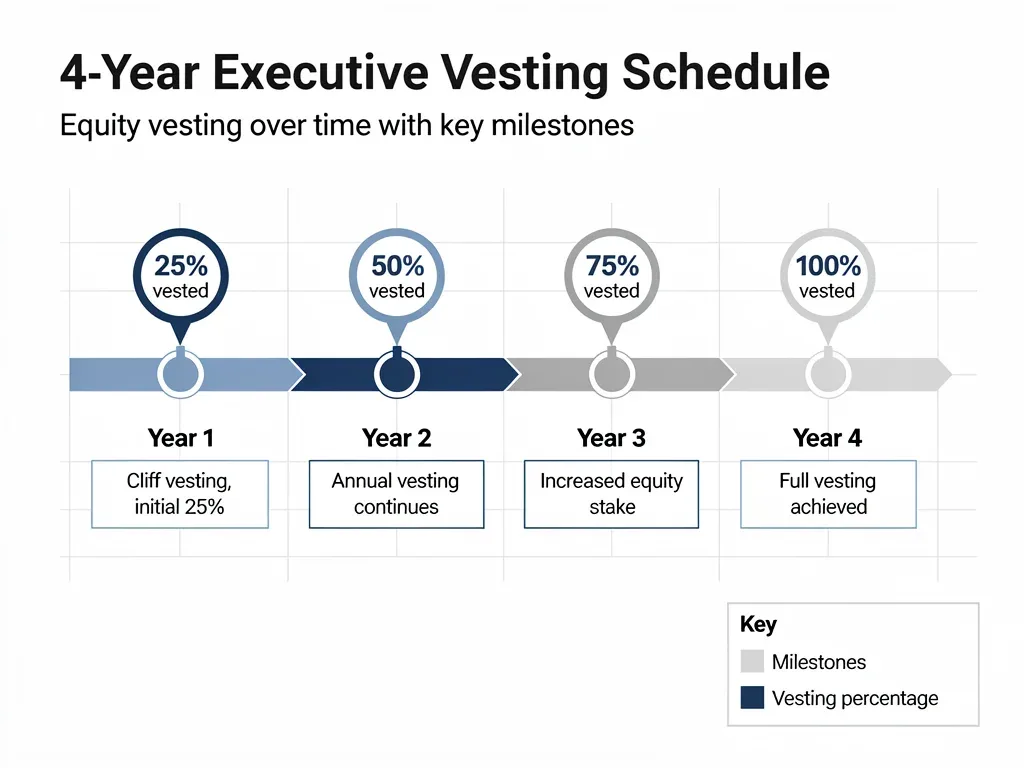
Furthermore, a longer vesting period encourages executives to focus on sustainable growth and long-term value creation rather than short-term gains. This aligns perfectly with the growth trajectories of many middle-market firms that require consistent leadership and strategic execution over several years to achieve their objectives.
Ultimately, the 4-year vesting schedule is a proven mechanism for fostering stability and continuity in executive leadership. It ensures that executives are meaningfully invested in the company's future, acting as a powerful tool for retention and a foundation for sustained organizational success.
Key Components of an Effective Equity Plan Design
Designing an executive equity incentive plan requires careful consideration of various components to ensure it effectively meets the company's objectives and motivates its leaders. A well-designed plan goes beyond simply granting shares; it strategically aligns incentives with desired outcomes.
The efficacy of an equity plan hinges on its clarity, fairness, and its ability to genuinely motivate executives. For middle-market companies, where resources might be more constrained, a thoughtful design process is even more critical to maximize impact.
Types of Equity Instruments
Companies can choose from several types of equity instruments, each with its own characteristics and implications:
- Stock Options: Grant executives the right to purchase company stock at a predetermined price (the exercise price) within a specified period. These are valuable if the company's stock price increases, offering significant upside potential.
- Restricted Stock Units (RSUs): Represent a promise to deliver company stock or its cash equivalent at a future date, usually upon vesting. RSUs have value even if the stock price does not significantly increase, making them less risky for executives than stock options.
- Performance Shares: Similar to RSUs, but vesting is contingent not only on continued service but also on the achievement of specific performance targets (e.g., revenue growth, profitability milestones). These strongly link compensation to company performance.
The choice of instrument often depends on the company's stage of growth, its valuation, and its strategic goals. For instance, early-stage middle-market companies might favor stock options to offer high upside, while more mature firms might lean towards RSUs or performance shares for their retention and performance-linking capabilities.
Performance Metrics and Triggers
To ensure equity plans drive desired behaviors, it's essential to link vesting and potential payouts to clear performance metrics. These metrics should be quantifiable, relevant to the executive's role, and aligned with the company's overall strategic goals.
Common performance metrics include:
- Revenue growth
- EBITDA (Earnings Before Interest, Taxes, Depreciation, and Amortization)
- Customer acquisition or retention rates
- Specific project milestones (e.g., successful product launch, market expansion)
Defining clear triggers for accelerated vesting, such as a change of control event (e.g., acquisition), is also crucial. This protects executives in the event of a company sale and can facilitate smoother transitions during M&A activities, which are common in the middle market.
A well-structured equity plan is a living document that should be reviewed periodically to ensure it remains relevant and effective as the company evolves. By carefully selecting equity instruments and linking them to meaningful performance metrics, middle-market companies can create powerful incentives that drive both individual executive success and overall organizational growth.
Legal and Tax Considerations for Middle-Market Companies
Implementing executive equity incentive plans involves navigating a complex web of legal and tax regulations. For middle-market companies, understanding these considerations is not just about compliance; it's about optimizing the plan's benefits for both the company and its executives while avoiding costly pitfalls.
Failure to properly address legal and tax implications can lead to unexpected liabilities, administrative burdens, and even undermine the incentive value of the equity awards. Therefore, expert legal and financial counsel is indispensable throughout the design and implementation process.
Securities Law Compliance
The issuance of equity, even to executives, falls under the purview of securities laws. For private middle-market companies, this often means relying on exemptions from registration requirements, such as Rule 701 under the Securities Act of 1933. This rule allows private companies to offer and sell securities to employees, directors, and consultants without registration, provided certain conditions are met.
- Rule 701 Requirements: Companies must ensure they stay within prescribed offering limits and provide certain disclosures to recipients.
- State Blue Sky Laws: In addition to federal laws, companies must also comply with state-specific securities regulations, often referred to as "blue sky laws," which can vary significantly.
- Accredited Investor Status: In some cases, especially for larger grants, executives may need to qualify as "accredited investors."
Public middle-market companies face even more stringent requirements, including registration with the SEC and ongoing reporting obligations related to executive compensation and equity grants.
Tax Implications for Executives and Companies
The tax treatment of equity awards is a critical factor for both the executive recipient and the issuing company. Different types of equity instruments have distinct tax consequences:
- Incentive Stock Options (ISOs): Generally, executives do not pay regular income tax when ISOs are granted or exercised, but they may be subject to Alternative Minimum Tax (AMT) upon exercise. Gains are typically taxed at favorable long-term capital gains rates if specific holding periods are met.
- Non-Qualified Stock Options (NSOs): Executives pay ordinary income tax on the difference between the fair market value of the stock and the exercise price at the time of exercise. The company can typically deduct this amount.
- Restricted Stock Units (RSUs) and Restricted Stock Awards (RSAs): Executives are generally taxed as ordinary income when the shares vest (for RSUs) or when restrictions lapse (for RSAs), based on the fair market value of the shares at that time. An 83(b) election can alter the tax timing for RSAs.
Companies must understand these tax rules to accurately report compensation, withhold taxes if necessary, and claim appropriate deductions. Missteps can result in penalties for both the company and the executive. Consulting with tax professionals specializing in executive compensation is essential to structure plans that are tax-efficient and compliant.
Tailoring Plans to Middle-Market Dynamics
Middle-market companies face unique challenges and opportunities that differentiate them from startups or large corporations. Therefore, their executive equity incentive plans must be specifically tailored to these dynamics to be truly effective. A one-size-fits-all approach rarely works.
The agility, growth potential, and often more personal culture of middle-market firms allow for creative and highly customized compensation strategies. The goal is to leverage these inherent strengths to design plans that resonate with leaders and drive specific organizational outcomes.
Balancing Growth and Stability
Many middle-market companies are in a growth phase, requiring executives to manage both rapid expansion and the need for operational stability. Equity plans should reflect this dual focus. For instance, a plan might include a mix of performance-based awards tied to growth metrics (e.g., market share expansion) and time-based vesting for retention, ensuring continuous leadership during periods of change.
The 4-year vesting schedule is particularly well-suited here, as it provides a stable framework for executive commitment while allowing the company to evolve and hit various growth milestones within that period. It encourages leaders to build foundational strength rather than chasing immediate, unsustainable gains.
Customizing for Company Culture and Stage
Middle-market companies often pride themselves on a distinct culture, whether it's entrepreneurial, family-oriented, or highly collaborative. Equity plans should ideally reflect and reinforce this culture. For example, a company with a strong team-oriented culture might consider group performance hurdles for a portion of equity, fostering collective responsibility.
- Early-Stage Middle Market: May offer higher equity percentages with more aggressive upside potential (e.g., stock options) to attract leaders willing to take on more risk for significant reward.
- Mature Middle Market: Might lean towards more predictable instruments like RSUs or performance shares, focusing on sustained profitability and specific strategic objectives.
- Family-Owned Businesses: May use phantom stock or stock appreciation rights (SARs) to provide equity-like compensation without diluting family ownership or control.
Flexibility and Adaptability
The business environment for middle-market companies can change rapidly. Economic shifts, technological advancements, or competitive pressures can necessitate strategic pivots. An effective equity plan should therefore incorporate a degree of flexibility. This could mean:
- Discretionary Adjustments: Allowing the board or compensation committee some discretion to adjust metrics or targets under extraordinary circumstances.
- Evergreen Provisions: Designing plans that can be easily refreshed or re-granted to executives to maintain long-term incentives beyond the initial grant period.
By thoughtfully customizing equity plans to their specific context, middle-market companies can create powerful incentives that not only attract and retain top talent but also align executive efforts with the unique trajectory and values of the organization, driving sustainable success.
Best Practices for Implementing and Managing Equity Plans
Once an executive equity incentive plan is designed, its successful implementation and ongoing management are critical to realizing its full potential. Best practices ensure the plan operates smoothly, remains compliant, and continues to motivate executives effectively.
A well-managed plan fosters trust, transparency, and sustained executive engagement. Conversely, poor administration can lead to confusion, dissatisfaction, and even legal challenges, undermining the very purpose of the incentives.
Clear Communication and Transparency
One of the most important aspects of implementation is ensuring that executives fully understand their equity awards. This includes:
- Detailed Grant Agreements: Providing clear, legally sound documents outlining the terms, vesting schedule, performance conditions, and tax implications.
- Educational Sessions: Conducting workshops or one-on-one meetings to explain the plan, answer questions, and clarify how equity value is created and realized.
- Regular Updates: Keeping executives informed about company performance relative to any performance hurdles and the current value of their vested and unvested equity.
Transparency builds trust and ensures executives are motivated by a clear understanding of their potential rewards, rather than by ambiguity or speculation.
Robust Administration and Governance
Effective administration is key to managing equity plans efficiently and compliantly. This involves:
- Dedicated Resources: Assigning responsibility for plan administration to a specific individual or team, often within HR, finance, or legal departments.
- Specialized Software: Utilizing equity management software to track grants, vesting schedules, exercises, and tax withholding, especially as the number of participants grows.
- Strong Governance: Establishing a compensation committee (typically a subcommittee of the board) to oversee the plan, approve grants, set performance targets, and ensure compliance. This committee plays a crucial role in maintaining fairness and strategic alignment.

Ongoing Review and Adjustment
The business environment is dynamic, and what works today may not be optimal tomorrow. Best practices dictate that equity plans should not be static; they require periodic review and, if necessary, adjustment.
Reviews should consider:
- Market Competitiveness: Benchmarking against peer companies to ensure the plan remains competitive in attracting and retaining talent.
- Company Performance: Assessing whether the plan is effectively driving desired business outcomes and executive behavior.
- Regulatory Changes: Adapting to new legal or tax regulations that might impact the plan's structure or administration.
By embracing these best practices, middle-market companies can ensure their executive equity incentive plans are not just theoretical constructs but powerful, living tools that consistently support their strategic objectives and foster a highly engaged and committed leadership team.
The Long-Term Impact on Talent Retention and Company Growth
The ultimate goal of designing executive equity incentive plans, particularly with structured 4-year vesting schedules, is to create a sustainable model for both talent retention and accelerated company growth. The impact of these well-crafted plans extends far beyond immediate compensation, shaping the very trajectory of a middle-market enterprise.
By fostering a deep-seated commitment from top leaders, these plans lay the groundwork for strategic continuity, operational excellence, and a culture of shared success that is indispensable for long-term value creation.
Cultivating Loyalty and Stability
A primary benefit of a robust equity plan with a 4-year vesting schedule is its ability to significantly enhance executive loyalty and reduce turnover. When executives have a substantial, unvested equity stake, their incentive to remain with the company is considerably higher. This stability in leadership is invaluable for middle-market companies, which often rely heavily on the institutional knowledge and relationships of their key personnel.
Reduced turnover means less disruption, lower recruitment costs, and the preservation of critical expertise within the organization. This continuity allows for the consistent execution of long-term strategies, building momentum and avoiding the setbacks that often accompany frequent leadership changes.
Driving Sustainable Value Creation
Equity incentives inherently align executive interests with those of shareholders, promoting a focus on sustainable value creation. Executives are motivated to make decisions that enhance the company's long-term health and profitability, knowing that their personal wealth is directly tied to this success. This contrasts sharply with short-term bonus structures that might incentivize decisions focused on immediate gains at the expense of future prospects.
For middle-market companies, this long-term perspective is crucial for:
- Strategic Investments: Encouraging investments in R&D, market expansion, or infrastructure that may have delayed returns but significant future impact.
- Risk Management: Fostering a more considered approach to risk, avoiding decisions that could jeopardize long-term stability for short-term wins.
- Culture of Ownership: Instilling a broader sense of ownership throughout the organization, as other employees see leaders genuinely invested in the company's destiny.
Enhancing Exit Opportunities
For many middle-market companies, a strategic exit (e.g., acquisition or IPO) is a key long-term objective. Well-structured executive equity incentive plans can significantly enhance the attractiveness of the company to potential buyers or investors. A stable, motivated executive team with a vested interest in the company's success is a strong selling point, indicating a healthy, well-managed organization.
Furthermore, plans that include provisions for accelerated vesting upon a change of control can facilitate smoother transitions during M&A activities, ensuring executives remain engaged through the sale process and beyond, if desired by the acquiring entity.
In conclusion, the careful design and implementation of executive equity incentive plans with 4-year vesting schedules are not merely a cost of doing business; they are a strategic imperative for middle-market companies seeking to secure top talent, drive performance, and build lasting value. These plans are a testament to a company's commitment to its leaders and its belief in a shared, prosperous future.
| Key Aspect | Brief Description |
|---|---|
| Equity Incentive Plans | Strategic tools for middle-market companies to attract, motivate, and retain top executive talent by offering ownership stakes. |
| 4-Year Vesting Schedule | A common mechanism ensuring executives earn full equity ownership incrementally over four years, fostering long-term commitment. |
| Key Design Components | Involves choosing appropriate equity instruments (options, RSUs), defining performance metrics, and ensuring legal/tax compliance. |
| Talent Retention & Growth | Effective plans cultivate executive loyalty, drive sustained value creation, and enhance the company's attractiveness for future growth or exit. |
Frequently Asked Questions About Executive Equity Incentive Plans
What is the main purpose of an executive equity incentive plan?▼The primary purpose is to align the interests of top-tier executives with the long-term success of the company. By granting executives an ownership stake, these plans motivate them to make decisions that enhance shareholder value, attract key talent, and reduce leadership turnover.
Why is a 4-year vesting schedule common for middle-market companies?▼A 4-year vesting schedule is popular because it balances retention and motivation. It encourages executives to commit for a significant period to fully realize their equity, providing stability for the company during critical growth phases and ensuring a sustained focus on long-term objectives.
What are the key types of equity instruments used in these plans?▼Common instruments include stock options (giving the right to buy shares at a set price), Restricted Stock Units (RSUs, promise to deliver shares upon vesting), and Performance Shares (RSUs tied to specific company performance targets). Each has distinct benefits and tax implications.
How do legal and tax considerations impact equity plan design?▼Legal and tax considerations are crucial. Companies must comply with securities laws (e.g., Rule 701 for private firms) and understand the varied tax treatments for executives (e.g., ordinary income vs. capital gains) and the company (e.g., deductions). Expert advice is essential for compliance and optimization.
What are best practices for managing an executive equity plan?▼Best practices include clear communication to executives about their awards, robust administration using specialized software, strong governance through a compensation committee, and periodic review and adjustment of the plan to remain competitive and aligned with company goals and regulatory changes.
Conclusion
In the dynamic landscape of the middle market, the ability to attract, motivate, and retain exceptional executive talent is not merely an advantage; it is a fundamental pillar of sustained success. By thoughtfully designing executive equity incentive plans, particularly those incorporating a well-structured 4-year vesting schedule, companies can forge a powerful alignment between their leaders' personal ambitions and the organization's long-term strategic objectives. These plans transcend traditional compensation, transforming executives into true partners invested in the company's future. From navigating complex legal and tax frameworks to tailoring plans that resonate with unique company cultures, the comprehensive approach outlined here provides a roadmap for middle-market firms to unlock their full potential through committed and high-performing leadership, ultimately driving enduring growth and value creation.
