FAA Part 108: Unlocking Scaled BVLOS Drone Delivery Corridors
Advertisements
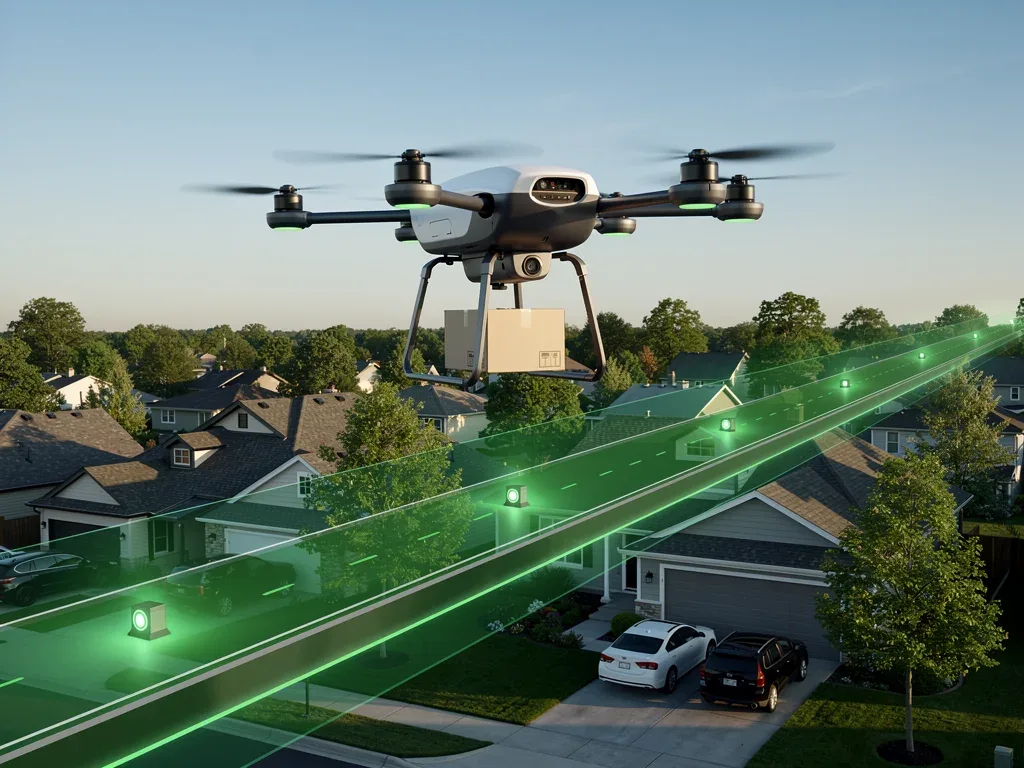
FAA Part 108 compliance is pivotal for the widespread adoption of autonomous drone delivery corridors, enabling safe and scalable Beyond Visual Line of Sight (BVLOS) operations to revolutionize logistics and supply chains across the United States.
Imagine a future where packages arrive at your doorstep within minutes, delivered by silent, efficient autonomous drones navigating dedicated aerial pathways. This isn't science fiction; it's the imminent reality being shaped by advancements in drone technology and, crucially, by regulatory frameworks. The full realization of autonomous drone delivery corridors: how FAA Part 108 compliance unlocks scaled BVLOS operations is not just a technological challenge but a regulatory frontier, with the Federal Aviation Administration (FAA) playing a central role in defining its safe and scalable deployment.
Understanding the Vision of Autonomous Drone Delivery Corridors
The concept of autonomous drone delivery corridors represents a paradigm shift in logistics and transportation. These aren't just random flight paths; they are meticulously planned, designated segments of airspace where unmanned aerial vehicles (UAVs) can operate routinely and autonomously, often Beyond Visual Line of Sight (BVLOS).
These corridors are designed to optimize efficiency, enhance safety, and enable a high volume of drone traffic without interfering with traditional aviation or posing risks to ground populations. They are the aerial highways of the future, purpose-built for the unique demands of drone operations, especially for last-mile delivery and critical infrastructure inspection.
Defining Autonomous Corridors
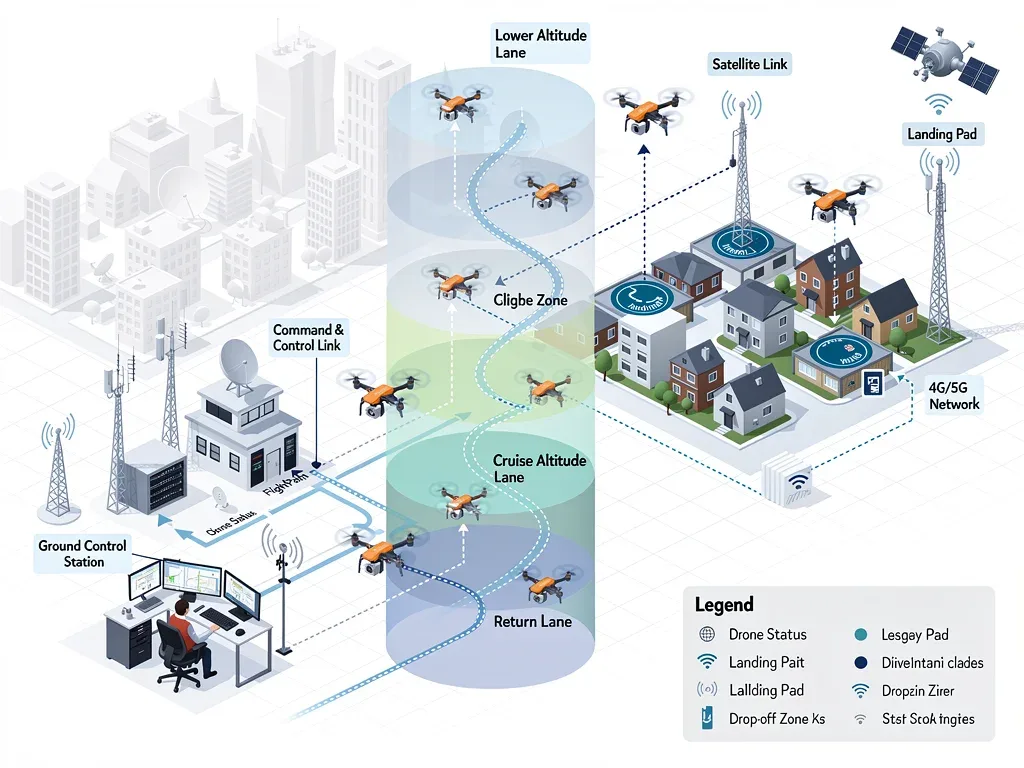
Autonomous corridors are more than just lines on a map. They encompass a complex ecosystem of:
- Designated Airspace: Specific routes and altitudes reserved for drone operations.
- Communication Infrastructure: Robust and redundant systems for command, control, and data transfer.
- Sense-and-Avoid Technologies: Advanced onboard and ground-based systems to prevent collisions.
- Traffic Management Systems: Software and protocols to manage multiple drones simultaneously.
The implementation of these corridors promises to dramatically reduce delivery times, lower operational costs, and provide access to remote or underserved areas. However, the path to widespread adoption is paved with regulatory complexities, primarily centered around ensuring public safety and integrating these new operations into existing airspace. The success hinges on a comprehensive regulatory framework that can adapt to rapid technological advancements while maintaining stringent safety standards. Without clear guidelines, the promise of drone delivery remains largely theoretical.
Ultimately, autonomous drone delivery corridors are a testament to human ingenuity, aiming to create a more efficient, responsive, and sustainable logistics network. Their successful integration requires not only technological prowess but also a deep understanding of regulatory requirements and a commitment to continuous improvement in safety protocols. This vision, while ambitious, is becoming increasingly attainable with each step forward in technology and regulation.
The Critical Role of BVLOS Operations in Scaled Delivery
Beyond Visual Line of Sight (BVLOS) operations are the linchpin for achieving scaled autonomous drone delivery. Without BVLOS, drone operations are largely confined to niche applications, limited by the operator's ability to maintain direct visual contact with the aircraft. This severely restricts range, payload capacity, and the overall economic viability of drone delivery services.
BVLOS enables drones to fly over long distances, beyond the pilot's line of sight, making it possible to connect distribution centers with distant customers, deliver medical supplies to remote hospitals, or conduct extensive infrastructure inspections. It transforms drones from localized tools into true logistical assets capable of operating across vast geographical areas.
Challenges and Opportunities of BVLOS
While BVLOS presents immense opportunities, it also introduces significant challenges:
- Safety Concerns: The primary concern is preventing mid-air collisions with other aircraft or unexpected ground incidents when the drone is not visually monitored.
- Technological Demands: Requires highly reliable navigation, communication, and sense-and-avoid systems.
- Regulatory Hurdles: Obtaining FAA authorization for BVLOS flights is historically complex and requires extensive justification and safety case development.
Despite these hurdles, the economic and societal benefits of scaled BVLOS operations are too significant to ignore. Companies are investing heavily in technologies like radar, LiDAR, and advanced AI to ensure drones can detect and avoid obstacles autonomously, paving the way for safer and more efficient BVLOS flights. The ability to conduct these operations routinely and safely is what will truly unlock the potential of drone delivery corridors, moving beyond experimental phases to widespread commercial deployment. The regulatory environment, particularly the evolution of FAA guidelines, is crucial for fostering this growth while ensuring public safety remains paramount.
Introducing FAA Part 108: A Game Changer
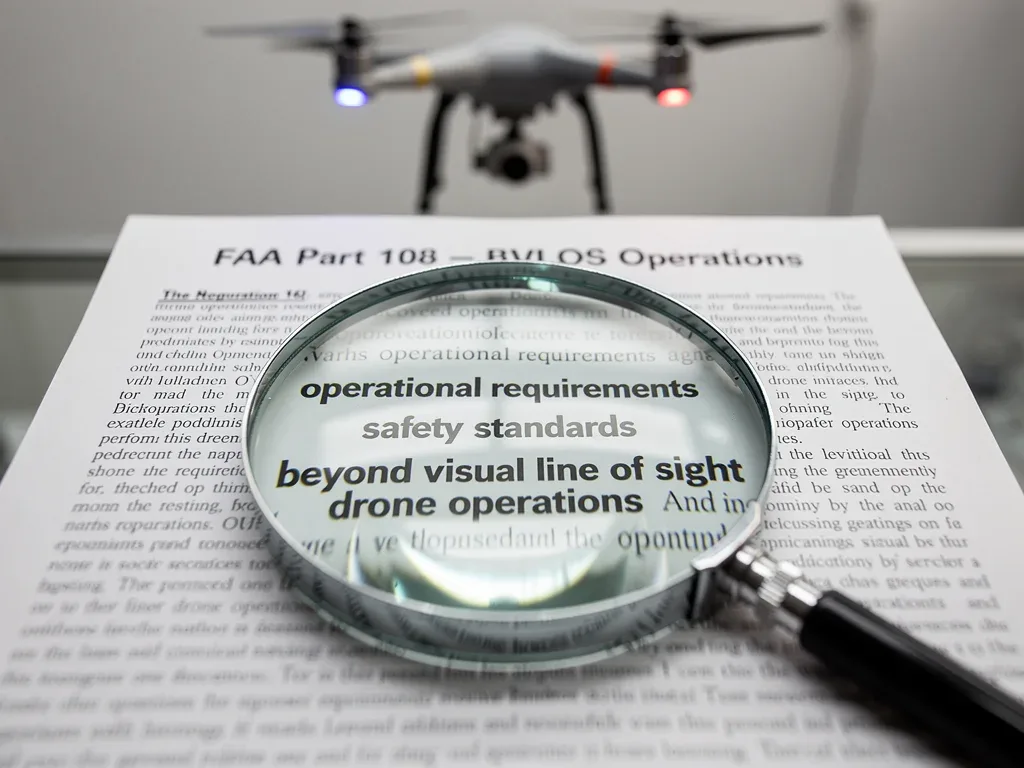
For years, companies seeking to operate drones BVLOS faced a cumbersome waiver process under Part 107, requiring individualized approvals and extensive documentation for each specific operation. This bottleneck significantly hindered scalability and routine commercial drone delivery. The introduction of FAA Part 108 aims to fundamentally change this landscape, providing a more structured and predictable pathway for expanded drone operations.
Part 108 is envisioned as a regulatory framework specifically designed to address routine, complex drone operations, including those BVLOS and potentially involving autonomous flight within designated corridors. It seeks to standardize the requirements for these operations, moving away from a case-by-case waiver system to a more programmatic approach.
Key Aspects of Part 108
While the final rule is still evolving, the discussions around Part 108 suggest several key areas:
- Standardized Authorizations: Moving towards a framework that allows for broader operational approvals rather than individual waivers.
- Risk-Based Approach: Tailoring requirements based on the level of risk associated with specific operations, locations, and aircraft types.
- Performance-Based Standards: Focusing on desired safety outcomes rather than prescriptive technological solutions, allowing for innovation.
The potential impact of Part 108 cannot be overstated. By providing clearer guidelines and a more streamlined approval process, it is expected to significantly accelerate the deployment of autonomous drone delivery services. This shift will enable companies to plan and scale their operations with greater certainty, fostering investment and innovation in the drone industry. It represents a crucial step by the FAA to adapt its regulations to the rapidly advancing capabilities of unmanned aircraft, ensuring safety while facilitating economic growth and technological progress in this dynamic sector.
Compliance Requirements and Operational Standards
Achieving FAA Part 108 compliance will necessitate a rigorous adherence to a new set of operational standards and safety requirements. These standards are designed to mitigate the inherent risks of BVLOS and autonomous operations, ensuring the safety of people and property on the ground, as well as other airspace users.
Operators will likely need to demonstrate advanced capabilities in several key areas, moving beyond the basic requirements of Part 107. This includes not only the drones themselves but also the entire operational ecosystem, from ground control systems to personnel training and maintenance protocols.
Core Compliance Elements
Anticipated compliance elements under Part 108 include:
- Aircraft Airworthiness: Drones must meet specific design, construction, and maintenance standards to ensure reliability.
- Operator Certification & Training: Pilots and ground crew will require specialized training and certifications for complex BVLOS operations.
- Airspace Integration: Demonstrating effective integration with existing air traffic management systems and other airspace users.
- Contingency Planning: Robust plans for dealing with emergencies, system failures, and unexpected events.
The emphasis will be on a holistic safety management system, where operators can prove they have the processes, technologies, and personnel in place to conduct routine BVLOS flights safely and reliably. This will likely involve extensive testing, data collection, and a transparent reporting structure. The FAA's goal is not to stifle innovation but to guide it in a way that prioritizes public safety above all else. For companies, proactively developing these capabilities now will be crucial for a smooth transition to Part 108 compliance, positioning them at the forefront of the autonomous drone delivery revolution.
Building the Infrastructure for Drone Corridors
The establishment of autonomous drone delivery corridors is not solely a regulatory or technological challenge; it also requires significant investment in physical and digital infrastructure. These corridors demand a robust network of supporting systems to ensure continuous, safe, and efficient operations. This infrastructure goes beyond the drones themselves, encompassing everything from navigation aids to communication hubs and weather monitoring stations.
Imagine a digital highway in the sky, complete with intelligent traffic lights and real-time monitoring. This is the essence of the infrastructure required for scalable drone corridors. It's a complex interplay of hardware, software, and human oversight, all working in concert to manage a high volume of autonomous traffic.
Essential Infrastructure Components
Key components for successful drone corridors include:
- Advanced Communication Networks: Reliable 5G or dedicated drone communication links for command, control, and payload data.
- Precision Navigation Systems: Enhanced GPS, alongside alternative navigation methods, for accurate positioning and route adherence.
- Remote Identification Systems: Technology to identify and track drones in real-time for security and air traffic management.
- Ground-Based Radar/Sensors: Supplementary systems to augment onboard sense-and-avoid capabilities, especially in complex environments.
The development of this infrastructure will likely involve collaborations between government agencies, private companies, and local communities. Public-private partnerships will be essential to fund and deploy the necessary ground stations, digital platforms, and communication relays. Furthermore, data security and privacy will be paramount, requiring robust cyber security measures to protect sensitive operational data and prevent unauthorized access. The successful deployment of these corridors will not only enable drone delivery but also create new economic opportunities in infrastructure development and maintenance, fostering a new ecosystem of innovation and employment.
Economic and Societal Impact of Scaled Drone Delivery
The widespread adoption of autonomous drone delivery corridors, enabled by FAA Part 108 compliance, promises to unleash a cascade of economic and societal benefits. This isn't just about faster package delivery; it's about fundamentally reshaping supply chains, creating new industries, and improving quality of life in myriad ways.
From urban centers to rural communities, the impact will be transformative, offering unprecedented efficiency, cost savings, and access to goods and services. This technological leap will touch almost every aspect of daily life, making it a pivotal development for the 21st century.
Anticipated Benefits
The potential economic and societal impacts are extensive:
- Reduced Delivery Costs: Lower fuel consumption and labor costs compared to traditional delivery methods.
- Faster Delivery Times: Near-instantaneous delivery for critical items and significantly reduced wait times for standard packages.
- Increased Accessibility: Providing timely access to goods and services for remote or underserved populations.
- Decreased Traffic Congestion & Emissions: Shifting deliveries from roads to air, reducing urban traffic and carbon footprint.
- New Job Creation: Demand for drone operators, maintenance technicians, software developers, and air traffic managers for drone systems.
Beyond these direct benefits, scaled drone delivery can also enhance disaster relief efforts by rapidly delivering essential supplies to inaccessible areas. It can revolutionize healthcare logistics, enabling quick transport of medicines, vaccines, and even organs. The economic stimulus from this burgeoning industry will be substantial, driving innovation in manufacturing, software development, and specialized services. However, realizing these benefits will require careful planning, continued regulatory support, and public acceptance. Addressing concerns about noise, privacy, and safety through transparent communication and robust operational standards will be crucial for widespread public adoption and the sustained growth of this transformative technology.
| Key Aspect | Brief Description |
|---|---|
| Autonomous Corridors | Dedicated airspace for routine, autonomous BVLOS drone operations, enhancing efficiency and safety. |
| BVLOS Operations | Beyond Visual Line of Sight flights, critical for scaling drone delivery over long distances. |
| FAA Part 108 | New regulatory framework by the FAA to standardize and streamline complex drone operations, including BVLOS. |
| Infrastructure Needs | Requires advanced communication, navigation, and traffic management systems for safe corridor operation. |
Frequently Asked Questions about Drone Delivery Corridors
What are autonomous drone delivery corridors?▼Autonomous drone delivery corridors are designated aerial pathways where unmanned aircraft can operate routinely and autonomously, often Beyond Visual Line of Sight (BVLOS), for package delivery and other services. They feature dedicated airspace, communication, and traffic management systems.
Why is BVLOS critical for scaled drone delivery?▼BVLOS (Beyond Visual Line of Sight) operations are essential because they allow drones to fly over long distances, far beyond the operator's direct sight. This capability is necessary for economically viable and widespread drone delivery services, covering larger geographical areas and increasing efficiency.
How does FAA Part 108 impact drone delivery?▼FAA Part 108 is a new regulatory framework designed to standardize and streamline approvals for complex drone operations, including BVLOS and autonomous flights within corridors. It aims to replace cumbersome waiver processes, enabling more predictable and scalable deployment of drone delivery services across the US.
What are the main compliance requirements for Part 108?▼Compliance under Part 108 will likely include rigorous standards for aircraft airworthiness, specialized operator certification and training, effective airspace integration, and robust contingency planning. Operators must demonstrate a comprehensive safety management system for routine BVLOS operations.
What infrastructure is needed for drone corridors?▼Establishing drone corridors requires significant infrastructure, including advanced communication networks (like 5G), precision navigation systems, remote identification technology, and supplementary ground-based radar or sensors. These components ensure safe, continuous, and efficient management of drone traffic.
Conclusion
The journey towards widespread autonomous drone delivery corridors, underpinned by the critical framework of FAA Part 108 compliance, marks a pivotal moment in the evolution of logistics and air travel. This comprehensive regulatory approach is not merely about enabling drones to fly further; it's about establishing a new, safe, and efficient paradigm for transportation that will have profound economic and societal benefits. By moving towards standardized, risk-based approvals for Beyond Visual Line of Sight (BVLOS) operations, the FAA is paving the way for a future where drone delivery is not an exception, but a routine, integrated part of our daily lives. The successful implementation of Part 108, coupled with continued technological advancements and robust infrastructure development, will unlock unprecedented opportunities, transforming how goods are moved, how services are delivered, and ultimately, how we interact with our environment. The promise of faster, more sustainable, and more accessible delivery is on the horizon, ready to reshape industries and improve lives across the United States.
