Are You Prepared for 2026 SEC Climate Disclosure Requirements?
Advertisements
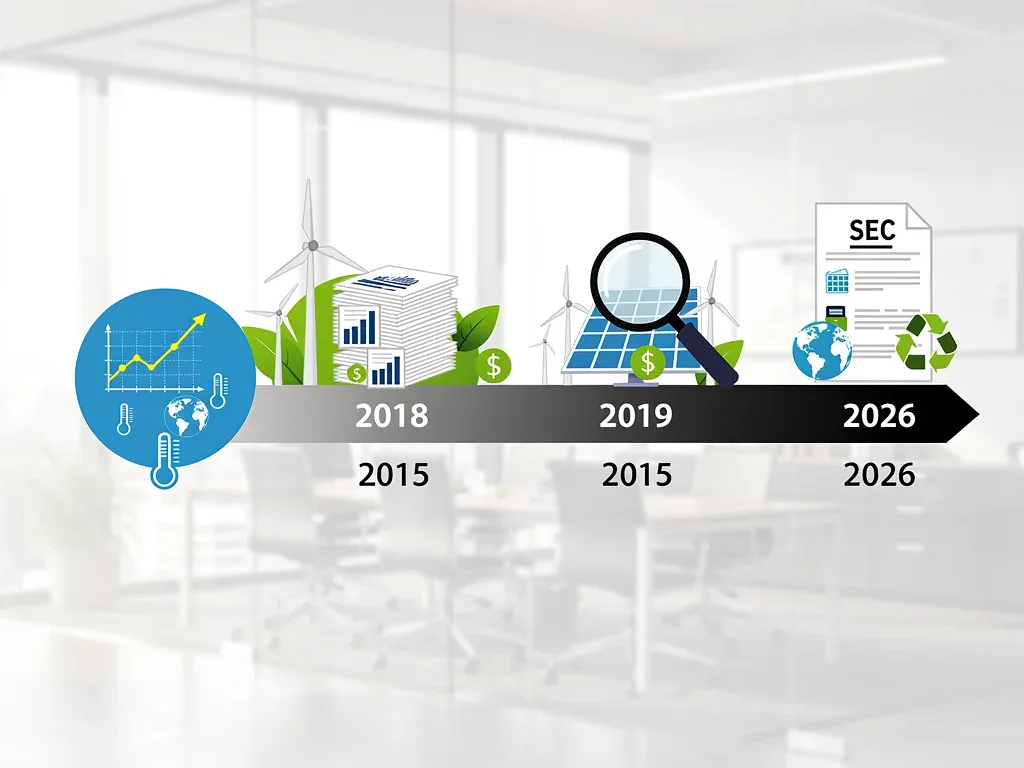
The 2026 SEC climate disclosure requirements will significantly impact operational reporting for businesses in the U.S., necessitating a proactive approach to data collection, emissions measurement, and comprehensive compliance strategies.
As the 2026 deadline for the U.S. Securities and Exchange Commission (SEC) climate disclosure requirements looms, many businesses are grappling with the complexities of compliance. Are you prepared for 2026 SEC climate disclosure requirements? Step-by-step reporting guidelines for operations are not just a matter of regulatory adherence, but a strategic imperative that will shape corporate responsibility and investor confidence for years to come. This article provides a comprehensive overview to help your organization navigate these critical new mandates.
Understanding the Mandate: What the SEC Requires
The U.S. Securities and Exchange Commission (SEC) has introduced a landmark rule requiring publicly traded companies to disclose extensive climate-related information in their registration statements and annual reports. This initiative aims to provide investors with consistent, comparable, and reliable data to inform their investment decisions, reflecting the growing financial risks and opportunities associated with climate change. Understanding the specific elements of this mandate is the first critical step toward compliance.
At its core, the SEC’s rule is designed to bring climate-related disclosures into the mainstream of financial reporting. It recognizes that climate risks can materially impact a company's financial performance, operations, and long-term viability. By standardizing these disclosures, the SEC intends to create a level playing field and enhance market transparency, allowing stakeholders to better assess a company’s resilience to climate-related challenges and its transition plans towards a lower-carbon economy.
Key Disclosure Categories
The new rules broadly categorize disclosures into several key areas, each demanding meticulous data collection and reporting. Companies will need to go beyond general statements and provide quantifiable metrics and detailed qualitative information to meet the SEC’s expectations.
- Governance: Disclosures on the board's oversight of climate-related risks and management's role in assessing and managing those risks.
- Strategy: How identified climate-related risks have had or are reasonably likely to have a material impact on the company’s business, strategy, and outlook.
- Risk Management: How the company identifies, assesses, and manages climate-related risks.
- Targets and Goals: Any climate-related targets or goals, and information on how the company plans to achieve them.
Furthermore, the rule requires disclosure of greenhouse gas (GHG) emissions, including Scope 1 and Scope 2 emissions, and potentially Scope 3 emissions if they are material or if the company has set a GHG emissions reduction target that includes Scope 3. This granular level of reporting necessitates a robust internal system for tracking and verifying emissions data. The financial impact of climate-related events and transition activities also needs to be quantified and reported in financial statements, adding another layer of complexity to traditional accounting practices. Companies must begin to integrate climate considerations directly into their financial planning and risk assessments, ensuring that these disclosures are not isolated reports but are embedded within the broader financial narrative. This foundational understanding is crucial for any organization aiming to successfully navigate the upcoming regulatory landscape and maintain investor confidence.
Assessing Your Current Operational Footprint
Before any meaningful reporting can commence, organizations must conduct a thorough assessment of their current operational footprint. This involves understanding where climate-related risks and opportunities lie within your value chain and how your operations contribute to or are affected by climate change. This assessment isn't merely about data collection; it's about gaining a holistic view of your environmental impact and identifying areas for improvement and strategic adaptation.
The process begins with a detailed inventory of all significant operational activities. This includes everything from energy consumption in manufacturing facilities to the logistics of your supply chain and the waste generated by your processes. Each element needs to be scrutinized for its climate implications, whether it's direct emissions, water usage, or reliance on climate-sensitive resources. A comprehensive assessment provides the baseline data necessary for setting targets and measuring progress, which are central to the SEC’s disclosure requirements.
Identifying Key Emission Sources
A critical component of operational footprint assessment is identifying and quantifying greenhouse gas emissions across all three scopes. This often proves to be the most challenging aspect for many companies, requiring specialized knowledge and data collection methodologies.
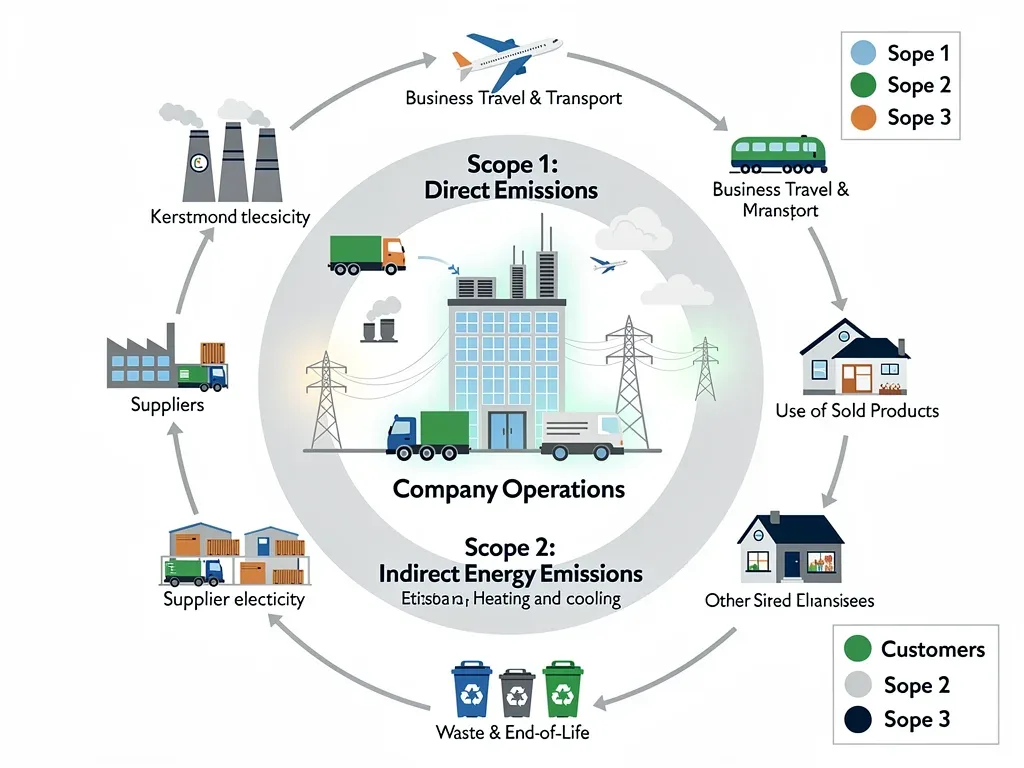
- Scope 1 Emissions: Direct emissions from sources owned or controlled by the company, such as company vehicles, on-site combustion of fuels, and fugitive emissions.
- Scope 2 Emissions: Indirect emissions from the generation of purchased electricity, heating, or cooling consumed by the company.
- Scope 3 Emissions: All other indirect emissions that occur in a company's value chain, both upstream and downstream. This can include emissions from purchased goods and services, business travel, employee commuting, waste generated in operations, and the use of sold products.
Accurate measurement of these emissions requires establishing clear boundaries for reporting, selecting appropriate methodologies (e.g., GHG Protocol), and ensuring data quality and consistency. Many companies find that their existing data collection systems are not robust enough to capture the necessary granularity for all three scopes, particularly Scope 3, which often involves engaging with suppliers and customers. Developing a robust data infrastructure capable of tracking, aggregating, and verifying these diverse emission sources is paramount. This initial assessment lays the groundwork for all subsequent reporting efforts, providing the essential data and insights needed to meet the SEC’s stringent disclosure standards and manage climate-related risks effectively.
Establishing Robust Data Collection and Management Systems
The cornerstone of successful compliance with the 2026 SEC climate disclosure requirements lies in establishing robust data collection and management systems. Without accurate, verifiable, and consistently collected data, companies will struggle to meet the SEC’s stringent reporting standards. This phase involves not just gathering numbers, but building an infrastructure that ensures data integrity, auditability, and efficient reporting processes across the organization.
Implementing effective data management begins with identifying all relevant data points required for disclosure, ranging from energy consumption figures and waste generation metrics to climate risk assessments and governance structures. This often necessitates integrating data from various departments, including operations, finance, supply chain, and human resources. Siloed data systems can pose significant challenges, making a unified approach essential for comprehensive and accurate reporting. Investment in specialized software or upgrading existing enterprise resource planning (ERP) systems to handle climate-related data is often a necessary step.
Key Steps in Data System Development
Developing a reliable data collection and management system requires a systematic approach, focusing on standardization, automation, and verification. These steps ensure that the data reported is both complete and credible, meeting the expectations of regulators and investors.
- Define Data Requirements: Clearly outline what data needs to be collected, its frequency, and the responsible parties. This should align directly with SEC disclosure mandates.
- Standardize Measurement Methodologies: Adopt recognized standards, such as the GHG Protocol, for calculating emissions and other environmental metrics to ensure consistency and comparability.
- Implement Data Collection Tools: Utilize software solutions, sensors, and digital platforms to automate data capture wherever possible, reducing manual errors and improving efficiency.
- Establish Verification Protocols: Put in place internal controls and processes for data validation and verification to ensure accuracy and readiness for external assurance.
Furthermore, training employees involved in data collection and reporting is crucial. They need to understand the importance of data accuracy and the specific methodologies to be used. Regular internal audits of data collection processes can help identify and address discrepancies before they become larger issues. Ultimately, a well-designed data system not only ensures compliance but also provides valuable insights for internal decision-making, enabling companies to identify opportunities for emissions reduction and resource efficiency. This proactive approach to data management transforms a regulatory burden into a strategic asset, providing a clear picture of climate performance and progress.
Measuring and Reporting Greenhouse Gas Emissions (Scopes 1, 2, & 3)
Measuring and reporting greenhouse gas (GHG) emissions is arguably the most technical and critical aspect of the 2026 SEC climate disclosure requirements. Companies must accurately quantify their Scope 1, Scope 2, and, where material, Scope 3 emissions. This process demands a deep understanding of emission sources, appropriate measurement methodologies, and robust reporting frameworks. The SEC's emphasis on auditability means that mere estimates will not suffice; verifiable data is paramount.
The first step in this complex endeavor is to clearly define the organizational and operational boundaries for emissions reporting. This involves deciding which entities and facilities are included in the reporting scope, as well as identifying all relevant emission sources within those boundaries. For Scope 1 emissions, this might involve direct measurements from smokestacks or fuel consumption records from company-owned vehicles. Scope 2 typically involves calculating emissions from purchased electricity, steam, heating, and cooling, often relying on utility data and regional emission factors. The real challenge often lies with Scope 3 emissions, which encompass a vast array of indirect sources across the value chain, requiring collaboration with suppliers and customers.
Navigating Scope 3 Emissions
Scope 3 emissions are frequently the largest portion of a company’s carbon footprint and the most difficult to measure. The SEC rule states that Scope 3 emissions must be disclosed if they are material, or if the company has set a GHG emissions reduction target that includes Scope 3. This materiality assessment itself requires careful consideration and justification.
- Upstream Activities: Includes emissions from purchased goods and services, capital goods, fuel- and energy-related activities not included in Scope 1 or 2, upstream transportation and distribution, waste generated in operations, and business travel.
- Downstream Activities: Covers emissions from downstream transportation and distribution, processing of sold products, use of sold products, end-of-life treatment of sold products, leased assets, and franchises.
To tackle Scope 3, companies often need to engage with their supply chain partners, collect data on their emissions, or use industry-average data when specific information is unavailable. Implementing autonomous sourcing and collaborating with suppliers are key strategies. This requires significant coordination and often the implementation of supplier engagement programs to improve data quality over time. Furthermore, the selection of appropriate emission factors is critical for accurate calculations. These factors convert activity data (e.g., liters of fuel consumed, kWh of electricity used) into CO2 equivalent emissions. Companies must ensure they use the most up-to-date and geographically relevant emission factors. Ultimately, a robust GHG inventory involves not only meticulous data collection and calculation but also a clear narrative explaining the methodologies used, any assumptions made, and the limitations of the data, all to build trust and meet the SEC’s transparency expectations.
Integrating Climate Risk into Financial Reporting
Beyond emissions data, the SEC climate disclosure requirements demand that companies integrate climate-related risks and opportunities directly into their financial reporting. This means moving beyond qualitative statements and quantifying the financial impacts of climate change on a company’s balance sheet, income statement, and cash flows. This integration is a significant departure from traditional financial reporting and requires a deeper alignment between environmental sustainability teams and financial accounting departments.
The rule specifically requires companies to disclose the financial impacts of climate-related events, such as severe weather events (e.g., floods, droughts, wildfires), and the financial impacts of transition activities, such as investments in new technologies, changes in energy sources, or carbon pricing mechanisms. These disclosures must be presented in a disaggregated manner, showing how various climate factors affect specific line items in the financial statements. This level of detail necessitates robust internal accounting systems capable of tracking and attributing costs and revenues related to climate risks and opportunities.
Quantifying Financial Impacts
Quantifying the financial impacts of climate-related risks and opportunities involves a complex analytical process. Companies will need to develop methodologies to estimate these impacts, which often involves scenarios analysis and forward-looking assessments. This is a new frontier for many financial teams, requiring new skill sets and cross-functional collaboration.
- Physical Risks: Disclose the financial impacts of direct damage to assets, supply chain disruptions, and increased operational costs due to extreme weather events.
- Transition Risks: Report on the financial implications of policy and regulatory changes (e.g., carbon taxes), technological shifts, market changes (e.g., demand for low-carbon products), and reputational impacts.
- Climate-Related Opportunities: Disclose the financial benefits derived from investments in renewable energy, energy efficiency projects, or the development of green products and services.
The challenge lies in translating qualitative climate risks into quantifiable financial metrics. This often involves making assumptions about future climate scenarios, market conditions, and regulatory environments. Companies must clearly articulate these assumptions and the methodologies used to arrive at their financial impact figures. Furthermore, the SEC requires attestation from a qualified independent expert for GHG emissions disclosures, which underscores the need for robust internal controls and audit-ready data. Integrating climate risk into financial reporting is not just about compliance; it's about providing investors with a more complete picture of a company's financial health and its resilience in a changing climate, enabling more informed capital allocation decisions.

Ensuring Internal Controls and External Assurance
The credibility of climate disclosures, particularly GHG emissions data, hinges on robust internal controls and, for certain disclosures, external assurance. The SEC’s rule mandates that companies establish and maintain disclosure controls and procedures for climate-related information, similar to those for financial reporting. This signifies a move towards treating climate data with the same rigor and accountability as financial data, ensuring its reliability and accuracy for investors.
Internal controls encompass a range of policies and procedures designed to ensure that climate-related data is accurately collected, processed, and reported. This includes defining clear roles and responsibilities, implementing data validation checks, and maintaining comprehensive documentation of methodologies and assumptions. Without strong internal controls, companies risk reporting inaccurate or incomplete information, which could lead to restatements, reputational damage, and potential regulatory penalties. The establishment of these controls should involve cross-functional teams, including sustainability experts, finance professionals, and internal auditors, to ensure a holistic and integrated approach.
The Role of External Assurance
A significant aspect of the SEC rule is the requirement for external assurance over Scope 1 and Scope 2 GHG emissions disclosures. This assurance provides an independent verification of the reported emissions data, enhancing its credibility and investor confidence. The assurance requirement will be phased in, starting with limited assurance and transitioning to reasonable assurance over time, aligning with the rigor applied to financial statement audits.
- Limited Assurance: Provides a lower level of assurance, where the assurance provider performs procedures that are less extensive than those performed for reasonable assurance, concluding whether anything has come to their attention that causes them to believe the GHG emissions disclosure is materially misstated.
- Reasonable Assurance: Provides a higher level of assurance, where the assurance provider performs extensive procedures to obtain sufficient appropriate evidence to conclude that the GHG emissions disclosure is free from material misstatement.
- Assurance Provider Qualifications: The rule specifies that the assurance provider must be independent and have appropriate expertise in GHG emissions.
Engaging with a qualified independent assurance provider early in the process is crucial. This allows companies to identify potential weaknesses in their data collection and reporting systems and address them before the final reporting deadline. The assurance process will involve reviewing data sources, calculation methodologies, internal controls, and the overall reporting process. Preparing for external assurance requires meticulous record-keeping, transparent documentation of all assumptions and methodologies, and a clear understanding of the assurance standards. By proactively building strong internal controls and preparing for external assurance, companies can instill confidence in their climate disclosures, demonstrating their commitment to transparency and accountability in addressing climate-related risks and opportunities.
Strategic Implications and Future-Proofing Your Business
Beyond mere compliance, the 2026 SEC climate disclosure requirements present significant strategic implications for businesses. Companies that view these mandates as an opportunity rather than just a burden can gain a competitive advantage, enhance their reputation, and future-proof their operations in an increasingly climate-conscious economy. This involves integrating climate considerations into core business strategy, fostering innovation, and engaging proactively with stakeholders.
A proactive approach to climate disclosure can unlock new avenues for value creation. By meticulously tracking emissions and assessing climate risks, companies can identify inefficiencies, reduce operational costs, and discover opportunities for sustainable innovation. For instance, understanding energy consumption patterns can lead to investments in renewable energy or energy efficiency measures, which not only reduce emissions but also offer long-term financial savings and hedge against energy price volatility. Furthermore, transparent reporting can strengthen relationships with investors, customers, and employees, who are increasingly prioritizing sustainability performance.
Leveraging Disclosures for Strategic Advantage
Companies can transform the disclosure process into a strategic asset by leveraging the insights gained to drive innovation, improve risk management, and attract capital. This strategic perspective goes beyond simply meeting regulatory requirements.
- Enhanced Investor Relations: High-quality, transparent climate disclosures can attract ESG-focused investors and potentially lower the cost of capital.
- Operational Efficiency: Detailed data on emissions and resource use can pinpoint areas for efficiency improvements, leading to cost reductions and operational resilience.
- Innovation and Product Development: Understanding climate impacts can spur the development of new, sustainable products and services, opening up new markets and revenue streams.
- Supply Chain Resilience: Engaging with suppliers on their climate performance can lead to a more resilient and sustainable supply chain, mitigating future risks.
Moreover, the SEC disclosures can serve as a catalyst for internal transformation, fostering a culture of sustainability and accountability across the organization. By setting ambitious climate targets and publicly reporting on progress, companies can motivate employees, drive cultural change, and embed sustainability into their corporate DNA. This long-term strategic vision not only ensures compliance but also positions the business for sustained success in a world increasingly shaped by climate change. Companies that embrace these requirements as a strategic opportunity will be better equipped to navigate future challenges and thrive in the evolving global marketplace, demonstrating true leadership in environmental stewardship and corporate responsibility.
| Key Aspect | Brief Description |
|---|---|
| Mandate Overview | SEC rule requires public companies to disclose climate-related financial risks and GHG emissions for investor transparency. |
| Operational Footprint | Assess and inventory all climate-related impacts across operations, including Scope 1, 2, and 3 emissions. |
| Data Systems | Implement robust systems for accurate, verifiable, and consistent data collection, management, and reporting. |
| Assurance & Controls | Establish strong internal controls and plan for mandatory external assurance of GHG emissions data. |
Frequently Asked Questions About SEC Climate Disclosures
What are the key deadlines for the 2026 SEC climate disclosure requirements?▼While the full implementation is set for 2026, larger filers will begin disclosing Scope 1 and 2 emissions in their fiscal year 2025 reports, filed in 2026. Smaller reporting companies have later phase-in dates for certain disclosures, including GHG emissions.
Which companies are subject to these new SEC climate disclosure rules?▼The rules apply to all publicly traded companies that are required to file registration statements and annual reports with the SEC, including domestic registrants and foreign private issuers. The specific requirements may vary based on company size and filer status.
What is the difference between Scope 1, Scope 2, and Scope 3 emissions?▼Scope 1 are direct emissions from company-owned or controlled sources. Scope 2 are indirect emissions from purchased electricity, heating, or cooling. Scope 3 covers all other indirect emissions in a company's value chain, both upstream and downstream.
Is external assurance mandatory for all climate disclosures?▼External assurance is mandatory for Scope 1 and Scope 2 GHG emissions disclosures for larger filers, phased in over time from limited to reasonable assurance. Other climate-related financial disclosures currently do not require external assurance.
How can companies effectively manage Scope 3 emissions reporting?▼Managing Scope 3 requires engaging with supply chain partners, collecting data on their emissions, or using industry-average data when specific information is unavailable. Implementing robust data collection tools and collaborating with suppliers are key strategies.
Conclusion
The 2026 SEC climate disclosure requirements represent a fundamental shift in corporate reporting, compelling businesses to integrate climate considerations deeply into their operational and financial frameworks. Proactive preparation, encompassing a thorough assessment of operational footprints, establishment of robust data management systems, accurate GHG emissions measurement, and integration of climate risk into financial reporting, is not merely about compliance. It’s a strategic imperative that will define resilience, attract investment, and foster sustainable growth in the coming decade. By embracing these guidelines, companies can transform regulatory challenges into opportunities for innovation and leadership in the global economy.
