Combating Subscription Fatigue: Micro-Access Trends Surge
Advertisements

The pervasive issue of subscription fatigue is propelling 68% of US consumers towards on-demand micro-access, fundamentally altering how they engage with digital services and products.
Combating Subscription Fatigue: The Rapid Shift of 68% of US Consumers Toward On-Demand Micro-Access is no longer a niche discussion but a mainstream phenomenon reshaping the digital economy. As consumers navigate an ever-growing sea of monthly commitments, the appeal of flexible, pay-as-you-go options is becoming undeniably potent, signaling a significant evolution in purchasing behavior across various sectors.
Understanding the Rise of Subscription Fatigue
Subscription fatigue has become a prevalent concern for American consumers, who are increasingly overwhelmed by the sheer volume and cost of their recurring monthly payments. This exhaustion stems from managing multiple services, often leading to underutilization and a feeling of being locked into unnecessary expenses.
The digital age brought an explosion of subscription models, from streaming entertainment to software and even physical goods. While initially convenient, the cumulative effect of these commitments has led many to re-evaluate their spending habits and seek alternatives that offer greater control and value.
The Saturation Point of Subscriptions
The market is undeniably saturated with subscription services. Consumers are faced with an almost endless array of choices for everything from media consumption to productivity tools. This abundance, paradoxically, contributes to fatigue as individuals struggle to justify ongoing payments for services they may only use occasionally.
- Too many options create decision paralysis.
- Overlap in content or features among competing services.
- The psychological burden of managing numerous billing cycles.
Economic Pressures and Value Perception
In an economic climate where every dollar counts, consumers are scrutinizing their expenditures more closely than ever. The perceived value of a subscription often diminishes over time, especially if usage fluctuates. This leads to a strong desire for models where payment directly correlates with consumption.
The shift away from long-term commitments is also a reflection of changing lifestyles and priorities. People want flexibility, the ability to adapt their spending quickly, and the freedom to choose what they need, when they need it, without being tied down by recurring charges.
In essence, subscription fatigue is a natural response to an oversaturated market combined with evolving consumer expectations for value and flexibility. Businesses that fail to recognize this shift risk losing a significant portion of their customer base to more adaptable models.
The Allure of On-Demand Micro-Access
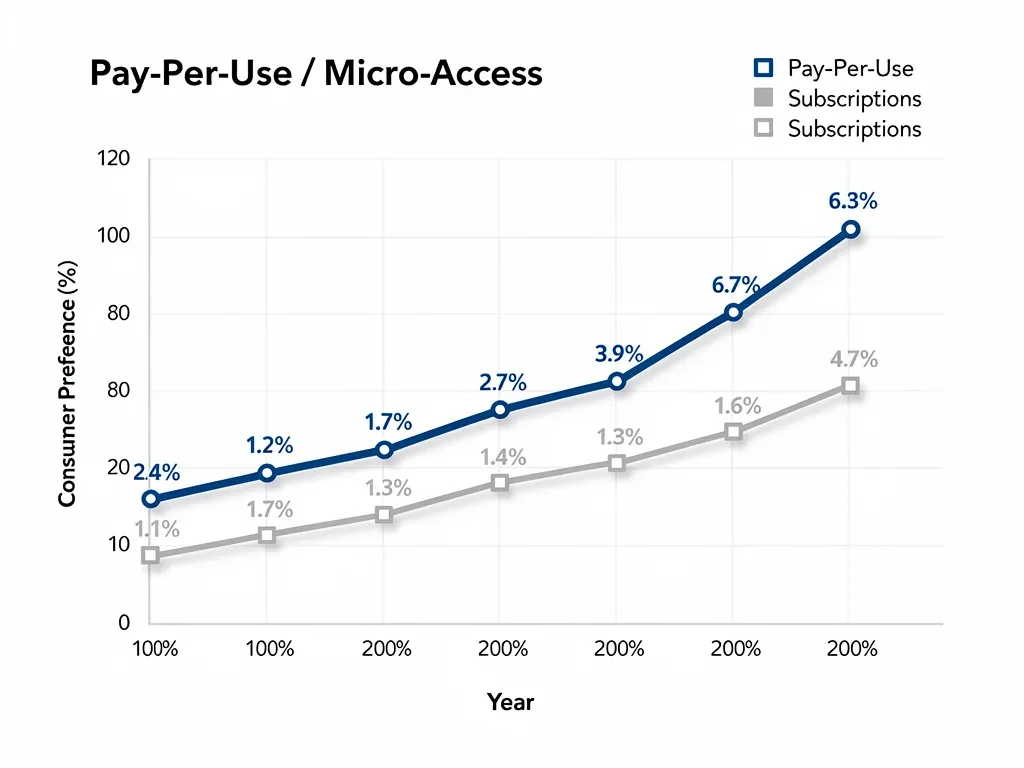
On-demand micro-access represents a powerful counter-narrative to subscription fatigue, offering consumers granular control over their spending and usage. This model allows individuals to pay only for what they consume, precisely when they need it, fostering a sense of empowerment and financial prudence.
The appeal lies in its inherent flexibility and transparency. Instead of a blanket monthly fee, micro-access breaks down services into discrete, transactional units. This could mean paying per article read, per song listened to, per minute of a service, or per specific feature unlocked temporarily.
Flexibility and Cost Efficiency
The primary driver for consumers embracing micro-access is the unparalleled flexibility it offers. They are no longer bound by long-term contracts or the feeling of wasting money on underutilized services. This model aligns perfectly with modern consumer behavior, which often prioritizes immediate needs and situational utility.
- Pay-per-use models prevent overspending on infrequent services.
- Consumers can experiment with different offerings without commitment.
- Direct correlation between usage and cost enhances perceived value.
Instant Gratification and Customization
Beyond cost, micro-access caters to the demand for instant gratification and highly personalized experiences. Consumers can access specific content, tools, or services exactly when the need arises, without navigating a broader subscription package. This level of customization allows for a more tailored consumption journey.
This shift also empowers consumers to curate their digital lives more effectively. They can pick and choose elements from various providers, creating a bespoke ecosystem of services that precisely matches their current requirements, rather than settling for bundled offerings that include many unwanted features.
The move towards on-demand micro-access is a direct response to the limitations of traditional subscriptions. It promises a future where consumers have more agency, greater cost control, and a more personalized engagement with digital products and services.
Key Industries Embracing Micro-Access
While the concept of micro-access might seem novel, several industries are already demonstrating its viability and success, adapting their business models to meet evolving consumer demands. This strategic pivot is not just about combating subscription fatigue micro-access; it's about unlocking new revenue streams and fostering deeper customer relationships.
From media and entertainment to software and even physical goods, the implementation of micro-access varies, but the underlying principle remains consistent: providing value on a per-use or granular basis.
Media and Content Consumption
The media industry is a prime example of this transformation. While streaming subscriptions dominate, there's a growing appetite for single-purchase or time-limited access to specific content. Think about pay-per-view events, individual article purchases, or even short-term access to a specific movie or TV series without a full platform subscription.
- Individual article purchases on news sites.
- Pay-per-view for sporting events or concerts.
- Rental or purchase of individual digital movies/shows.
Software and Digital Tools
Software-as-a-Service (SaaS) traditionally relies on subscriptions, but micro-access is gaining traction for specialized tools or features. For instance, developers might pay per API call, designers per asset download, or users per hour for high-compute cloud services. This allows businesses and individuals to scale their usage precisely with their project needs.
This model is particularly beneficial for niche software or occasional users who cannot justify a full subscription for a tool they only need a few times a month. It opens up access to powerful software for a broader audience, fostering innovation and reducing barriers to entry.
The adoption of micro-access across diverse sectors underscores its potential as a sustainable and consumer-friendly business model. Companies that innovate in this space are likely to capture a significant share of the market weary of traditional subscriptions.
Technological Enablers of Micro-Access
The widespread adoption of on-demand micro-access wouldn't be possible without significant advancements in technology. These innovations provide the infrastructure, security, and user experience necessary to facilitate seamless, granular transactions and manage varied consumption patterns. The ability to handle high volumes of small, frequent payments is paramount.
From robust payment gateways to sophisticated data analytics and blockchain, technology is the backbone supporting this shift away from bulk subscriptions. These tools ensure that both consumers and providers can engage in micro-transactions efficiently and securely.

Advanced Payment Systems
The proliferation of secure, fast, and low-cost payment processing systems is critical. Traditional credit card transactions often have fixed fees that make micro-payments economically unfeasible. However, new digital wallets, mobile payment solutions, and even cryptocurrency options are changing this landscape, reducing transaction costs and friction.
- Mobile payment apps facilitate quick, small transactions.
- Secure tokenization and encryption protect financial data.
- Emerging blockchain technologies for immutable micro-transactions.
Data Analytics and Personalization
Effective micro-access platforms rely heavily on sophisticated data analytics. By understanding individual consumption patterns, providers can offer highly relevant, personalized micro-access options, predict demand, and optimize pricing. This data-driven approach enhances the user experience and maximizes revenue.
Furthermore, AI and machine learning play a crucial role in dynamic pricing models, fraud detection, and ensuring that the right micro-service is offered to the right user at the opportune moment. This level of personalization is what makes micro-access feel so responsive and valuable to the consumer.
Ultimately, the technological foundation for micro-access is rapidly maturing, creating an environment where businesses can confidently pivot towards these flexible models, offering consumers more choice and control while maintaining operational efficiency.
Challenges and Opportunities for Businesses
While the shift towards on-demand micro-access presents a compelling solution to subscription fatigue micro-access, it also introduces a unique set of challenges and opportunities for businesses. Adapting to this new paradigm requires more than just changing pricing models; it demands a fundamental rethinking of product design, customer engagement, and operational efficiency.
Companies must carefully balance the desire for consumer flexibility with the need for predictable revenue streams and sustainable growth. This involves innovative strategies and a deep understanding of market dynamics.
Rethinking Business Models and Pricing
One of the primary challenges for businesses is restructuring their offerings to be granular enough for micro-access without cannibalizing existing, more profitable subscription models. This often involves unbundling services, identifying core value units, and implementing complex, usage-based pricing structures.
- Defining the 'micro-unit' of value for various services.
- Implementing robust metering and billing systems.
- Communicating transparent pricing to avoid consumer confusion.
Enhancing Customer Experience and Engagement
In a micro-access environment, every interaction is a potential transaction, placing an even greater emphasis on an exceptional customer experience. Seamless access, intuitive interfaces, and instant fulfillment become paramount. Businesses must ensure that the friction of making a small payment is minimal, or consumers will quickly disengage.
However, this also presents a massive opportunity for deeper engagement. By consistently delivering value on demand, companies can build stronger trust and loyalty with consumers who feel respected and in control of their spending. Personalized recommendations for micro-access services can further enhance this relationship.
The transition to micro-access is not without its hurdles, but for businesses willing to innovate and prioritize the evolving needs of their customers, the rewards in terms of market share and customer loyalty can be substantial.
The Future Landscape of Consumption
The rapid shift of 68% of US consumers toward on-demand micro-access is not merely a passing trend; it signals a fundamental reorientation in the landscape of consumption. This evolution will likely redefine how products and services are designed, delivered, and monetized across virtually every sector, moving towards a more fluid and consumer-centric economy.
As subscription fatigue micro-access continues to grow, businesses must anticipate a future where flexibility, personalization, and immediate value are paramount. The long-term implications for both consumers and enterprises are profound, promising a dynamic and adaptive marketplace.
Personalized and Hyper-Contextual Services
The future will see an even greater emphasis on hyper-personalized and contextual micro-access offerings. AI and machine learning will enable services to anticipate consumer needs, offering relevant micro-transactions precisely when and where they are most valuable. Imagine a personalized news feed where you pay per article only for topics you genuinely care about, or a fitness app that charges per guided workout session tailored to your real-time performance.
- AI-driven recommendations for micro-content.
- Location-based micro-services for immediate needs.
- Dynamic pricing adapting to individual usage patterns.
The Blended Model: Subscriptions with Micro-Access
While micro-access is gaining momentum, it’s unlikely to completely replace subscriptions. More probable is a blended model where core services are offered via subscription, with premium features or additional content available through micro-access. This hybrid approach could offer the best of both worlds: predictable revenue for businesses and enhanced flexibility for consumers.
This future demands agility and foresight from businesses. Those that can successfully integrate micro-access into their strategies, understanding consumer behavior deeply and leveraging technological advancements, will be well-positioned to thrive in this evolving consumption landscape. The era of rigid, all-encompassing subscriptions is giving way to a more nuanced, adaptable approach.
| Key Trend | Brief Description |
|---|---|
| Subscription Fatigue | Consumers overwhelmed by numerous recurring payments and underutilized services. |
| Micro-Access Shift | 68% of US consumers moving towards on-demand, pay-per-use models for greater control. |
| Technological Enablers | Advanced payment systems and data analytics facilitate seamless micro-transactions. |
| Blended Future | Expect hybrid models combining core subscriptions with flexible micro-access options. |
Frequently Asked Questions About Micro-Access
What is subscription fatigue and why is it happening?▼Subscription fatigue refers to consumers feeling overwhelmed and financially burdened by too many recurring subscription services. It's happening due to market saturation, increased cost of living, and a desire for greater control over spending on underutilized services.
How does micro-access differ from traditional subscriptions?▼Micro-access allows consumers to pay for individual units of a service or content, like a single article or a specific software feature, rather than a recurring monthly fee for a bundle. It offers flexibility and pay-per-use value.
Which industries are best suited for micro-access models?▼Industries like media and content, software and digital tools, and even certain niche physical services are well-suited. Any sector where consumption can be broken down into discrete, valuable units can benefit from micro-access.
What technologies enable the growth of micro-access?▼Advanced payment systems, including mobile wallets and low-fee transaction platforms, are crucial. Additionally, data analytics and AI play a significant role in personalizing offerings and optimizing pricing for granular services.
Will micro-access completely replace subscription models?▼It's unlikely to completely replace subscriptions. Instead, a blended model is more probable, where core services remain subscription-based, while premium content or specific features are offered through flexible micro-access options, catering to diverse consumer needs.
Conclusion
The undeniable trend of Combating Subscription Fatigue: The Rapid Shift of 68% of US Consumers Toward On-Demand Micro-Access represents a pivotal moment in consumer behavior and business strategy. As consumers increasingly demand flexibility, control, and transparent value for their spending, the traditional subscription model faces significant pressure. Businesses that recognize this shift and adapt by integrating micro-access options, alongside or in place of conventional subscriptions, will be best positioned for future success. This evolution promises a more dynamic, personalized, and ultimately empowering consumption experience for individuals, while challenging companies to innovate in how they deliver and monetize their offerings in an increasingly competitive digital landscape.
