Supply Chain Dual-Sourcing: Slash Disruption Risk by 40%
Advertisements
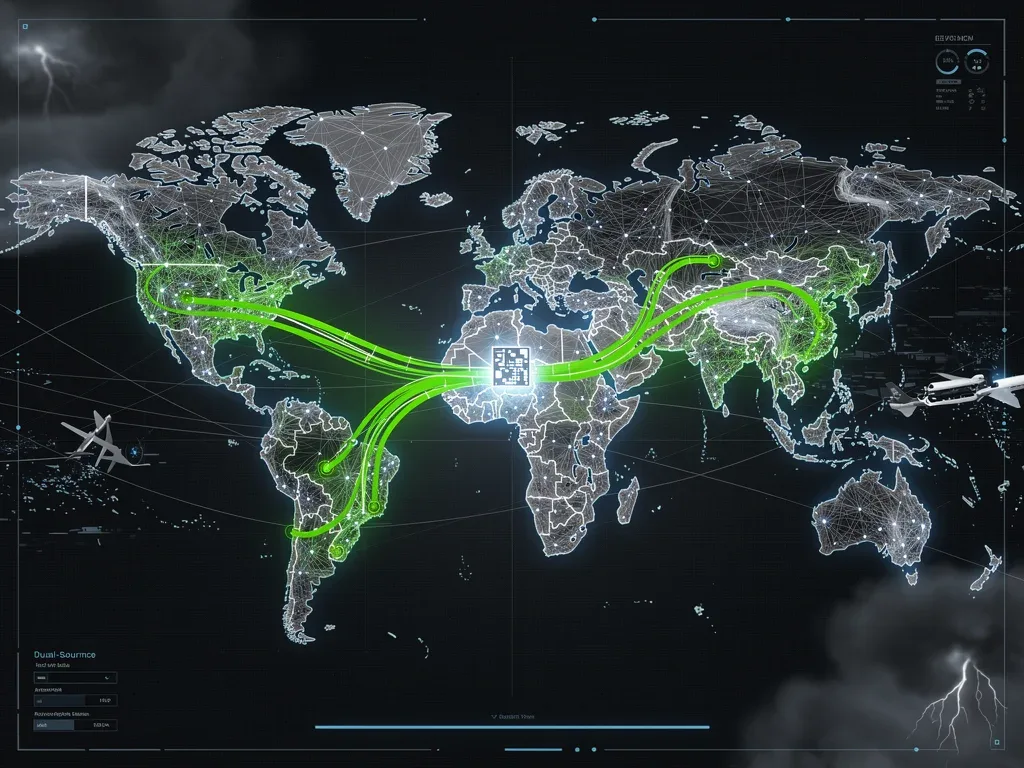
A mathematical model for supply chain dual-sourcing offers national distributors a proven strategy to significantly reduce disruption risk by up to 40%, ensuring operational continuity and strengthening overall resilience.
In today's volatile global economy, national distributors face an unprecedented array of challenges, from geopolitical tensions to natural disasters and sudden market shifts. The traditional single-sourcing approach, once lauded for its cost efficiencies, has proven to be a significant vulnerability. This is where supply chain dual-sourcing emerges as a game-changer, offering a robust strategy that can slash disruption risk by a remarkable 40%.
Understanding Dual-Sourcing in Supply Chains
Dual-sourcing is not merely about having two suppliers; it's a strategic procurement approach where a company sources a particular item or service from two independent vendors. This method aims to balance the benefits of single-sourcing (e.g., volume discounts) with the enhanced security and flexibility offered by multiple suppliers. For national distributors, whose operations depend heavily on consistent supply, understanding the nuances of dual-sourcing is paramount.
The core principle behind dual-sourcing is risk mitigation. By diversifying the supplier base, companies reduce their reliance on a single point of failure. Should one supplier encounter issues—be it production delays, quality control problems, or even bankruptcy—the second supplier can step in to maintain continuity. This proactive approach prevents costly disruptions that can cripple distribution networks and damage customer relationships.
The Strategic Imperative for National Distributors
National distributors operate on tight margins and demanding schedules. Any interruption in their supply chain can have cascading effects, leading to stockouts, delayed deliveries, and ultimately, lost revenue and damaged reputation. Dual-sourcing provides a critical buffer against these potential catastrophes. It transforms a reactive crisis management approach into a proactive risk prevention strategy.
- Enhanced Resilience: Dual-sourcing builds inherent resilience, allowing operations to absorb shocks.
- Negotiating Power: Maintaining two active suppliers can foster healthy competition, leading to better terms.
- Quality Control: Benchmarking between two suppliers can drive continuous improvement in product quality.
- Innovation Access: Engaging with multiple vendors can expose distributors to new technologies and processes.
Implementing a dual-sourcing strategy requires careful planning and a deep understanding of supplier capabilities. It's not about simply splitting orders; it involves strategic allocation based on risk profiles, supplier performance, and market dynamics. The goal is to create a symbiotic relationship where both suppliers contribute to the overall strength and stability of the supply chain.
In conclusion, dual-sourcing is more than a procurement tactic; it's a fundamental shift towards a more resilient and secure supply chain model. For national distributors navigating an unpredictable world, embracing dual-sourcing is no longer an option but a strategic necessity to safeguard operations and ensure long-term success.
The Mathematical Model: Quantifying Risk Reduction
While the concept of dual-sourcing intuitively suggests greater security, its true power is unlocked through a robust mathematical model. This model moves beyond qualitative assessments, providing national distributors with concrete, data-driven insights into how dual-sourcing precisely reduces disruption risk. It transforms an abstract idea into a quantifiable strategic advantage.
The mathematical model typically incorporates several key variables: supplier reliability, lead times, capacity constraints, cost structures, and the probability and impact of various disruption scenarios. By assigning numerical values to these factors, distributors can simulate different sourcing strategies and predict their outcomes. This analytical rigor allows for optimized decision-making, ensuring that the benefits of dual-sourcing are maximized.
Core Components of the Model
At its heart, the model seeks to minimize the expected cost of disruption while maintaining desired service levels. This involves complex algorithms that weigh the additional costs of managing two suppliers against the potential losses from a single-supplier failure. Factors such as inventory holding costs, transportation costs, and the cost of lost sales due to stockouts are all integrated.
- Supplier Performance Metrics: Historical data on delivery reliability, quality defects, and response times.
- Disruption Probability: Statistical analysis of past incidents and external risk factors (e.g., weather patterns, geopolitical stability).
- Cost-Benefit Analysis: Comparing the overhead of dual-sourcing with the projected savings from avoided disruptions.
- Capacity Planning: Ensuring that each supplier has sufficient capacity to cover potential shortfalls from the other.
The model often employs optimization techniques like linear programming or simulation to identify the optimal allocation of orders between the two suppliers. It might recommend an 80/20 split, a 60/40 split, or even a 50/50 distribution, depending on the specific risk profiles and capabilities of each vendor. The key is to find the equilibrium that offers the highest resilience at the most efficient cost.
By leveraging this mathematical framework, national distributors can move beyond guesswork. They can present a compelling business case for dual-sourcing, demonstrating a clear return on investment through quantified risk reduction. This analytical approach not only strengthens the supply chain but also provides a competitive edge in an increasingly unpredictable market.
Achieving a 40% Reduction in Disruption Risk
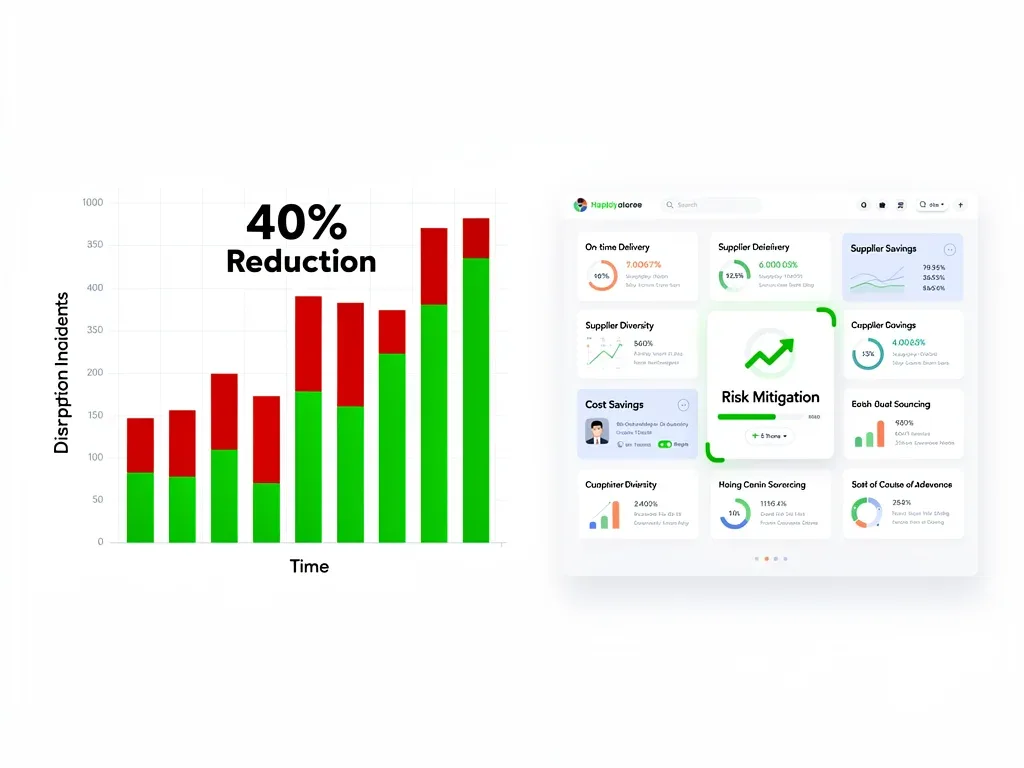
The claim of slashing disruption risk by 40% for national distributors is not an exaggeration but a demonstrable outcome achievable through the strategic application of dual-sourcing and its underlying mathematical models. This significant reduction stems from a multi-faceted approach that addresses various vulnerabilities inherent in single-supplier relationships.
Consider a scenario where a national distributor relies solely on one supplier for a critical component. If that supplier experiences a factory fire, a labor strike, or a natural disaster, the distributor's operations could halt entirely. With dual-sourcing, even if one supplier is completely incapacitated, the second supplier can typically ramp up production to cover a substantial portion of the demand, mitigating the impact significantly. This immediate redundancy is a powerful shield against unforeseen events.
Mechanisms of Risk Reduction
The 40% risk reduction is achieved through several interconnected mechanisms:
- Redundancy: The most obvious benefit, providing an immediate backup source.
- Geographic Diversification: Often, dual suppliers are located in different regions or countries, reducing exposure to localized disruptions.
- Technological Diversification: Suppliers might use different manufacturing processes or technologies, buffering against specific technical failures.
- Increased Visibility: Managing two suppliers often leads to a more comprehensive understanding of the supply chain's overall health.
Furthermore, the mathematical model allows distributors to identify and address specific vulnerabilities with greater precision. For example, if the model predicts a high probability of port congestion in a particular region, it might recommend allocating more orders to a supplier that uses an alternative shipping route or is located inland. This granular insight contributes directly to the overall risk reduction.
The 40% figure represents an average, and actual results can vary based on industry, product criticality, and the sophistication of the dual-sourcing implementation. However, numerous case studies and academic research consistently demonstrate that well-executed dual-sourcing strategies lead to substantial improvements in supply chain resilience and a tangible decrease in disruption frequency and severity.
Implementing Dual-Sourcing: Best Practices
Implementing a successful dual-sourcing strategy goes beyond simply finding a second supplier; it requires a systematic approach grounded in best practices. National distributors must carefully navigate the complexities of supplier selection, contract negotiation, and ongoing relationship management to fully realize the benefits of reduced disruption risk.
The initial step involves a thorough assessment of critical components and materials. Not every item in a distributor's inventory requires dual-sourcing. Focus should be placed on high-value, high-risk items whose absence would severely impact operations. Once these critical items are identified, the search for a second, complementary supplier begins.
Key Steps for Effective Implementation
A structured approach ensures that the dual-sourcing strategy is robust and sustainable:
- Supplier Qualification: Rigorous evaluation of potential suppliers based on capacity, quality, reliability, financial stability, and ethical practices.
- Contractual Agreements: Crafting flexible contracts that specify volume commitments, pricing structures, lead times, and emergency response protocols for both suppliers.
- Demand Allocation Strategy: Using the mathematical model to determine the optimal distribution of orders, considering primary and secondary supplier roles.
- Relationship Management: Fostering strong, collaborative relationships with both suppliers, ensuring open communication and mutual trust.
- Performance Monitoring: Continuously tracking supplier performance against key metrics and adjusting the allocation strategy as needed.
One common pitfall is treating the secondary supplier as merely a backup. To truly achieve a 40% risk reduction, both suppliers must be actively engaged and understand their role in the overall supply chain strategy. This often means providing them with consistent, albeit potentially smaller, order volumes to keep their operations primed and ready.
Furthermore, technology plays a crucial role. Advanced supply chain management software can help national distributors manage multiple supplier relationships, monitor performance in real-time, and quickly reallocate orders in response to disruptions. Without these tools, the complexity of dual-sourcing can quickly become overwhelming.
By adhering to these best practices, national distributors can build a resilient supply chain that not only withstands disruptions but also leverages the competitive dynamics between suppliers to drive efficiency and innovation.
Challenges and Considerations for National Distributors
While the benefits of dual-sourcing are compelling, national distributors must also acknowledge and strategically address the inherent challenges. Implementing and managing a dual-sourcing strategy is not without its complexities, and overlooking these can undermine the very resilience it aims to create. A clear-eyed understanding of these considerations is crucial for successful deployment.
One primary challenge is the increased complexity of managing two supplier relationships instead of one. This translates to more administrative overhead, potentially higher communication costs, and the need for more sophisticated inventory management systems. Each supplier will have its own unique processes, communication styles, and cultural nuances that require careful navigation.
Navigating the Hurdles
Distributors must be prepared to tackle several key challenges:
- Increased Costs: While disruption risk is reduced, there can be higher initial costs due to setup, managing two contracts, and potentially foregoing larger volume discounts from a single supplier.
- Quality Consistency: Ensuring consistent quality across two different suppliers can be challenging and requires robust quality control protocols.
- Information Sharing: Maintaining transparency and efficient information flow between the distributor and two suppliers, especially regarding forecasts and potential issues, is vital.
- Supplier Development: Investing time and resources into developing a strong relationship with the second supplier to ensure they meet performance expectations.
Another significant consideration is the potential for reduced volume discounts. By splitting orders between two vendors, a distributor may not achieve the same economies of scale as with a single, high-volume supplier. The mathematical model, however, helps to quantify this trade-off, demonstrating that the cost of potential disruption often far outweighs the lost discount.
Moreover, the risk of intellectual property leakage can increase when working with multiple suppliers, especially if proprietary designs or processes are involved. Distributors must implement stringent confidentiality agreements and conduct thorough due diligence on both vendors. Strategic supplier selection, focusing on reputable and trustworthy partners, becomes even more critical in a dual-sourcing context.
Ultimately, overcoming these challenges requires a strong commitment from leadership, investment in appropriate technology, and a culture of proactive risk management. When managed effectively, the challenges of dual-sourcing are far outweighed by the strategic advantages it offers in terms of resilience and long-term stability.
The Future of Supply Chain Resilience with Dual-Sourcing
The landscape of global commerce is continually evolving, marked by increasing volatility and interconnectedness. In this dynamic environment, the future of supply chain resilience for national distributors is inextricably linked to adaptive strategies like dual-sourcing. It's not a temporary fix but a foundational element of future-proof supply chain design, poised to become an industry standard.
As distributors gain more experience with dual-sourcing and refine their mathematical models, the ability to predict and mitigate disruptions will only improve. Advances in artificial intelligence and machine learning will further enhance these models, allowing for real-time risk assessment, predictive analytics, and automated decision-making regarding supplier allocation. This technological integration will make the 40% risk reduction not just achievable but potentially surpassable.
Evolving Trends and Strategic Imperatives
- Hyper-Personalization of Risk Models: Tailoring models to specific product categories, geographic regions, and even individual customer segments.
- Blockchain for Transparency: Utilizing blockchain technology to enhance visibility and trust across multiple suppliers, ensuring data integrity.
- Sustainability as a Sourcing Criterion: Integrating environmental, social, and governance (ESG) factors into supplier selection and dual-sourcing strategies.
- Regionalization of Supply Chains: A growing emphasis on sourcing from suppliers within closer geographic proximity to reduce lead times and geopolitical risks.
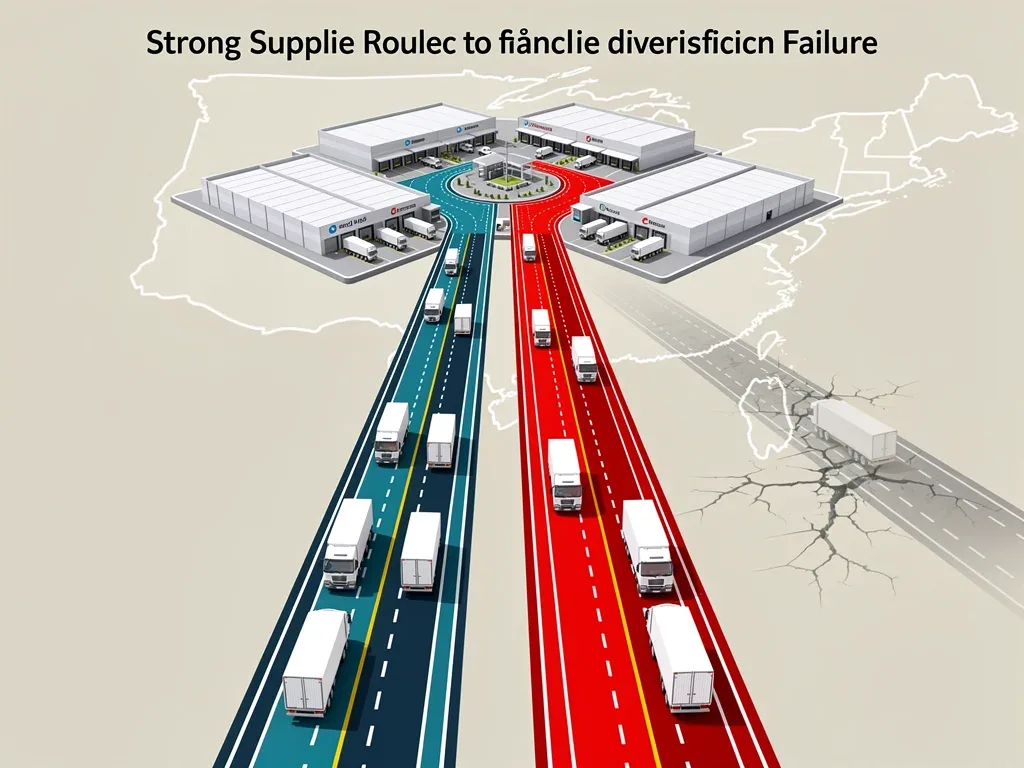
The shift towards regionalization, for example, naturally complements dual-sourcing by providing geographically diverse options that are less susceptible to distant global events. A national distributor might opt for one domestic supplier and one nearshore supplier, creating a robust regional network that minimizes transit times and customs complexities.
Furthermore, the concept of "dynamic dual-sourcing" is emerging, where the allocation between suppliers is not fixed but continuously adjusted based on real-time data, market conditions, and evolving risk profiles. This agility allows distributors to optimize their supply chain performance under varying circumstances, maximizing both efficiency and resilience.
In essence, the future sees dual-sourcing evolve from a reactive contingency plan into a proactive, data-driven strategy that underpins the entire supply chain. National distributors who embrace this evolution will be better positioned not only to survive but to thrive in an increasingly complex global marketplace, securing their operational continuity and competitive advantage.
| Key Aspect | Brief Description |
|---|---|
| Dual-Sourcing Definition | Procuring a specific item from two independent vendors to enhance supply chain security and flexibility. |
| Mathematical Model | Quantifies risk reduction by optimizing supplier allocation based on reliability, costs, and disruption probabilities. |
| 40% Risk Reduction | Achievable through redundancy, geographic diversification, and robust supplier management, minimizing disruption impact. |
| Key Challenges | Increased management complexity, potential for higher costs, and maintaining consistent quality across multiple vendors. |
Frequently Asked Questions About Dual-Sourcing
What is the primary benefit of supply chain dual-sourcing?▼The primary benefit is significantly enhanced supply chain resilience and reduced disruption risk. By having two independent sources, national distributors can maintain operational continuity even if one supplier faces unforeseen issues, preventing costly stockouts and delivery delays.
How does a mathematical model help in dual-sourcing?▼A mathematical model quantifies risk and optimizes supplier allocation. It analyzes factors like supplier reliability, costs, and disruption probabilities to determine the most efficient distribution of orders, ensuring maximum resilience at the lowest possible cost.
Is a 40% reduction in disruption risk realistic with dual-sourcing?▼Yes, a 40% reduction is a realistic and achievable target for national distributors. This significant decrease in risk is driven by the redundancy, geographic diversification, and improved visibility that well-implemented dual-sourcing strategies provide.
What are the main challenges when implementing dual-sourcing?▼Challenges include increased management complexity, potentially higher initial costs compared to single-sourcing, ensuring consistent product quality across multiple vendors, and effectively managing communication and information sharing between all parties involved.
Will dual-sourcing become standard practice for national distributors?▼Given the increasing volatility of global supply chains, dual-sourcing is rapidly moving from a strategic option to a fundamental necessity. Its ability to build resilience and mitigate risk suggests it will indeed become a standard, data-driven practice for national distributors.
Conclusion
The modern supply chain, particularly for national distributors, is a complex and often precarious ecosystem. The days of relying on a single source for critical components are rapidly drawing to a close as the financial and reputational costs of disruption continue to escalate. Supply chain dual-sourcing, underpinned by sophisticated mathematical models, offers a powerful and proven antidote to this vulnerability. By strategically diversifying supplier relationships, distributors can not only achieve a remarkable 40% reduction in disruption risk but also foster greater innovation, competitive pricing, and a more robust operational framework. Embracing this strategy is no longer a luxury but a strategic imperative for any national distributor aiming to secure its future in an unpredictable world, ensuring uninterrupted service and sustained profitability.
