Contractor Reclassification 2026: Impact on Freelancers & Agencies
Advertisements

The 2026 national labor guidelines on contractor reclassification are set to redefine the operational landscape for both freelancers and agencies across the United States.
The landscape of work is perpetually evolving, and 2026 is poised to usher in one of the most significant shifts yet for the gig economy. The impending national labor guidelines concerning contractor reclassification in 2026 are not merely regulatory tweaks; they represent a fundamental rethinking of how independent contractors are defined and engaged across the United States. This pivotal change promises to reshape operational strategies for countless freelancers and the agencies that rely on their specialized talents, demanding proactive understanding and adaptation to avoid substantial legal and financial repercussions.
Understanding the Core of Contractor Reclassification in 2026
The concept of worker classification has long been a contentious area, with a delicate balance between affording workers protections and preserving the flexibility of independent contracting. The 2026 national labor guidelines aim to clarify, and in many cases, tighten the criteria for classifying individuals as independent contractors rather than employees. This move primarily stems from a desire to ensure that workers receive appropriate benefits and protections, such as minimum wage, overtime pay, and access to unemployment insurance, which are typically reserved for employees.
Historically, various tests have been applied at both federal and state levels to distinguish between employees and independent contractors. These new guidelines seek to standardize and often broaden the interpretation of what constitutes an employment relationship, moving away from a more permissive view of independent contracting that has characterized certain sectors of the gig economy. The implications are far-reaching, affecting not just individual contractors but also the businesses that engage them.
The Shift from Control to Economic Realities
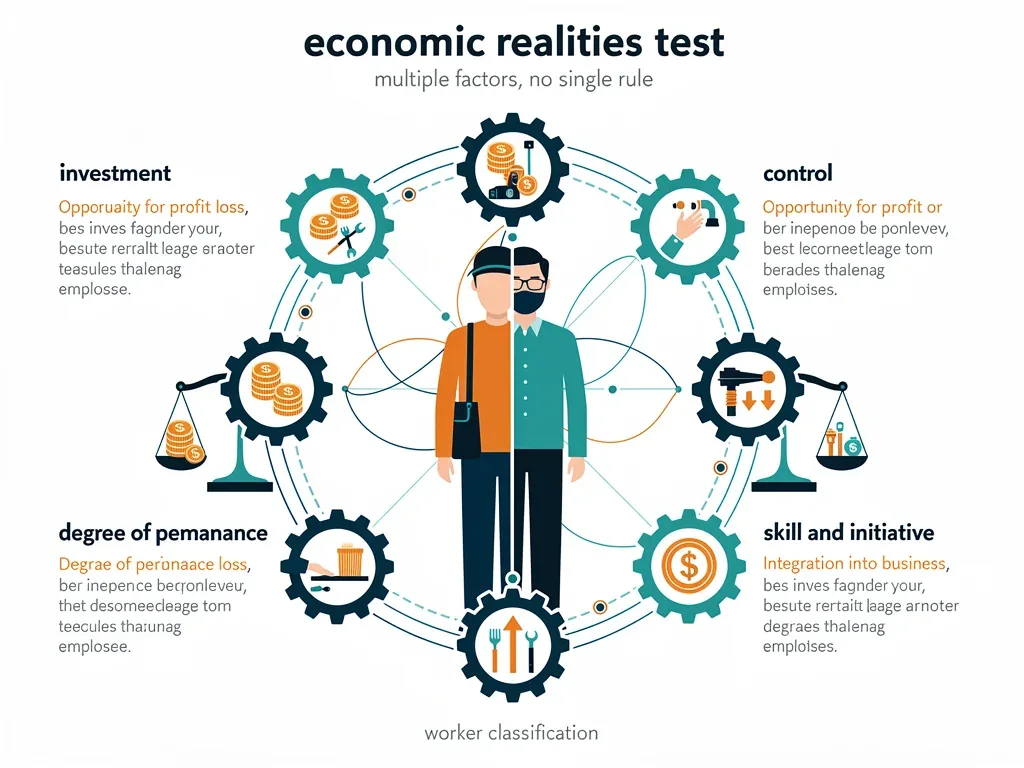
A key aspect of the new guidelines is a potential shift in emphasis from the traditional 'control test' to a more comprehensive 'economic realities' test. While control over how work is performed remains a factor, the economic realities test delves deeper into the worker's financial dependence on the hiring entity.
- Investment: Does the worker make significant investments in their own business, such as equipment or training, that are not reimbursed by the hiring entity?
- Opportunity for Profit or Loss: Does the worker have the ability to influence their own profit or loss through managerial skill or capital investment?
- Integration: Is the work performed an integral part of the hiring entity's business?
- Permanency: Is the relationship with the hiring entity permanent or indefinite?
These factors, among others, will be weighed to determine if a worker is truly in business for themselves or if they are, in reality, economically dependent on the hiring entity, thereby qualifying as an employee. This nuanced approach seeks to prevent misclassification where companies might label workers as contractors to avoid employment obligations.
In essence, the 2026 guidelines are designed to close loopholes and provide greater clarity, albeit with significant adjustments required from both sides of the contracting equation. The goal is to foster a fairer working environment, ensuring that those who function as employees are treated as such, while still allowing for genuine independent contracting relationships to thrive.
Direct Impact on Freelancers: Navigating the New Landscape
For millions of freelancers across the United States, the 2026 contractor reclassification guidelines will necessitate a thorough review of their professional arrangements. The days of simply agreeing to a contract without understanding the underlying classification implications are rapidly drawing to a close. Freelancers must become more astute about their contractual terms and the nature of their working relationships.
One of the most immediate impacts will be on how freelancers market themselves and structure their services. Those who closely resemble traditional employees in their current roles may find their clients initiating reclassification discussions or even terminating contracts if they are unwilling or unable to accommodate new employment statuses. This could lead to a period of uncertainty and adjustment for many.
Key Considerations for Freelancers
Freelancers should proactively assess their current client relationships against the new 'economic realities' test. Understanding where they stand will be crucial for future planning. This might involve consulting with legal professionals specializing in labor law to ensure compliance and protect their interests.
- Diversify Client Portfolio: Relying heavily on one or two clients could be seen as economic dependence, increasing the risk of reclassification.
- Invest in Your Business: Demonstrating significant investment in tools, training, and marketing for your independent business strengthens your contractor status.
- Maintain Autonomy: Ensure contracts clearly define project-based work, allowing for control over how and when tasks are completed, rather than hour-to-hour supervision.
- Understand Contractual Terms: Carefully review all contracts for clauses related to exclusivity, intellectual property, and termination, as these can influence classification.
Furthermore, freelancers might need to adjust their pricing models to account for potential increases in administrative overhead or the loss of certain tax deductions if they are reclassified as employees. The guidelines could also spur the growth of professional employer organizations (PEOs) or other third-party services designed to help freelancers manage their business and compliance responsibilities more effectively. Ultimately, the successful freelancer of 2026 and beyond will be one who is well-informed, adaptable, and proactive in managing their professional identity and relationships.
Agencies and the Reclassification Challenge: Operational Overhaul
For agencies that frequently engage freelancers and independent contractors, the 2026 national labor guidelines present a significant operational challenge. The risk of misclassification carries severe penalties, including back wages, unpaid taxes, benefits, and substantial fines. This necessitates a comprehensive review and potential overhaul of their engagement strategies, HR practices, and contractual frameworks.
Agencies will need to develop robust internal processes to accurately classify workers and continuously monitor these classifications. This is not a one-time adjustment but an ongoing commitment to compliance. The financial implications are substantial; reclassifying a significant portion of their contractor base to employees would mean new payroll taxes, benefits administration, and potentially increased labor costs. This could fundamentally alter business models, especially for agencies heavily reliant on flexible, project-based talent.
Strategic Adjustments for Agencies
To mitigate risks and ensure compliance, agencies should consider several strategic adjustments. This includes revisiting their talent acquisition strategies and potentially investing more in training internal staff or shifting towards different engagement models.
- Auditing Current Classifications: Conduct a thorough audit of all existing contractor relationships against the new guidelines to identify potential misclassifications.
- Revising Contract Templates: Update all independent contractor agreements to reflect the new legal requirements and clearly define the scope of work, autonomy, and non-exclusivity.
- Training and Education: Educate internal teams, particularly HR, legal, and project managers, on the nuances of the new classification rules.
- Exploring Alternative Engagement Models: Consider engaging with other agencies, staffing firms, or PEOs that specialize in managing compliant contractor relationships.
Furthermore, agencies might find themselves re-evaluating their core service offerings and client delivery models. Some may opt to specialize in areas where true independent contracting is more easily maintained, while others might pivot to a more traditional employment model for their workforce. The key will be flexibility and a willingness to adapt to the evolving regulatory environment, ensuring that their business remains viable and compliant in the face of these significant changes.
State-Level Variations and Federal Harmonization Efforts
While the 2026 guidelines are national, it is crucial to remember that state-level labor laws often have their own distinct criteria for worker classification. This creates a complex patchwork of regulations that both freelancers and agencies must navigate. Historically, some states have adopted stricter 'ABC tests,' making it harder to classify workers as independent contractors than federal guidelines previously allowed.
The new national guidelines aim to provide a more uniform framework, but they do not necessarily supersede all state laws. Instead, they may set a new federal baseline, with states still having the authority to impose even stricter requirements. This means that businesses operating across state lines will need to be particularly vigilant, ensuring compliance with both federal mandates and the specific regulations of each state where they engage talent.
Navigating the Regulatory Maze
The interplay between federal and state laws will be a critical area of focus. Agencies, in particular, may need to implement sophisticated compliance management systems to track and apply the correct classification rules based on the physical location of the contractor and the nature of the work.
- Jurisdictional Awareness: Understand the specific labor laws in every state where your agency or freelance business operates or engages talent.
- Legal Counsel: Engage legal experts who specialize in multi-state labor law to ensure comprehensive compliance.
- Consistent Application: Strive for consistent classification practices across all engagements, even if state laws vary, to reduce overall risk.
- Monitoring Legislative Updates: Stay informed about ongoing legislative developments at both federal and state levels, as these guidelines may continue to evolve.
The federal harmonization efforts are designed to reduce some of the existing ambiguities, but complete uniformity remains a distant goal. Therefore, a proactive and geographically informed approach to worker classification will be paramount for minimizing legal exposure and ensuring smooth operations in the coming years. Both freelancers and agencies must remain agile in adapting to these layered legal requirements.
Technological Solutions and the Future of Work
The challenges posed by contractor reclassification in 2026 are likely to spur significant innovation in technological solutions designed to aid compliance and streamline operations. Companies specializing in HR tech, legal tech, and workforce management are already developing tools to help businesses and freelancers navigate these complex regulations.
These solutions could range from AI-powered classification tools that assess engagement risks to platforms that automate compliance checks and generate legally sound contracts. For freelancers, platforms that help manage multiple client relationships, track business expenses, and provide clear documentation of independent business activities will become increasingly valuable. The future of work will undoubtedly be more digitized, with technology playing a crucial role in ensuring adherence to labor laws.
Innovations to Watch For
The market for compliance-focused technology is set to boom. Both large enterprises and small agencies will seek out solutions that reduce administrative burdens and minimize legal risks.
- Automated Classification Tools: Software that uses questionnaires and data analysis to recommend appropriate worker classification based on current guidelines.
- Contract Management Systems: Platforms that generate and manage legally compliant independent contractor agreements, with built-in review processes.
- Freelancer Management Systems (FMS): Tools that help agencies manage their contractor networks, track project milestones, and ensure proper invoicing and payment, all while maintaining compliance.
- Gig Economy Platforms with Compliance Features: Existing platforms may integrate more robust compliance features, offering legal guidance and classification support directly to users.
This technological evolution will not only simplify compliance but also foster greater transparency in the contracting relationship. It will empower both parties with the information and tools needed to make informed decisions, ultimately contributing to a more structured yet still flexible future for the gig economy. Embracing these innovations will be key to thriving in the post-2026 labor landscape.

Preparing for 2026: A Proactive Approach is Key
The impending 2026 national labor guidelines on contractor reclassification demand a proactive and strategic response from both freelancers and agencies. Waiting until the last minute to address these changes could lead to significant disruptions, legal challenges, and financial penalties. The time to prepare is now, through education, assessment, and strategic planning.
For freelancers, this means understanding their current standing, diversifying their client base, and ensuring their business operations clearly delineate them as independent entities. For agencies, it involves a comprehensive audit of their workforce, a revision of contractual agreements, and potentially a re-evaluation of their entire operational model for engaging external talent. The goal is not to eliminate independent contracting but to ensure it is conducted ethically and legally.
Steps Towards Effective Preparation
Both parties can take concrete steps to ensure a smooth transition into the new regulatory environment. These actions will help minimize risks and capitalize on new opportunities.
- Stay Informed: Continuously monitor official government publications and reputable legal analyses regarding the new guidelines.
- Seek Expert Advice: Consult with labor law attorneys or HR consultants specializing in worker classification to get tailored guidance.
- Scenario Planning: For agencies, develop contingency plans for various reclassification outcomes, including budgetary adjustments and potential shifts in talent acquisition.
- Open Communication: Freelancers should initiate conversations with their primary clients about potential impacts and explore mutually beneficial solutions.
Ultimately, the successful navigation of the 2026 reclassification guidelines will hinge on foresight, adaptability, and a commitment to compliant practices. Those who embrace these changes as an opportunity to refine their operations and strengthen their relationships will be best positioned to thrive in the evolving future of work. The landscape is changing, and preparedness is the ultimate competitive advantage.
Long-Term Implications for the Gig Economy and Workforce
The contractor reclassification in 2026 guidelines are not just a momentary hurdle; they represent a significant inflection point for the broader gig economy and the future of the American workforce. While the immediate focus is on compliance, the long-term implications could reshape how businesses operate, how talent is engaged, and even the fundamental nature of work itself. We may see a more clearly defined distinction between genuine independent contractors and those who benefit from employment protections.
This shift could lead to a more stable, albeit potentially less flexible, workforce for many companies. It might also encourage businesses to invest more in their internal employee base, fostering greater loyalty and skill development. For the gig economy, it means a maturation, moving away from a 'wild west' mentality towards a more regulated and formalized structure. This could ultimately benefit workers by providing greater security, while pushing businesses to innovate in how they manage and utilize flexible talent compliantly.
Evolving Dynamics of Work
The guidelines are expected to catalyze several long-term trends, impacting everything from talent acquisition to economic growth.
- Increased Employment Opportunities: Some contractors may be reclassified as employees, potentially increasing access to benefits and job security.
- Refined Independent Contractor Pool: The remaining independent contractors will likely be those with truly specialized skills, operating with greater autonomy and business acumen.
- Innovation in Workforce Models: Companies will explore hybrid models, combining core employees with specialized project-based contractors or engaging through compliant third-party providers.
- Enhanced Worker Protections: The overall goal is to reduce worker exploitation and ensure fair labor practices across all engagement types.
The long-term outlook suggests a more structured and equitable labor market. While initial adjustments may be challenging, the ultimate outcome could be a healthier and more sustainable gig economy, where both businesses and workers operate with greater clarity and protection. The 2026 guidelines are a crucial step in defining the next chapter of work in the United States, prompting a necessary evolution for all stakeholders involved.
| Key Aspect | Brief Description |
|---|---|
| New Guidelines Focus | Shift to 'economic realities' test for worker classification, emphasizing dependence over control. |
| Freelancer Impact | Requires assessment of client relationships, potential reclassification, and business diversification. |
| Agency Challenges | Demands compliance audits, contract revisions, and potential operational model overhauls. |
| Proactive Preparation | Crucial for both parties to stay informed, seek legal advice, and adapt strategies. |
Frequently Asked Questions About 2026 Contractor Reclassification
What is the primary change in the 2026 contractor reclassification guidelines?▼The main change is a heightened emphasis on the 'economic realities' test, shifting focus from a worker's control over their tasks to their economic dependence on the hiring entity, making it harder to classify workers as independent contractors.
How will these guidelines affect freelancers' income and benefits?▼Freelancers reclassified as employees would gain access to benefits like minimum wage, overtime, and unemployment insurance. However, they might lose certain business tax deductions and face changes in their net income due to new tax withholdings.
What are the potential penalties for agencies that misclassify workers?▼Agencies face significant penalties for misclassification, including back wages, unpaid payroll taxes, benefits, and substantial fines from federal and state labor departments. This underscores the need for strict compliance.
Do state laws still apply alongside the new national guidelines?▼Yes, state laws will continue to apply. The national guidelines establish a federal baseline, but states can, and often do, implement stricter classification criteria. Agencies must comply with both federal and applicable state regulations.
What steps should freelancers take to prepare for these changes?▼Freelancers should review their client contracts, diversify their client base, make significant investments in their own business, and potentially seek legal counsel to ensure their independent contractor status is clearly defensible under the new rules.
Conclusion: Adapting to a New Era of Work
The 2026 national labor guidelines on contractor reclassification mark a pivotal moment for the American workforce, necessitating careful attention and strategic adaptation from both freelancers and agencies. These changes are designed to foster greater fairness and provide essential protections, fundamentally reshaping the gig economy. While the transition may present complexities, a proactive approach—involving thorough understanding, legal consultation, and operational adjustments—will be key to navigating this new regulatory landscape successfully. Ultimately, these guidelines are steering us towards a more defined and equitable future of work, where the distinctions between independent contractors and employees are clearer, benefiting all stakeholders in the long run.
