Prompt Engineers to Workflow Architects: 40% Higher Pay
Advertisements

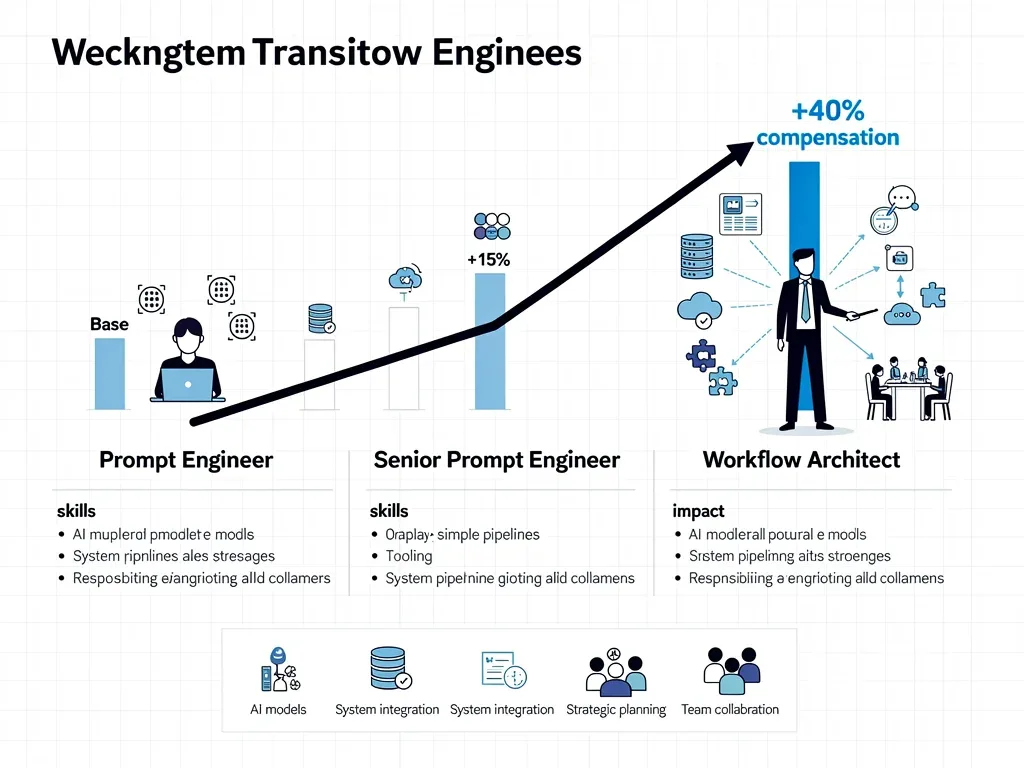
Enterprise prompt engineers are rapidly transforming into workflow architects, a pivotal shift driving significant career advancement and an average 40% increase in compensation by focusing on holistic AI system integration and optimization.
The landscape of artificial intelligence careers is undergoing a profound transformation, with prompt engineer evolution now leading to a more strategic and lucrative role: the workflow architect. This isn't just a title change; it represents a significant expansion of responsibilities and a dramatic increase in earning potential, often seeing a 40% higher compensation. Let's delve into this exciting career trajectory and understand its implications for the future of work.
The Genesis of Prompt Engineering: From Art to Science
Prompt engineering emerged as a critical discipline with the rise of large language models (LLMs) and generative AI. Initially, it was often seen as an almost artistic endeavor, crafting precise instructions to elicit desired outputs from powerful, yet often finicky, AI systems. This foundational role quickly proved indispensable for businesses looking to leverage AI effectively.
Early prompt engineers focused heavily on the iterative process of trial and error, refining prompts to improve accuracy, relevance, and efficiency. They were the bridge between human intent and machine understanding, translating complex business needs into AI-comprehensible queries. This required a deep understanding of natural language processing and the specific nuances of various AI models.
The Initial Skillset: Crafting Effective Prompts
The core competencies for early prompt engineers revolved around linguistic precision and a keen eye for detail. They needed to anticipate potential AI misinterpretations and guide the model towards optimal responses. Their work was often project-specific, solving immediate problems rather than designing overarching systems.
- Understanding AI model limitations and capabilities.
- Developing clear, concise, and unambiguous prompt structures.
- Iterative testing and refinement of prompt strategies.
- Knowledge of domain-specific terminology and context.
As AI applications became more embedded in enterprise operations, the limitations of a purely prompt-centric approach became apparent. Organizations realized that isolated prompts, however well-crafted, were insufficient for truly transformative AI integration. This paved the way for a more holistic perspective, demanding professionals who could design entire AI workflows.
The journey from prompt artisan to a more structured engineering discipline marked the first step in this significant career evolution. It highlighted the need for not just individual prompt mastery but also for understanding how these prompts fit into larger operational frameworks.
Transitioning Beyond Prompts: The Workflow Architect's Mandate
The shift from prompt engineer to workflow architect signifies a maturation of the AI field within enterprises. It moves beyond merely instructing individual AI models to designing, implementing, and optimizing entire ecosystems where AI tools collaborate seamlessly. This expanded role addresses the growing complexity of AI deployments and the need for scalable, integrated solutions.
Workflow architects are no longer just concerned with the 'what' of AI output but also the 'how' and 'why' of its integration into existing business processes. They consider the end-to-end journey of data, the interplay between different AI components, and the human-AI collaboration points. This strategic oversight is what drives the significant increase in their value and, consequently, their compensation.
Key Responsibilities of a Workflow Architect
Unlike their prompt engineering predecessors, workflow architects engage with a broader spectrum of challenges. Their role encompasses architectural design, system integration, performance optimization, and strategic alignment with business objectives. They are essentially the master planners of enterprise AI. This holistic view is crucial for successful AI adoption at scale.
- Designing end-to-end AI-powered business processes.
- Integrating various AI models and tools into cohesive workflows.
- Optimizing AI systems for efficiency, scalability, and cost-effectiveness.
- Collaborating with cross-functional teams (data scientists, developers, business stakeholders).
This transition demands a blend of technical acumen, strategic thinking, and strong communication skills. Workflow architects must be able to translate complex technical concepts into actionable business strategies and vice versa. They are the linchpins ensuring that AI investments yield tangible, measurable business results.
The Strategic Imperative: Why Enterprises Need Workflow Architects
In today's competitive business environment, simply having AI capabilities is no longer enough. Enterprises require professionals who can strategically weave AI into the very fabric of their operations, creating efficiencies, fostering innovation, and driving growth. This is where the workflow architect becomes indispensable. They are the architects of competitive advantage in the AI era.
Their value proposition lies in their ability to bridge the gap between theoretical AI potential and practical, impactful business solutions. Without a clear architectural vision, AI initiatives can become fragmented, inefficient, and fail to deliver on their promise. Workflow architects ensure that every AI component serves a greater strategic purpose, optimizing enterprise AI.
Driving Business Value Through Integrated AI
The core function of a workflow architect is to maximize the return on investment from AI technologies. This involves not just technical implementation but also a deep understanding of business processes and pain points. They identify opportunities where AI can create the most significant impact, from automating routine tasks to generating strategic insights.
For instance, a workflow architect might design an AI-driven customer service system that integrates chatbots, sentiment analysis, and knowledge base management. They would ensure that data flows seamlessly between these components, leading to faster resolution times and improved customer satisfaction. This level of integration is far beyond the scope of a traditional prompt engineer.
Skills Revolution: What Defines a Workflow Architect
The elevated role of a workflow architect necessitates a broader and deeper skillset than that of a traditional prompt engineer. While prompt crafting remains a foundational skill, it's augmented by competencies in system design, data architecture, project management, and business strategy. This expanded toolkit is why their compensation is significantly higher.
These professionals are not just technical experts; they are strategic thinkers who understand the full lifecycle of AI implementation within an organization. They must be proficient in various AI technologies, but more importantly, they must know how to orchestrate them into a harmonious and effective whole. This requires a strong grasp of both technical and organizational dynamics.
Essential Competencies for the Modern Workflow Architect
The journey to becoming a workflow architect involves continuous learning and skill development. It requires moving beyond individual AI model interactions to understanding system-level design and optimization. This includes proficiency in various programming languages, cloud platforms, and data management tools.
- Advanced understanding of AI/ML models and their operationalization.
- System architecture and integration expertise.
- Data governance and pipeline design.
- Project management and stakeholder communication.
- Business process analysis and optimization.
Moreover, soft skills like critical thinking, problem-solving, and leadership are paramount. Workflow architects often lead multidisciplinary teams and must effectively communicate complex technical concepts to non-technical stakeholders. Their ability to influence and guide strategic decisions is a major component of their value.
The Compensation Premium: Understanding the 40% Increase
The significant increase in compensation for workflow architects compared to traditional prompt engineers—often around 40%—is a direct reflection of their expanded responsibilities and the strategic value they bring to an organization. This isn't just about a fancier title; it's about a role that fundamentally transforms how businesses leverage AI to achieve their objectives.
The demand for professionals who can design, implement, and manage complex AI workflows far outstrips the supply. This scarcity, coupled with the critical impact these roles have on an enterprise's bottom line, drives up salaries. Companies are willing to invest heavily in talent that can ensure their AI initiatives are not just innovative but also effective and scalable.

Factors Contributing to Higher Earning Potential
Several key factors underpin this substantial compensation premium. The ability to drive tangible business outcomes through AI integration is perhaps the most significant. Workflow architects are directly responsible for creating efficiencies, reducing costs, and generating new revenue streams through optimized AI applications. Their work directly impacts profitability.
- Strategic impact on business operations and profitability.
- High demand for specialized integration and architectural skills.
- Leadership and cross-functional collaboration responsibilities.
- Expertise in complex AI systems and data governance.
Furthermore, the risk associated with poorly implemented AI systems can be substantial. Workflow architects mitigate these risks by ensuring robust design, proper integration, and continuous optimization. Their role is preventive as much as it is constructive, safeguarding investments and ensuring long-term success. This risk mitigation aspect also contributes to their higher value.
Future Outlook: The Expanding Horizon for Workflow Architects
The trajectory for workflow architects is one of continuous growth and increasing influence. As AI technologies become more sophisticated and ubiquitous, the need for professionals who can orchestrate these complex systems will only intensify. This role is at the forefront of the future of work, defining how humans and AI collaborate to achieve unprecedented levels of productivity and innovation.
We can expect to see workflow architects playing an even more central role in strategic planning, influencing technology roadmaps, and shaping organizational structures. Their expertise will be critical not just for implementing AI but for envisioning new business models enabled by advanced automation and intelligence. This makes the prompt engineer evolution a particularly exciting career path.
Emerging Trends and Opportunities
The field is dynamic, with new AI models and tools constantly emerging. Workflow architects will need to stay abreast of these developments, continuously adapting their strategies and skillsets. This includes exploring areas like explainable AI, ethical AI deployment, and advanced human-AI interaction design. The role will continue to evolve, demanding lifelong learning.
Opportunities will expand into niche industries, as every sector seeks to harness AI's potential. From healthcare to finance, manufacturing to retail, workflow architects will be pivotal in translating industry-specific challenges into AI-powered solutions. Their ability to contextualize AI within diverse operational frameworks will be highly prized.
Navigating Your Career Path: From Prompt Engineer to Workflow Architect
For current prompt engineers looking to advance their careers and achieve that 40% higher compensation, a clear roadmap exists. It involves a deliberate shift from a tactical focus on individual prompts to a strategic focus on entire AI workflows and their integration into business processes. This career progression demands proactive skill development and a broader perspective.
The transition requires an investment in learning new technologies, understanding enterprise architecture, and developing stronger leadership and communication skills. It's about seeing the bigger picture and understanding how each AI component contributes to the overall strategic objectives of the organization. This holistic approach is the hallmark of the workflow architect.
Steps to Elevate Your AI Career
Embarking on this career path means acquiring new knowledge and demonstrating a capacity for strategic thinking. Certifications in cloud platforms, enterprise architecture frameworks, and project management can be highly beneficial. Networking with industry leaders and participating in relevant forums can also provide invaluable insights and opportunities for prompt engineer evolution.
- Acquire advanced knowledge in system design and integration.
- Develop expertise in data governance and pipeline management.
- Cultivate strong project management and leadership skills.
- Understand enterprise-level business processes and strategy.
- Seek out opportunities to lead end-to-end AI projects.
Ultimately, becoming a workflow architect is about demonstrating a readiness to take on greater responsibility and deliver strategic value. It's about moving from being an expert in a specific AI task to becoming an orchestrator of intelligent systems that drive significant business transformation. The rewards, both in terms of compensation and career satisfaction, are substantial for those who make this strategic pivot.
| Key Role | Brief Description |
|---|---|
| Prompt Engineer | Focuses on crafting specific instructions for individual AI models to generate desired outputs. |
| Workflow Architect | Designs, integrates, and optimizes end-to-end AI systems and their interaction within business processes. |
| Compensation Growth | Workflow architects typically earn 40% higher compensation due to expanded strategic responsibilities. |
| Key Skills | System design, data architecture, project management, business process optimization, and strategic thinking. |
Frequently Asked Questions About AI Career Evolution
What is the primary difference between a prompt engineer and a workflow architect?▼A prompt engineer focuses on optimizing individual AI model inputs for specific outputs. A workflow architect, however, designs and integrates entire AI systems into broader business processes, ensuring seamless collaboration and strategic alignment across multiple AI tools.
Why are workflow architects earning 40% higher compensation?▼The higher compensation reflects their expanded strategic responsibilities. Workflow architects drive significant business value by optimizing AI integration, leading to greater efficiencies, cost savings, and revenue generation. Their role demands a broader and deeper skillset, making them highly sought after.
What new skills are essential for this career transition?▼Beyond prompt engineering, essential skills include system architecture, data governance, project management, business process analysis, and strategic communication. A strong understanding of how AI integrates into overall enterprise strategy is crucial for success in this advanced role.
How does a workflow architect impact enterprise AI adoption?▼Workflow architects are vital for successful enterprise AI adoption by ensuring that AI solutions are not isolated but are integrated into cohesive, efficient, and scalable business processes. They bridge the gap between AI potential and tangible business outcomes, driving real-world impact.
What is the future outlook for workflow architects?▼The future for workflow architects is exceptionally bright. As AI complexity grows, their role will become even more critical in strategic planning and integrating advanced AI into new business models across all industries. Demand for their specialized expertise is expected to continue rising.
Conclusion
The evolution from prompt engineer to workflow architect represents a significant and rewarding career trajectory within the rapidly expanding field of artificial intelligence. This shift underscores the growing need for professionals who can not only interact with AI models but also design, integrate, and optimize complex AI-driven workflows to achieve strategic business objectives. With a substantial increase in compensation and a critical role in shaping the future of enterprise AI, this transition offers immense opportunities for those willing to expand their skillset and embrace a more holistic, architectural approach to AI implementation. The demand for these highly skilled individuals will only continue to grow as organizations increasingly rely on integrated AI solutions to drive innovation and maintain a competitive edge.
